Author Interview: T. Sae-Low on Writing YA High Fantasy

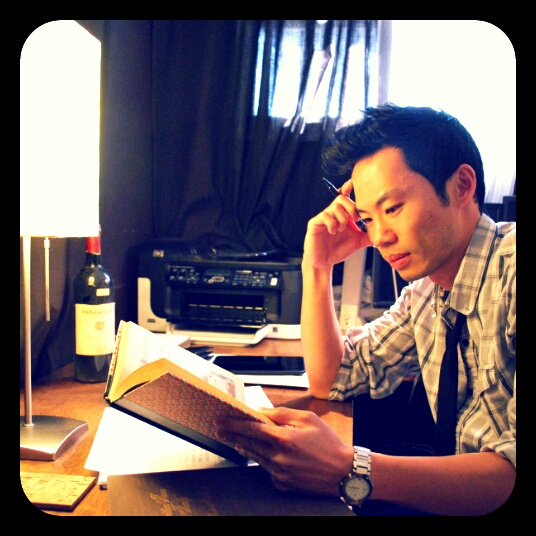
Author PicFor the sake of transparency, I’ll admit that the new author I’m interviewing today is one of my favorites. His YA fantasy Prophecy Rock series is action-packed and filled with characters who stay with you long after you’ve finished reading his stories. So far he has written the first book in the series, Genesis, and a novella called Shadows of Kyrus that will be released soon and I had the pleasure of beta reading. Both stories are quick, enjoyable reads that I recommend.

With the Prophecy Rock series, Sae-Low created a compelling world that feels real and robust. He is also gifted at creating powerful, believable female characters, a subject which you may already know is close to my heart. I hope you enjoy this peek into his thinking process as much as I did!

Tell us a little about the mysterious T. Sae-Low. Can we know what the “T” stands for?

Well, long story short, I’m a native of L.A. but went to college down in San Diego. After college I tried a couple different fields of work and ended up becoming a teacher. It’s Mr. Sae-Low by day and the mysterious T. Sae-Low at night! The “T” is just the first initial of my first name which is “Theppong.” The name is Thai which is where my parents are originally from before emigrating to the U.S. I’ve been told that it means “Angel of Mercy” or “Angel of  God” in Thai, but my family could just be messing with me. I’m thinking it’s the latter.

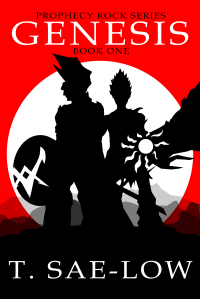
Cover_R5What was the hardest part about writing Genesis, and how did you overcome it?

Two things immediately come to mind. The first was creating the outline. It took so much longer than I thought it would. For months and months I spent countless hours researching to create Eos and all the characters that populate it. After that, I needed to figure out where I wanted the story to go. Once I had all that done, the writing came a lot easier than I thought it would…but it was just the first draft. The second thing that I think any creative mind can attest to was the revision process. To get the manuscript just right, at least in my mind, took a while. I continued revising and tweaking things until I was finally satisfied with the story. It took a lot of time and perseverance but it was well worth it when you see the finished product.

The female characters in Genesis are very strong. Did they come from your imagination or were they inspired by people from your life?

Yeah, I wanted to have strong female leads because I feel that they’re just so much more interesting than the typical “damsel in distress” archetype. Since the novel takes place in an age of constant warfare, I knew there would be a good number of battles (both large and small) in the novel. I didn’t want my female characters to be watching from the sidelines but actually in the thick of the action and even dictating what was happening.

I find my inspiration from a variety of sources, but I do tend to look back in history at ordinary people who did extraordinary things. Figures like Mother Theresa and Harriet Tubman come to mind. To endure incredible odds and still manage to come out on top is truly fascinating. For my female characters, in addition to being able to beat down their enemies in battle, I wanted them to have strong and opinionated personalities that almost commanded attention. I just felt it made them that much more interesting.

What was your inspiration for the vivid settings that you created in Genesis?

The world of Eos is a combination of a whole lot of different sources. I grew up reading and collecting comic books and watching anime with my older brother. Every title seemed to have a unique and wonderful world that I always wanted to learn more about. Why is the sky colored green? Why do they have to wear masks? Why are the buildings shaped like that? I found myself asking more and more questions as I delved deeper into these make-believe worlds. Another part of me has always been fascinated with mythologies of various cultures. Each one is so creative and different in how they try to explain and make sense of the world around us. I love reading about creation myths and what different cultures believe about the afterlife. All of these inspirations mixed together in my mind and what came out was the world and mythology of Eos and Prophecy Rock.

You’ve also written a novella that will be published soon, Shadows of Kyrus. Which story did you find easier to write?

Even though Genesis was a longer story, I felt it was easier to write than Shadows of Kyrus. With Shadows of Kyrus, I wanted to approach it a little differently and experiment with the narrative format. As a novella that takes place in the world of Eos but isn’t necessarily tied to the main story arc, I gave myself more flexibility in what I wanted to do. As odd as it may sound, I was inspired to write Shadows of Kyrus after I read some of the classic monster tales like Mary Shelley’s Frankenstein. Shadows was originally supposed to be told as a series of flashbacks during an interview but the plot evolved in a different direction during the writing process that I am very happy with.

What is the strangest thing that has ever inspired you?

I ride the train to work everyday and just watching and observing different people helps me create some of my characters. Here’s a short story. So one day an older man boards the train with his bicycle and starts banging his bike against the seats and even into other patrons. He’s cursing and hollering at everyone and just making a huge scene. Eventually he starts mouthing off at another rider and the other guy gets so angry that he hurls his soda at the old crotchety man, splashing soda all over the place, including me! I and other people were upset but the old man was laughing hysterically at the whole thing. The other rider got off the train and the old man exited shortly after. It was such a weird and random scenario, but I honestly couldn’t stop wondering what this old man’s story was. How the heck did he get to this point in his life? Did something horribly tragic happen to make him become like this? Or has he been like this his whole life? Anyways, when I got home that night and did some writing, the incident inspired me to write the scene in Genesis where one of the key characters meets the old man at the marketplace.

What are some books and authors that have inspired your writing?

There are so many to choose from but the ones that stand out to me are the masters of fantasy like Tolkien because of his incredible ability to create worlds. I mean the guy even created the term Mythopoeia! George R.R. Martin is a master of weaving together multiple plot lines into one epic story like no other. I’m a big fan of Paulo Coehlo and his works like The Alchemist. His ability to tell a simple yet deeply profound story is a skill that I truly admire. I also listen to great speeches from history on my iPod (yeah, I’m a nerd like that). Speeches are fascinating to me because you have to deliver so much with such few words. Even though it’s a different medium, I try to incorporate the same principal into my writing as well.

Is there anything else you’d like us to know about you?

I just want to thank Kristen Pham for the chance to be featured on her wonderful blog. Please support indie and self-published authors. There are a lot of great writers out there who deserve to be recognized and are creating truly unique and ground breaking work. Thanks to everyone who has supported me and my writing. Please check out my website at www.tsaelow.com to learn more about me and the Prophecy Rock Series. Shadows of Kyrus is almost available so please stay tuned! You can follow me on my blog, Twitter, and Facebook. Thanks!

How to Create a Likeably Flawed Protagonist

shutterstock_104313347As a writer, I’ve often heard about the trap of creating a character who’s too perfect. They don’t seem human and can often come off flat and boring. If there’s no room to grow, then where’s the story going? On the other hand, creating a flawed character is a tricky business. With a few notable exceptions, readers want to root for the protagonist, so they must be likable. Sometimes we may want to shake them, but they aren’t so irredeemable that we want to shut the book.

The best protagonists walk this line with flair and originality. Below are the lessons I learned from some of my favorite, classic authors on how to create characters whose flaws are an integral part of what makes them compelling.

Make a Flaw a Secret Strength
Jane Eyre – Jane Eyre

Charlotte Bronte’s Jane Eyre is one of my favorite novels of all time because of the wonderful heroine at the center of her story. Jane has a temper, railing against the unfairness she encounters with her family and at her horrible boarding school, rather than accepting her lot quietly, piously and passively like a good little girl. It’s this fighting spirit that makes Jane so lovable to the reader and her love interest, Mr. Rochester. She is also uncompromising in her values, leaving the man she loves when she finds out that he’s married, even though she wants to stay with him. This stubbornness almost costs her happiness and even her life, but when she manages to take a risk at the end of the story, her reunion with Mr. Rochester is all the sweeter for knowing how hard it was for Jane to turn around and come back to him.

Counterbalance Flaws with Self-Sacrifice
A Tale of Two Cities – Sydney Carton

Charles Dickens knew how to paint bright spots of humanity even in its darkest hour, and Sydney Carton is the best of his creations. A cynical, alcoholic and depressed character at the beginning of the novel, Sydney is completely transformed by his love of a woman to give his life to save the man she loves. His story wouldn’t be nearly as compelling if he was  better man. It is overcoming his flaws, or achieving true goodness in spite of them, which makes this story one of those that stays with you forever.

Choose a Flaw People Can Relate To
Hamlet – Hamlet

There are dozens of wonderful Shakesperian examples of flawed heroes to choose from, but Hamlet stands out as one of the characters who strikes a chord with many people. His fundamental goodness – loyalty, courage and committment to the truth – are undermined by his flaws – his indecision, pride, and depression. He’s a character that you simultaneously root for and want to shake. Every time I read the play I find myself somehow hoping that his final demise can be prevented. He’s a character that has taken root in my brain as a reminder that good intentions without action can be disasterous.

Let Your Character Revel in their Flaw
The Girl with the Dragon Tattoo – Lisbeth Salander

Perhaps this isn’t quite a classic, but I couldn’t end this post without mentioning Lisbeth – a violent, anti-social vigilante with an obsession with revenge and justice. What’s not to love? Stieg Larsson did an incredible job created a complex, multi-layered heroine whose flaws make her more lovable, rather than less. She’s tough, able to take down men three times her size, but also vulnerable, a woman alone who only knows how to turn to herself when she needs help. Watching her kick butt is gratifying and riveting.

Who are some of your favorite examples of delightfully flawed heroes and heroines?

Author Interview: Michael Fedison

me2The author I had the pleasure of talking to today is Michael Fedison, who not only has written a young adult sci-fi adventure called The Eye Dancers, but also a popular blog as well. His writing style is very natural and free-flowing. It feels like a peek inside a creative and very collaborative brain. His posts, both on the craft of writing and life in general, are very enjoyable to read. Visiting his blog always makes me realize how much I like being a part of the writing community, where it seems like most people are very open and want to share best practices. Mike is the embodiment of this – both a talented writer and just a cool guy happy to help fellow writers learn what they can from his journey.

The Eye Dancers is written from the perspective of four boys who find themselves in a parallel universe where they are the only ones who can save a missing girl. He does an excellent job giving each of the boys a unique voice. I enjoyed learning about how Mike found inspiration for his novel, and I hope you will too.

Tell us a little about yourself.

I am, first and foremost, a dreamer, someone who always has his imagination on overdrive.  I have loved to write creatively since the second grade.  By day, I work as a technical writer for a computer software company—so the creative writing offers an escape.  At the same time, I can be practical when I have to be!

What was your inspiration for your The Eye Dancers?

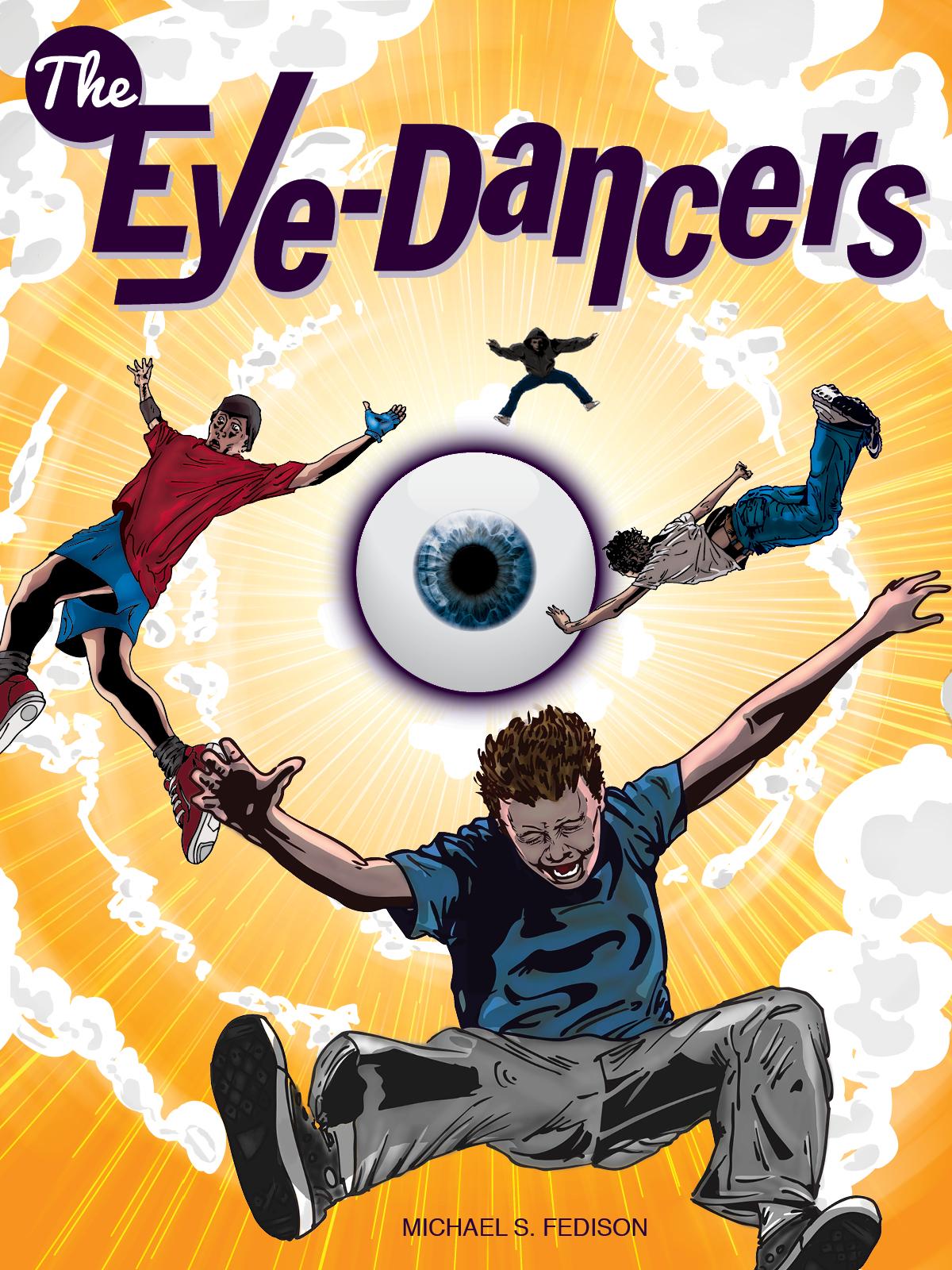
eye_dancers_lowresFirst and foremost, The Eye-Dancers is a story inspired by my own childhood, the friends I shared growing up, and the conversations we’d have about outer space, life “out there” . . . all sorts of stuff.  Combine that with my desire to write a book about adolescence, growing up, friendship, the very nature of reality, quantum physics and parallel worlds, and the oneness of all things—even things that seem so distant and removed—and you have the inspiration behind The Eye-Dancers!

Tell me about your main character. Was he based on someone you know (or yourself)?

Well, there are really four main characters—Mitchell Brant, Joe Marma, Ryan Swinton, and Marc Kuslanski.  They are all inspired by friends I knew when I was a kid.  So it was fun to write for these characters.  Mitchell is the character I can relate to the most—when I was his age, I shared many of his characteristics.  Like Mitchell, when I was in junior high, I was very shy around girls, had an overactive imagination, and loved old collectible comic books, especially The Fantastic Four.

Where do you go for inspiration when you’re feeling blocked?

The Twilight Zone is always a favorite, as is Ray Bradbury.  If I’m in a slump, I can pick up a Bradbury short story, get lost in the language, the imagination, the enthusiasm, and that almost always serves as a tonic when creativity is running low.

What’s the strangest thing that has ever inspired you?

I would have to say the “ghost girl” dream I had when I was a teenager.  I dreamed of a little girl, standing out in the road, beneath the streetlamp.  In the dream, it was late, well past midnight.  I looked out the window, and saw her.  She gestured for me to come outside.  But I felt afraid.  The light from the streetlamp filtered through her, as if she were more ghost than girl.  What did she want?  Why was she there?

I never discovered the answers, as I woke up shortly thereafter.  For weeks, I wanted to include this mysterious girl in a story—but nothing seemed to fit.  Finally, I decided to file her away in a “story vault,” and hope I would be able to write about her someday.

Fast-forward twenty years, and I experienced the same dream, of the same girl!  The difference?  This time, when I woke up, I had the start of a story idea in place.  That story would become The Eye-Dancers.

What are some books in your genre that have inspired you?

Can I skip over the genre part? 🙂  I love to read—all genres, fiction as well as nonfiction.  Truman Capote is one of my favorites—a master wordsmith.  Ray Bradbury is phenomenal—unparalleled imagination and love of writing.  To Kill a Mockingbird, A Separate Peace . . .  I could go on and on!

What are some words that you live by?

Reach for the stars.  Recognize your dreams, your calling, and go for it.  Don’t get discouraged when things veer off course, as surely they will.  They do for all of us.  The key is to keep dreaming, keep working, keep perfecting whatever it is you feel passionate about.  There is only one “you.”  Do what you love, find your voice, and share it.

Is there anything else you would like us to know?

I would just like to say that I write what I love, I write about the things that resonate for me.  That’s really all any writer can do.  Hopefully, by sharing the things that matter to me in the best way I know how, I can also make those same things matter to you.

Author Interview: Kendra Highley

author-picI’m excited to share my interview with today’s author – Kendra C. Highley. I had the pleasure of being one of the original reviewers for the first book of her Matt Archer series, and have been a huge fan ever since. For those who haven’t heard of the series, it’s about a boy who is chosen by a magical knife to become one of the world’s few monster hunters. It’s an action-packed, funny coming-of-age story under the most unusual circumstances, and I highly recommend checking it out. She recently published the latest book in the series, Matt Archer: Legend, and her contemporary YA novel, Sidelined, was picked up by Entangled Publishing and will be released this year.

Kendra was also one of the orginal reviewers of my novel, Into the Dark, and her advice was invaluable. Watching her star rising has been an inspiration for me, and I hope you feel the same after hearing about what motivates her in today’s interview.

Tell us a little about yourself.

I’m a wife and mom of two, and work as an HR manager during the day. I love to bake, read, write and vacation. Vacations don’t come often though, so I have to enjoy them while they last! I live in the Dallas area and I report to two cats. I’m their primary staff advisor (it was a promotion–I’m very proud).

What was your inspiration for your the Matt Archer series?

Matt Archer Legend 680x453Strangely, that’s easy for me to answer. I was at my first writers’ conference in 2009, and a published YA author was talking about Twilight and the dearth of “boy-centric” YA. She said, “Boys don’t want to fall in love with misunderstood vampires; they want to kick vampire butt!”  My son was 8 at the time, and a big reader, and my initial thought was to write a short story about a boy who saved his uncle from a monster…and the whole Matt-as-a-Monster-Hunter concept was born from that.

Tell me about Matt. Was he based on someone you know (or yourself)?

There are little bits and pieces of people I’ve known, but Matt’s really his own person. He was a very strong character in my head from the very beginning. Odd, since he’s a teenaged guy, and I’m neither. But I just had this connection with his voice and he formed through that.

Where do you go for inspiration when you’re feeling blocked?

I’d like to have a pithy answer…but usually I go to my pantry and snack. : )

What’s the strangest thing that has ever inspired you?

A bottle of Vicodin. I’d had to have my shoulder stitched up after an injury and that’s what the doctor prescribed. I’m very wary of prescription pain pills, and had just read an article about how they were the #1 abused drug among teens now. Out of that, Sidelined (Entangled, 2013) was born. It’s a story about an elite high school basketball player with scholarship opportunities. However, she gets seriously injured at the state tourney and can’t play anymore. She eventually becomes addicted to pain killers and much of the story is about her spiral down, and her struggle back out.

Tell us about an inspirational figure in your life.

My Dad. He read to me nearly every night when I was little. I arrived at Kindergarten able to read because of him. He encouraged my love of books from early on, and when I told him I planned to self-publish, he was right there to support me. My mother died when my sister and I were teenagers, so we just had Dad…he’s always there when we need him. And he’s super-smart, too. When he retired, he went back to school to get a Ph.D. in American History…because he had dreamed of doing it. He’s an inspiration.

What are some books in your genre that have inspired you?

This would be a long list, so I’ll limit it to five:  A Wrinkle in Time, Daughter of Smoke and Bone, Harry Potter and the Order of the Phoenix, Jackaroo, and Twisted.

What are some words that you live by?

Life’s too short not to eat chocolate. : )  But also “family first.” It’s really hard to work two jobs and juggle family life, but I try hard to take care of my family like they take care of me.

Is there anything else you would like us to know?

Writing is hard, and a lot of times you feel like giving up. I was lucky enough to meet Laurie Halse Anderson in 2011, and when she found out I was a writer, she signed my book cover with “P.S. Don’t Quit!!!!”  I took it to heart, and that made the tough times easier to deal with and the great times that much more rewarding.

If you are interested in self-publishing, there’s a great blog by Lindsay Buroker that can answer a lot of your questions.  She’s very generous with the knowledge she shares and, given her success, her advice works.  You can find her at www.lindsayburoker.com. <KP: I second Kendra’s recommendation. Lindsay’s blog is one of my favorite self-publishing resources.>

Author Interview: Rebecca Demarest

rebeccademarestToday Rebecca Demarest shares the inspiration behind the very unique voice of her novels, short stories, and blog. I had the pleasure of reading samples of her work, and her style is quick-paced and authentic. She isn’t afraid to tackle tough subjects with sensitivity and realism. After immersing myself in her writing, I was incredibly impressed by how driven she and prolific she is so early in her career.

Tell us a little about yourself.

I am a mild mannered technical illustrator by day and an author and book designer by night. My writing ranges from literary to speculative fiction, with an emphasis on bridging the gap between those two genres. I have a B.A. in English and Psychology from Willamette University and an M.F.A. in Creative Writing from Emerson College.

What was your inspiration for your novels, Undeliverable and Mark of the Storyteller?

CaptureUndeliverable was inspired by a random news story I heard talking about this mysterious Lost Letters Office—now the Mail Recovery Center—in the United States Postal Service. I was intrigued, and started digging into its history and its current operations. That was much harder than it would seem because no one at the Center is actually allowed to speak to civilians about anything and their monthly auctions are actually rather secretive (I was nearly arrested for taking pictures). But once I had a sense of what the Center did on a day-to-day basis, I started contemplating what kind of story could happen there, what kind of people would be drawn to it. After a couple years of research and free-writing, Ben slowly came into focus and his story took shape. A lot of the details of the characters themselves came from myself, my family, and my friends, which helped to make them real to me.

As for Mark of the Storyteller, this was actually inspired by my senior thesis class at Willamette University. It was a fantastic class about Grimm’s Fairy Tales and we were given the opportunity to either do a research paper on the tales or create our own unique re-interpretation of them. I leaped at the chance to do a creative English thesis as I was already weighed down with a research thesis in Psychology, and wrote a short story that eventually became the villain interview section at the beginning of Mark. The basic concept I had wanted to address was ‘What happens when the villain isn’t who we think it is, but is instead the one person we’re supposed to root for? And why do we have those misperceptions?’ Let me tell you, creating the world that all these characters live in and wreaking havoc on the stories and characters we know well was an immense amount of fun.

Where do you go for inspiration when you’re feeling blocked?

News sites, actually. Articles about bleeding glaciers, people hijacking barrels of maple syrup, or the fact that the ancient Egyptians made jewelry out of meteorites can all give my imagination a boost. Also, turning off your music and actually paying attention to the world around you while you walk, including eavesdropping on your fellow commuters, can provide some outlandish leads.

What’s the strangest thing that has ever inspired you?

The absolute strangest thing was an article about a lithopedion, or stone baby. A lithopedion is the result of an ectopic pregnancy that self terminates after the 14th week and the mother’s body calcifies the fetus to prevent it from causing harm to the mother. I couldn’t help it, the idea just grabbed hold of my brain and I couldn’t shake it, so I’ve got a short story in the works centering around this phenomenon.

Tell us about an inspirational figure in your life.

While I have found many of my writing instructors and friends inspirational, the woman who is the most inspirational would have to be my mother. She has not led the easiest of lives and has dealt with a series of genetic and environmentally induced health problems, many of which required surgery and extensive recoveries. But through all of this, she has never lost her sense of adventure, determination, or love. In fact, she started her first business just a couple years ago as a professional storyteller and has reached her five year goals, four years early. If she can deal with all of the health issues, two kids, and a husband who traveled extensively for work and come out the other side with enough energy to devote to a whole new career, then I can do anything.

What are some books in your genre that have inspired you?

This is a really hard question to answer because I read a lot of books each year. In the literary genre, I find the work of George Saunders, Scott Nadelson, Steve Yarbrough, Tom Perotta, and a handful of others to be greatly inspiring, mostly modern literary authors. In the speculative fiction genre, I draw a lot of inspiration from Tamora Pierce, Robert A. Heinlein, Patricia C. Wrede, Jasper Fforde, and Terry Pratchett.

What are some words that you live by?

Be and not seem. This is one of Emerson’s philosophies, and I’ve had it on my wall as long as I can remember. In my life and in my writing I try to stay true to myself and my ideals. Do not pretend you are a good person, let your work speak for itself. Do not pretend you are competent, actually go out and do the hard work to make it true.

Is there anything else you would like us to know?

I’ll be doing an Indiegogo campaign in November to help defray the last editing and marketing costs for Undeliverable, which will be launching in March of 2014. If you’d like to learn more about me or my writing, drop by my website at http://rebeccaademarest.com or follow me on Twitter @RebeccaDemarest.

The Art of Foreshadowing

“If in the first act you have hung a pistol on the wall, then in the following one it should be fired.” – Anton Chekov

shutterstock_90204550Being in the hands of a master of the craft of foreshadowing is one of the most rewarding parts of reading a great book. J.K. Rowling is such a master – there are incredible examples throughout the entire Harry Potter series. But by far my favorite is when we learn that Snape loved Harry’s mother in the final book of the series, Harry Potter and the Deathly Hallows. Rowling knew in book one that this was coming and laid clues throughout her series, from the color of Harry’s eyes to the hatred Snape had for Harry’s father, that made the payoff in book seven incredibly rewarding. It was one of those moments as an author where I shake my head and consider giving up the craft in the face of such genius.

Another example of excellent foreshadowing that I recently read is in Kendra C. Highley’s Matt Archer series. (I’ll be interviewing her in July, for those who would like to hear more.) I don’t want to give away any spoilers for those who haven’t read her latest book, but she had a creative idea that I haven’t seen before. Her character has a vision of himself with a strange marking, like a magical tattoo. It’s foreshadowing when he has the vision, then again when he gets the mark, because we know that he’ll be having some crazy adventures soon.

We all can’t be Rowling, but I do try to incorporate good foreshadowing into my writing – which invariably involves intense planning for my entire series, rather than planning book by book. This is my favorite part of the writing process – creating the overarching plot and identifying where the payoffs of each storyline will occur. It makes me feel like the master of my own little universe. For some great basic information and tips on foreshadowing I also like the advice in this All Write – Fiction Advice blog post.

But in the actual implementation of little clues throughout my series, I am constantly second guessing myself – are the hints too obvious, or too obtuse? It’s hard to find a balance between ‘It was a dark and stormy night’ and a little failed eye contact by a character at a key moment. What seems blatant to me as the author may be totally missed by an unsuspecting reader. So it’s critical that I have honest beta readers who can give me feedback.

Do you have any tips on how to implement foreshadowing well?

Author Interview: Jason Robbins

Jason RobbinsWhen I stumbled upon Jason Robbins’ post-apocalyptic fictional blog, Soulless, I planned to read a couple of entries out of curiosity because I haven’t had a lot of exposure to fictional blogs. Instead, I found myself following every step of his anti-hero’s journey. He has created a character who should be difficult to sympathize with, but somehow you can’t help rooting for. Add to that the mystery of what triggered the apocalypse and why there are any survivors at all, and you can understand why I ignored my toddler’s cries for milk for several minutes so I could finish reading the latest entry. After marathoning all of the blog entries in one sitting, I was interested in learning about Jason’s inspiration for Soulless and how he tackles the thorny writing challenges he encounters writing for this medium.

Tell us a little about yourself.

Well, I’m a native New Yorker.  Grew up in Queens and now I live in Manhattan.  I have a day job that I won’t bore you with. Suffice it to say, creativity isn’t a big part of it.  I’ve always loved writing, and this guy I worked with, who I’m good friends with now, was actually writing a novel on the side.  He always talked about it, seemed to derive a lot of joy from the process. So I thought, what the hell, let me take a stab.  Been writing fiction in one form or another ever since.  I love it.

What was your inspiration for your blog, Soulless?

Apocalypse NYCI always wanted to write an apocalypse tale, but the market is so saturated with them now, I figured, what’s the point?  But then this idea hit me – What if the protagonist has no interest in saving humankind or propagating the species?  What if he actually, if only subconsciously, wished for the apocalypse?  What would that story look like?  I think all of us, in our darkest moments, have wished everyone would just disappear.  This story takes that mentality to the extreme.  I think it’s pretty interesting to see someone start like that and then grow into something more.

Where do you go for inspiration when you’re feeling blocked?

I don’t want to jinx myself, but I’ve never actually experienced writer’s block in the seriously debilitating sense of the term.  If anything, I have more ideas than I have time to devote to them.  But, when I’m in the middle of a story, and I’m not sure where to take the proceedings next, I usually let the characters do the work for me.  I think about what that character or someone I know like that character would do next.  What’s the next logical step that character would take?  It helps shape the story more organically than if you plan out a bunch of plot points and drag the characters kicking and screaming through them.

What’s the strangest thing that has ever inspired you?

It’s funny, I had started writing the first post for Soulless, and I was walking down the street – don’t really remember where I was headed – and I came upon this sign someone had put up against a work-fence.  You run into weird things all the time in New York; in this case, someone had scrawled “What if when you die, they ask how was heaven?” on a piece of cardboard and propped it up.  And there were people streaming by all around me, but it happened that no one was right in front of this thing, so I took a picture, and it really looked like the city had been abandoned and someone left this sign there.  And that’s how I came up with the idea for the Messenger, one of the major antagonists in Soulless, a killer that leaves cryptic religious messages around post-apocalyptic Manhattan.  I even posted the pic on the site as his first message.

Tell us about an inspirational figure in your life.

My little cousin Alexis is the inspiration for the character of Emily in Soulless.  She’s a bit older than Emily now, but she’s adorable, charismatic, smart as a whip, and a brilliant writer for her age.  I’m a flawed person, but whenever I’m around her and her brother, Jesse, I always strive to be the best version of me that I can be.  I figure if anyone could bring out the good in my protagonist, it would be someone like Alexis.

What are some words that you live by?

I think Van Wilder said it best when paraphrasing Elbert Hubbard: “You shouldn’t take life too seriously.  You’ll never get out of it alive.”   If you’re looking for some words to write by, you can’t go wrong with Alfred Hitchcock’s “Drama is life with the dull bits cut out.”  I always try to keep that in the back of my mind while writing, and it helps streamline the stories immensely.

Is there anything else you would like us to know?

Yes, if you have a writer in your life, be gentle.  It’s not easy putting yourself out there in front of family, friends and the public.  Your support can give them the courage to endure and to succeed.

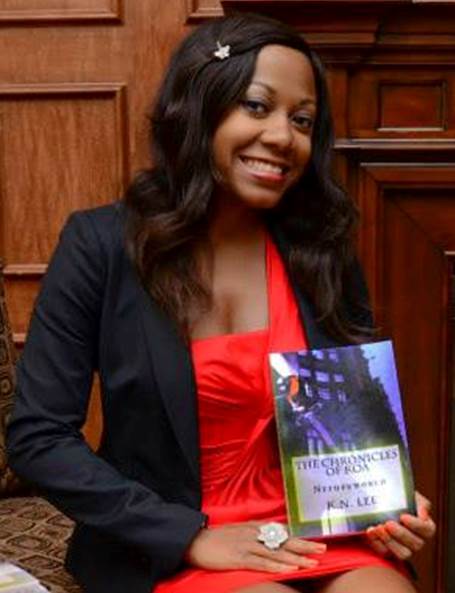
Author Interview: K.N. Lee

K.N. LeeThe first author in my new interview series is K.N. Lee, a talented up-and-coming young writer who has already self-published a novel, a book of short stories and a book of poetry. Her work, which is both creative and achieves a depth of emotion, is riveting. I’ll also admit that I’m drawn to her newest novel because it stars a strong female heroine who can take care of herself (and kick a little butt when the occasion calls for it, too). Clearly, she knows quite a bit about how to channel her muse.

Tell us a little about yourself.

I was born in Chicago, Illinois, raised in Atlanta, and currently live in Charlotte. I discovered my love for writing when I was in the second grade. Obsessed with books, I decided to create my own. I’d write a story, draw the pictures, and then cut up cardboard and wrap it in wall paper to make my book a hard back. It was the only thing I enjoyed. You’d have to force me to play outside. I just wanted to write!

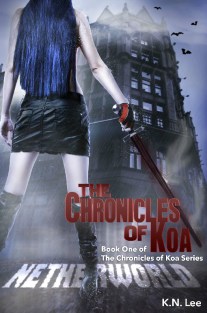
What was your inspiration for your newly released novel, The Chronicles of Koa?

The Chronicles of KoaThe inspiration for Koa came from a nightmare that I had. Not only that, but I love characters that may look small and nonthreatening, but can indeed be the most dangerous person in the room. There are many factors that went into creating The Chronicles of Koa. I grew up an Anne Rice fan, and I fully believe that she has the best vampire lore. So, what did I do? I created my own version of vampire, completely re-imagined. I didn’t stop there. As a high-fantasy fan and writer, I also created my own creatures and classes. Syths, Scayors, War-Breeders, Jems…they add an unexpected element to the story. You’ve never heard of them before, so the intrigue is heightened in my story.

Where do you go for inspiration when you’re feeling blocked?

Whenever I’m feeling blocked, I do a variety of things. Sometimes I’ll take a nice long walk with my iPod and my dog. Other times, I’ll take a yoga class or play video games (believe it or not, but video games are excellent inspiration!) Above all, I always go back to my desk and simply…write. It may feel forced at times. You may feel like it is a chore, but for me, I usually end up surprised by what I come up with. That blocked feeling has been conquered!

What’s the strangest thing that has ever inspired you?

Umm…OK…here goes. I had an experience with what I feel was a ghost. I was a child, and as I look back at the experience, I am no longer sure what happened. All I know, is that something grabbed my leg when I was trying to fall asleep. That moment, as horrifying, and as quick as it happened, started a traumatizing period in my life. I didn’t tell anyone what happened for years, for fear that whatever had grabbed me might still be watching me, and might try again. So, I took that fear and used it to my advantage. In silence, I instilled that feeling of absolute terror and let my characters use it. Such a real emotion gave my characters life.

Tell us about an inspirational figure in your life.

Tolkien is such an inspiration. He showed us that you don’t have to recycle the same creatures that have been used for centuries, and created his own. I do this myself. I may use elves sometimes, or vampires, but I also create my own creatures. In Koa, you’ll learn about Jems, War-Breeders, etc. In my high-fantasy trilogy, Rise of the Flame, you’ll see Tryans. The power of creation is exactly why I love writing so much.

What are some words that you live by?

If you have to choose between a material good or an experience, always go with the experience. Don’t get me wrong, I love to shop! However, if I have a chance to travel, see a show, or hang out with friends, I’ll always pick the latter.

Is there anything else you would like us to know?

I suppose I would like everyone to know that even though I am always cheerful, bubbly, and giggly, there is a darker, more serious, side to me that fuels my stories. I don’t hold back in my writing, and I fear that I truly live through my characters. Who knows, pick up The Chronicles of Koa, Wicked Webs, or Thicker Than Blood on Amazon…I might just surprise you.

Calling All Authors – What Inspires You?

open book2One of the reasons that I started this blog was to learn how other authors and artists find inspiration. I want to hear about your journey to creating your masterpiece – what got you started and what keeps pushing you forward. To that end, I’m inviting any authors who would like to be interviewed on my blog to contact me using the form below.

← Back

Thank you for your response. ✨

Adapting The Hero’s Journey for a Heroine

Heroesjourney_svgThe hero’s journey (also called the monomyth), outlined by Joseph Campbell in The Hero with a Thousand Faces, identifies common elements in stories from around the world, particularly myths and quest tales. I’ve been fascinated with the concepts Campbell defined since I first encountered his book, and I immediately wondered how it could be adapted for a heroine.

It has been pointed out by others (Maureen Murdock’s book The Heroine’s Journey and an awesome blog post on the FANgirl blog, for example) that the outline of the hero’s journey is inherently sexist. While I don’t dispute the truth of that argument, as a writer I’m less concerned with analyzing the pattern outlined by Campbell and more interested in how it can make my own stories richer. Being too strict in following each step in a particular order can stifle any good book, and in particular with a heroine, it’s critical to be flexible and adapt this outline to maximize its effectiveness.

Campbell’s pattern is split into three pieces, each with sub steps – the departure, initiation and return. I have found with The Conjurors series that it is helpful to have these three elements as a basic outline for each book as well as the series as a whole. It helps me to keep my thoughts organized and to keep the adventure exciting. Below I walk through how each of these steps can work for a heroine, including examples of modern young adult fantasy heroines who have walked the walk.

The first section, Departure, has five subsections:

The Call to Adventure
The moment when the heroine discovers that something exciting is in store for her is one of my favorite moments to write. Suddenly her world expands and the possibilities seem endless. A great example of a heroine’s call to adventure is in The Scorpio Races by Maggie Stiefvater, when Puck Connolly realizes that one way to earn the money she needs to support her family is join the incredibly dangerous Scorpio Races as the first girl to ever compete.

Refusal of the Call
As tempting as the new adventure may be, the heroine usually doubts her ability or desire to embark on the incredible journey. This can be an especially powerful step for heroines, who may have more insecurities or a greater sense of duty to parents or even their own children than male heroes. Veronica Roth does a great job with this in Divergent. In this novel, society splits everyone into different factions based on a different virtue. Tris was raised in Abnegation (where everyone is selfless) but has the opportunity to join the Dauntless community (where bravery is cultivated). Leaving her life and family behind is an incredibly difficult choice, and makes the stakes high for her when she takes the leap into a new life.

Supernatural Aid
Of course, there would be no story if the heroine didn’t ultimately accept the adventure thrust upon her. Once she does, there is usually a guide or mentor who gives her advice and help – sometimes even an object that can be used to help her on her quest. Coming up with creative talismans and mentors for a heroine can be incredibly fun. In Amanda Hocking’s Trylle Trilogy, the mentor, Finn Holmes, is also the heroine’s love interest. The dynamic changes between them from as the series progresses so that they are on more equal footing, but early  in the series he is her guide into a new world of magic where she will be a leader.

silhouette2The Crossing of the First Threshold
This is the moment when the heroine leaves the known for the unknown. She leaves behind who she was to embrace who she could be. In Divergent, Tris literally takes a leap of faith and jumps off of a moving train onto a roof, and then off the roof into a hole. She doesn’t know what’s down there, but she knows she’s leaving her old life behind for a new adventure.

Belly of The Whale
Now officially on her quest, the heroine gets her first taste of the danger that she will be facing. Often this can be a threat or a fight that really shows her what her limitations are. We know Katniss is really in the belly of the whale in Suzanne Collins’ Hunger Games when she enters the arena and all of the competitors begin killing each other as they fight for a pile of food and weapons on the first day of the games. She narrowly escapes being killed herself, and the survival of the fittest begins.

The second section, Initiation, has six subsections:

shutterstock_136940549The Road of Trials
All heroines must undergo trials to prove they are worthy of their quest, and also to get them ready for the journey ahead of them. These tests can be physical tasks, but often they have a deeper meaning for the character and help develop them into a stronger person emotionally as well. In Lauren Oliver’s trilogy, beginning with Delirium, she does a creative job of the road of trials for her heroine, Lena. Lena doesn’t have to face physical tests, but rather emotional trials to open her up to the possibility that love is not a disease, as she has been raised to believe. She opens herself up to friendship and ultimately love, making herself vulnerable and sharing her past and present feelings.

The Meeting With the Goddess
Several of the steps in the Initiation section are particularly geared toward male protagonists, beginning with the meeting with the goddess. This is traditionally about a hero finding the unconditional love of a woman who is worthy to be his companion. But for a heroine, this step can be abstracted, which in my opinion makes it more interesting. The importance of this step is about the heroine realizing the importance of finding a love that is the ultimate inspiration for her adventure. Whether it’s romantic or platonic, it can be the beating heart of story. P.C. and Kristin Cast also used this step in a very different capacity in their House of Night series. The heroine, Zoey, has a literal encounter with the goddess Nyx, who identifies her as special. It is her first clue that she will be different from other vampyres and has an important destiny to fulfill.

Woman as Temptress
This can be a very frustrating step if you take it too literally. For traditional heroes, there will typically be a woman who tempts him to abandon his quest for her, or distracts him from what’s really important. But for the heroine, it doesn’t need to be a man (or woman) or even a sexual distraction. To me, this element is about tempting your heroine to take the easy way out. For Rose in Richelle Mead’s Vampire Academy, she is tempted a number of times. First, she is tempted to have a relationship with Dimitri, even though it would be a major distraction from protecting her best friend. Later, when Dimitri is turned into an evil vampire called Strigoi, she is tempted to abandon her duty to kill him and love him instead.

Atonement with the Father
This is another step that needs some serious reconstruction for a heroine. I think of this step as the heroine’s confrontation with someone who has a lot of power over her. It is time to fight that person and cast of the shackles. Sometimes it can be the big battle with the major villain of the series, but it can also be the person who makes the heroine doubt herself. In Kristin Cashore’s Graceling, for example, Katsa, who is gifted with the ability to fight to survive, has been working as her uncle’s thug, killing off his enemies. He manipulates and uses her from a young age, and when she finally announces that she is done doing his bidding by detailing how she would kill every single one of his guards if they all tried to stop her at once, I felt like cheering.

shutterstock_136883615Apotheosis
The heroine always has a divine moment separate from her adventure that is a turning point for her. Sometimes it is a brush with death, and other times it is having a moment of peace and clarity where she can regroup and prepare for the final leg of her adventure. Madeleine L’Engle does a great job of doing both with her heroine, Meg, toward the end of A Wrinkle in Time. Meg is nearly killed and left paralyzed when she travels through the Black Thing that represents evil. But her paralysis is cured by a gentle creature she calls “Aunt Beast” who allows Meg to find both physical and mental peace. She needs this moment of emotional stability to face the ultimate evil and rescue her brother from it.

The Ultimate Boon
After facing her demons and conquering the villain, the heroine is rewarded for what she has achieved. For Campbell, this is usually an item or piece of knowledge that his hero is meant to bring back to the rest of humanity. But in modernizing this step for a heroine, the ultimate boon can be the achievement of their heart’s desire, such as love or a new confidence. At the end of Melissa Marr’s Wicked Lovely, Aislinn becomes the Summer Queen after facing her greatest fear – becoming fey (fairies), which she has always believed are evil. Ultimately, she risks exile to save a group she has always hated because she knows it is the right thing to do.

The final section, Return, also has six subsections:

Refusal of the Return
After the journey is over, it is natural for the heroine to not be able to imagine returning to regular life. There is a resistance to abandoning the quest even after it is complete. Despite the reluctance with which she started , now she doesn’t want to accept its end. A wonderful example of a refusal to return is in the first of the Thursday Next series by Jasper Fforde, The Eyre Affair. The heroine, Thursday, is pulled into the novel Jane Eyre, where she has to protect the characters from being hurt or killed. But understandably, she loves the story and admires the hero, Mr. Rochester, and even though she knows her return to the real world is necessary and inevitable, she can’t help feeling a pull to the characters she has grown to care about even more than she already did to begin with.

The Magic Flight
Even after the heroine realizes that she must return to reality, the adventure isn’t completely over. The return trip usually includes a few final surprises for the heroine. Marie Lu does an amazing job of the flight in the first of her trilogy, Legend. The heroine, June, has already realized that the boy she thought killed her brother is actually innocent (and she is falling in love with him). Her realization and change of heart is the true climax of the book, but helping him escape is an awesome final adventure as they outwit guards and barely escape after a thrilling chase. Her story isn’t fantasy, so it isn’t a magic flight, but it does an excellent job of adapting this step for a modern heroine.

Rescue from Without
An adventure of this magnitude has to have consequences. Despite her victory, an emotional or physical toll was taken on the heroine. She isn’t able to recuperate on her own. At the end of The Hunger Games trilogy, Katniss is almost insane from all of the horror she has witnessed and her grief over losing her sister. But with the help of Peeta, her true love, she is able to reclaim her mind and live her life. The tragedy of what she has experienced doesn’t vanish, but she is able to find some measure of happiness again.

The Crossing of the Return Threshold
Every great adventure must come to an end. But for the heroine, she has been changed, and her return to life as she knows it means bringing with her the knowledge she has gained on her journey. Philip Pullman has a powerful moment of crossing the return threshold for his heroine, Lyra, at the conclusion of the His Dark Materials trilogy. In the context of the story, there are many parallel worlds that are connected by windows. At the end of the story, these windows must all be closed between the different worlds. Lyra and the boy she loves, Will, come from different worlds and must each return to their own in order to live full lives. As a result, when Lyra returns to her world, she is leaving behind the love of her life. It is at once empowering and heartbreaking.

shutterstock_58598566Master of Two Worlds
At the end of the quest the heroine has found a new balance in her life. It may be abstract – a better grasp of how to balance conflicting elements in her life. Or it can be literal, where the heroine is part of both the world she started in at the beginning of her journey as well as the new world that she explored on her adventure. Aislinn in Wicked Lovely is also a great example of being a master of two worlds. She has one foot in the mortal world, and the other with the fey as queen of the summer court. This means balancing her mortal friends and boyfriend (never mind school) with her duties to protect her people. It is a complex opportunity and challenge rolled into one.

Freedom to Live
At the end of the adventure, the heroine is fundamentally changed. She has a confidence in herself and her abilities, and is at peace with the trials she has gone through. She now has the freedom to live and enjoy her life. Katsa in Graceling chooses to live in the woods with the love of her life and ignore the rest of the world. Rose in Vampire Academy is no longer bonded to her friend Lissa, so she can live her own life with her soul mate. Katniss in the Hunger Games has finally left behind the brutality of life before the revolution that she inspired and can have a life and love of her own.

Some of these sections are more difficult to adapt for a heroine than others. I allow myself to ignore certain elements as it suits the story, or radically change them in other cases. Ultimately this is a tool to help you think of new ideas and complications that can make your story more interesting.

Have you ever used the Hero’s Journey as a model for your story? If so, how did it work out for you?