
 The hero’s journey (also called the monomyth), outlined by Joseph Campbell in The Hero with a Thousand Faces, identifies common elements in stories from around the world, particularly myths and quest tales. I’ve been fascinated with the concepts Campbell defined since I first encountered his book, and I immediately wondered how it could be adapted for a heroine.
It has been pointed out by others (Maureen Murdock’s book The Heroine’s Journey and an awesome blog post on the FANgirl blog, for example) that the outline of the hero’s journey is inherently sexist. While I don’t dispute the truth of that argument, as a writer I’m less concerned with analyzing the pattern outlined by Campbell and more interested in how it can make my own stories richer. Being too strict in following each step in a particular order can stifle any good book, and in particular with a heroine, it’s critical to be flexible and adapt this outline to maximize its effectiveness.
Campbell’s pattern is split into three pieces, each with sub steps – the departure, initiation and return. I have found with The Conjurors series that it is helpful to have these three elements as a basic outline for each book as well as the series as a whole. It helps me to keep my thoughts organized and to keep the adventure exciting. Below I walk through how each of these steps can work for a heroine, including examples of modern young adult fantasy heroines who have walked the walk.
The first section, Departure, has five subsections:
The Call to Adventure
The moment when the heroine discovers that something exciting is in store for her is one of my favorite moments to write. Suddenly her world expands and the possibilities seem endless. A great example of a heroine’s call to adventure is in The Scorpio Races by Maggie Stiefvater, when Puck Connolly realizes that one way to earn the money she needs to support her family is join the incredibly dangerous Scorpio Races as the first girl to ever compete.
Refusal of the Call
As tempting as the new adventure may be, the heroine usually doubts her ability or desire to embark on the incredible journey. This can be an especially powerful step for heroines, who may have more insecurities or a greater sense of duty to parents or even their own children than male heroes. Veronica Roth does a great job with this in Divergent. In this novel, society splits everyone into different factions based on a different virtue. Tris was raised in Abnegation (where everyone is selfless) but has the opportunity to join the Dauntless community (where bravery is cultivated). Leaving her life and family behind is an incredibly difficult choice, and makes the stakes high for her when she takes the leap into a new life.
Supernatural Aid
Of course, there would be no story if the heroine didn’t ultimately accept the adventure thrust upon her. Once she does, there is usually a guide or mentor who gives her advice and help – sometimes even an object that can be used to help her on her quest. Coming up with creative talismans and mentors for a heroine can be incredibly fun. In Amanda Hocking’s Trylle Trilogy, the mentor, Finn Holmes, is also the heroine’s love interest. The dynamic changes between them from as the series progresses so that they are on more equal footing, but early in the series he is her guide into a new world of magic where she will be a leader.
 The Crossing of the First Threshold
This is the moment when the heroine leaves the known for the unknown. She leaves behind who she was to embrace who she could be. In Divergent, Tris literally takes a leap of faith and jumps off of a moving train onto a roof, and then off the roof into a hole. She doesn’t know what’s down there, but she knows she’s leaving her old life behind for a new adventure.
Belly of The Whale
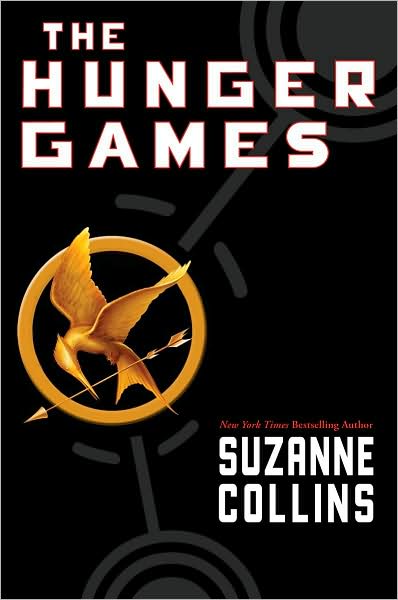
Now officially on her quest, the heroine gets her first taste of the danger that she will be facing. Often this can be a threat or a fight that really shows her what her limitations are. We know Katniss is really in the belly of the whale in Suzanne Collins’ Hunger Games when she enters the arena and all of the competitors begin killing each other as they fight for a pile of food and weapons on the first day of the games. She narrowly escapes being killed herself, and the survival of the fittest begins.
The second section, Initiation, has six subsections:
 The Road of Trials
All heroines must undergo trials to prove they are worthy of their quest, and also to get them ready for the journey ahead of them. These tests can be physical tasks, but often they have a deeper meaning for the character and help develop them into a stronger person emotionally as well. In Lauren Oliver’s trilogy, beginning with Delirium, she does a creative job of the road of trials for her heroine, Lena. Lena doesn’t have to face physical tests, but rather emotional trials to open her up to the possibility that love is not a disease, as she has been raised to believe. She opens herself up to friendship and ultimately love, making herself vulnerable and sharing her past and present feelings.
The Meeting With the Goddess
Several of the steps in the Initiation section are particularly geared toward male protagonists, beginning with the meeting with the goddess. This is traditionally about a hero finding the unconditional love of a woman who is worthy to be his companion. But for a heroine, this step can be abstracted, which in my opinion makes it more interesting. The importance of this step is about the heroine realizing the importance of finding a love that is the ultimate inspiration for her adventure. Whether it’s romantic or platonic, it can be the beating heart of story. P.C. and Kristin Cast also used this step in a very different capacity in their House of Night series. The heroine, Zoey, has a literal encounter with the goddess Nyx, who identifies her as special. It is her first clue that she will be different from other vampyres and has an important destiny to fulfill.
Woman as Temptress
This can be a very frustrating step if you take it too literally. For traditional heroes, there will typically be a woman who tempts him to abandon his quest for her, or distracts him from what’s really important. But for the heroine, it doesn’t need to be a man (or woman) or even a sexual distraction. To me, this element is about tempting your heroine to take the easy way out. For Rose in Richelle Mead’s Vampire Academy, she is tempted a number of times. First, she is tempted to have a relationship with Dimitri, even though it would be a major distraction from protecting her best friend. Later, when Dimitri is turned into an evil vampire called Strigoi, she is tempted to abandon her duty to kill him and love him instead.
Atonement with the Father
This is another step that needs some serious reconstruction for a heroine. I think of this step as the heroine’s confrontation with someone who has a lot of power over her. It is time to fight that person and cast of the shackles. Sometimes it can be the big battle with the major villain of the series, but it can also be the person who makes the heroine doubt herself. In Kristin Cashore’s Graceling, for example, Katsa, who is gifted with the ability to fight to survive, has been working as her uncle’s thug, killing off his enemies. He manipulates and uses her from a young age, and when she finally announces that she is done doing his bidding by detailing how she would kill every single one of his guards if they all tried to stop her at once, I felt like cheering.
 Apotheosis
The heroine always has a divine moment separate from her adventure that is a turning point for her. Sometimes it is a brush with death, and other times it is having a moment of peace and clarity where she can regroup and prepare for the final leg of her adventure. Madeleine L’Engle does a great job of doing both with her heroine, Meg, toward the end of A Wrinkle in Time. Meg is nearly killed and left paralyzed when she travels through the Black Thing that represents evil. But her paralysis is cured by a gentle creature she calls “Aunt Beast” who allows Meg to find both physical and mental peace. She needs this moment of emotional stability to face the ultimate evil and rescue her brother from it.
The Ultimate Boon
After facing her demons and conquering the villain, the heroine is rewarded for what she has achieved. For Campbell, this is usually an item or piece of knowledge that his hero is meant to bring back to the rest of humanity. But in modernizing this step for a heroine, the ultimate boon can be the achievement of their heart’s desire, such as love or a new confidence. At the end of Melissa Marr’s Wicked Lovely, Aislinn becomes the Summer Queen after facing her greatest fear – becoming fey (fairies), which she has always believed are evil. Ultimately, she risks exile to save a group she has always hated because she knows it is the right thing to do.
The final section, Return, also has six subsections:
Refusal of the Return
After the journey is over, it is natural for the heroine to not be able to imagine returning to regular life. There is a resistance to abandoning the quest even after it is complete. Despite the reluctance with which she started , now she doesn’t want to accept its end. A wonderful example of a refusal to return is in the first of the Thursday Next series by Jasper Fforde, The Eyre Affair. The heroine, Thursday, is pulled into the novel Jane Eyre, where she has to protect the characters from being hurt or killed. But understandably, she loves the story and admires the hero, Mr. Rochester, and even though she knows her return to the real world is necessary and inevitable, she can’t help feeling a pull to the characters she has grown to care about even more than she already did to begin with.
The Magic Flight
Even after the heroine realizes that she must return to reality, the adventure isn’t completely over. The return trip usually includes a few final surprises for the heroine. Marie Lu does an amazing job of the flight in the first of her trilogy, Legend. The heroine, June, has already realized that the boy she thought killed her brother is actually innocent (and she is falling in love with him). Her realization and change of heart is the true climax of the book, but helping him escape is an awesome final adventure as they outwit guards and barely escape after a thrilling chase. Her story isn’t fantasy, so it isn’t a magic flight, but it does an excellent job of adapting this step for a modern heroine.
Rescue from Without
An adventure of this magnitude has to have consequences. Despite her victory, an emotional or physical toll was taken on the heroine. She isn’t able to recuperate on her own. At the end of The Hunger Games trilogy, Katniss is almost insane from all of the horror she has witnessed and her grief over losing her sister. But with the help of Peeta, her true love, she is able to reclaim her mind and live her life. The tragedy of what she has experienced doesn’t vanish, but she is able to find some measure of happiness again.
The Crossing of the Return Threshold
Every great adventure must come to an end. But for the heroine, she has been changed, and her return to life as she knows it means bringing with her the knowledge she has gained on her journey. Philip Pullman has a powerful moment of crossing the return threshold for his heroine, Lyra, at the conclusion of the His Dark Materials trilogy. In the context of the story, there are many parallel worlds that are connected by windows. At the end of the story, these windows must all be closed between the different worlds. Lyra and the boy she loves, Will, come from different worlds and must each return to their own in order to live full lives. As a result, when Lyra returns to her world, she is leaving behind the love of her life. It is at once empowering and heartbreaking.
 Master of Two Worlds
At the end of the quest the heroine has found a new balance in her life. It may be abstract – a better grasp of how to balance conflicting elements in her life. Or it can be literal, where the heroine is part of both the world she started in at the beginning of her journey as well as the new world that she explored on her adventure. Aislinn in Wicked Lovely is also a great example of being a master of two worlds. She has one foot in the mortal world, and the other with the fey as queen of the summer court. This means balancing her mortal friends and boyfriend (never mind school) with her duties to protect her people. It is a complex opportunity and challenge rolled into one.
Freedom to Live
At the end of the adventure, the heroine is fundamentally changed. She has a confidence in herself and her abilities, and is at peace with the trials she has gone through. She now has the freedom to live and enjoy her life. Katsa in Graceling chooses to live in the woods with the love of her life and ignore the rest of the world. Rose in Vampire Academy is no longer bonded to her friend Lissa, so she can live her own life with her soul mate. Katniss in the Hunger Games has finally left behind the brutality of life before the revolution that she inspired and can have a life and love of her own.
Some of these sections are more difficult to adapt for a heroine than others. I allow myself to ignore certain elements as it suits the story, or radically change them in other cases. Ultimately this is a tool to help you think of new ideas and complications that can make your story more interesting.
Have you ever used the Hero’s Journey as a model for your story? If so, how did it work out for you?












 Kristen Pham