The 5 best YA science fiction and fantasy books with top-tier romantic banter

Let’s be honest. Saving the world from impending doom is great and all, but we’re really here for the banter. The snark and spark that keeps us turning pages. My favorite part of any book is that electric, snappy dialogue between two characters who refuse to admit they like each other (and are fooling no one).

A common misconception is that “banter” is just two characters insulting each other until they fall in love. But true, top-tier banter is so much more than that. It’s a verbal dance between two partners who are intellectual equals and can’t help but respect each other. It can be a non-cheesy way to share those vulnerable, mushy feelings that we secretly yearn to witness. And most importantly, it shows the deep attention that two characters show each other. We all want to be seen and known, and watching two brilliant characters do just that is a heady experience.

If you love a snappy, sparks-flying, fast-paced dialogue as much as I do, here are the best young adult science fiction and fantasy books for top-tier romantic banter, mixing my all-time favorites with some of my newer obsessions.
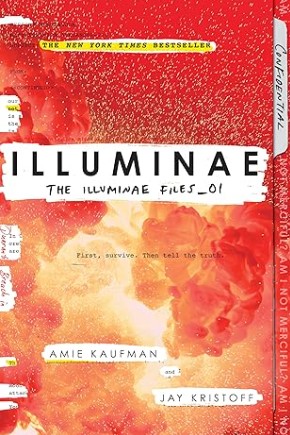
Book cover for Illuminae by Amie Kaufman and Jay Kristoff

Illuminae by Amie Kaufman and Jay Kristoff

The main characters in this story break up hours before their planet is invaded. Because the story is told entirely through hacked documents and instant messages, their banter carries the emotional weight of the story. It’s hilarious, desperate, and deeply affectionate mix of teenage angst and life-or-death survival.
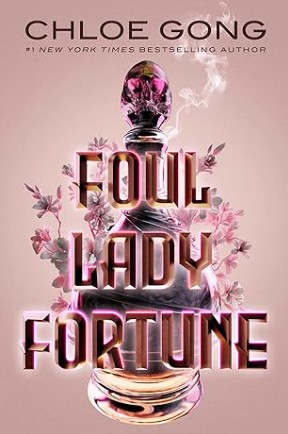
Cover image for Foul Lady Fortune by Chloe Gong

Foul Lady Fortune by Chloe Gong

This is the fake-marriage trope at its best. Rosalind is a rigid assassin; Orion is a charming flirt. Their banter works because Orion uses humor to disarm Rosalind, but underneath the sharp retorts, they are both fiercely intelligent and highly observant of each other’s hidden trauma.
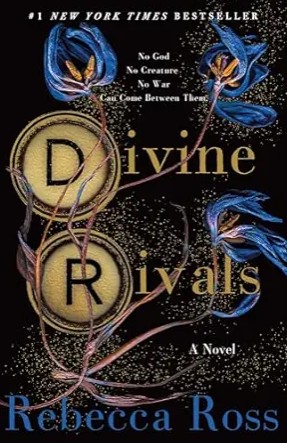
Cover image for Divine Rivals by Rebecca Ross

Divine Rivals by Rebecca Ross

If you’ve read it, you get it. Two rival journalists writing magical, anonymous letters to each other during a war between gods. The banter is sharply intelligent, competitive, and highly observant. They push each other to be better writers and braver people, making the transition from rivals to lovers incredibly soft and believable.
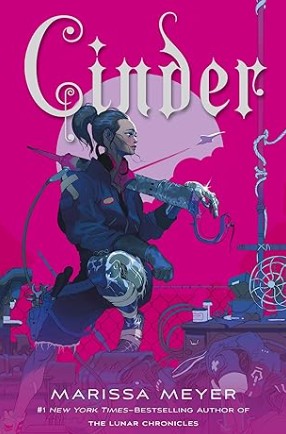
Cover image for Cinder by Marissa Meyer

Cinder by Marissa Meyer

Cinder is a sarcastic cyborg mechanic with zero time for royal protocol, and Prince Kai is utterly charmed by someone who doesn’t treat him like a porcelain doll. Their back-and-forth is rooted in mutual respect and curiosity, grounding their romance is reality.
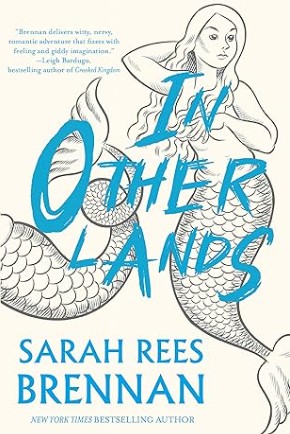
Cover image for In Other Lands by Sarah Rees Brennan

In Other Lands by Sarah Rees Brennan

This is a portal fantasy that pokes fun at portal fantasies. The main character, Elliot, is an unapologetic, pacifist, know-it-all who uses his biting wit as both a weapon and a shield. His banter with his love interest, Serene, is a masterclass in challenging fantasy tropes while building a tender connection.
Sidekicks with main character energy

As a writer, there’s a secret, terrifying, and exhilarating thing that can happen while you’re drafting: a character you intended for a minor role walks into a scene and refuses to leave.

They show up with a fully-formed voice, a riveting backstory you never planned, and a perspective so compelling it threatens to derail your carefully crafted plot. They aren’t just supporting the protagonist anymore; they feel like the hero of a different, fascinating story that’s happening just off-page.

That’s what I call “Main Character Energy.” It’s more than just being a fan favorite. It’s the powerful sense that a character has their own complete, vibrant world spinning within the larger narrative. Here are three secondary characters who radiate that energy, making their books infinitely richer.

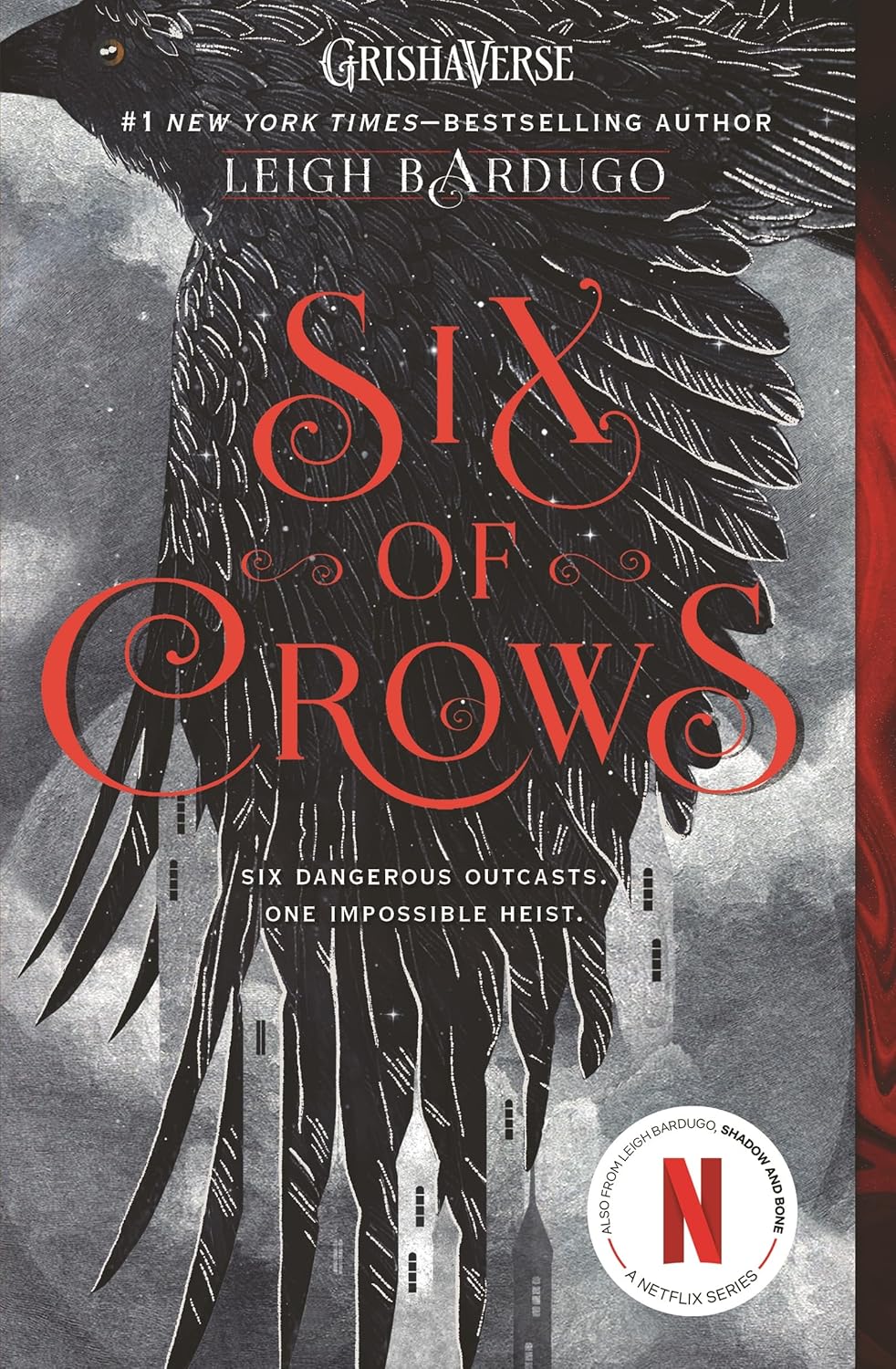
1. Inej Ghafa from Six of Crows by Leigh Bardugo

Kaz Brekker may be the mastermind, but Six of Crows is arguably Inej Ghafa’s story of reclamation. A girl of Suli heritage sold into indenture, her quest isn’t about money; it’s about buying back her own life and hunting the slavers who stole it. Her entire arc is a classic hero’s journey of confronting trauma and forging a new identity, happening in the shadow of a heist. You get the feeling that if the book followed only her, it would be just as compelling, if not more so. She is the moral center, and her quiet, deadly grace makes her the novel’s true gravitational pull.

2. Kenji Kishimoto from the Shatter Me series by Tahereh Mafi

Kenji isn’t just the comic relief; he’s the narrator of the story we wish we were reading sometimes. In a series defined by intense romance and angst, Kenji is the only one with enough perspective to see the utter absurdity of their situation, and he’s not afraid to say it. His Main Character Energy comes from the fact that he has a life, a history, and responsibilities—leading the soldiers of Sector 45—that exist completely outside of the main love triangle. He’s the protagonist of a gritty, found-family story about survival that just happens to intersect with Juliette’s epic romance.

3. Nico di Angelo from the Heroes of Olympus series by Rick Riordan

Nico’s power comes from the fact that his most important character development happens between books, in the shadows. We see the cheerful, myth-obsessed kid, and then we see the brooding, immensely powerful Son of Hades. His transformation is so profound that it forces us to imagine the harrowing solo journey he undertook. As a gay Italian demigod from the 1940s, he is a man out of time and out of place, everywhere he goes. He’s the protagonist of a dark, gothic tragedy who occasionally wanders into Percy Jackson’s sunnier adventure story, reminding us that the world is much bigger and scarier than we thought.


These are the characters who prove that a story’s magic doesn’t always come from the person on the cover. They remind us that every person on the street has a life as vivid and complex as our own.

Beyond the pale elf: 5 fantasy recs with representation

And hey, I love that guy! But when that’s the only model available, a lot of us are left staring at the screen thinking, “Uh, none of these look like me.” You can’t find your reflection, and it’s hard to feel like the hero of the story when you can’t even see yourself on the screen.

This is why we talk about books as “mirrors and windows”—they give us a chance to see ourselves (a mirror) and to understand someone else’s world (a window). Thankfully, today’s authors are blowing the doors off the old character creator. They’re adding every possible option, background, and skill tree, finally making fantasy a world where everyone can be the hero.

If you’re looking for amazing adventures with fully expanded character-creation sliders, here are five books that are getting it right.

1. Emily Wilde’s Encyclopaedia of Faeries by Heather Fawcett

This cozy and brilliant adventure offers a mirror for anyone who’s ever felt more at home with books than with people. The protagonist, Emily Wilde, is a genius Cambridge scholar who is logical, driven, and—to put it mildly—socially awkward, and she is widely embraced by readers as a fantastic representation of neurodiversity. Her academic approach to studying dangerous fae is a hilarious and heartwarming window into a mind that works differently, proving that methodical rigor can be its own kind of magic.

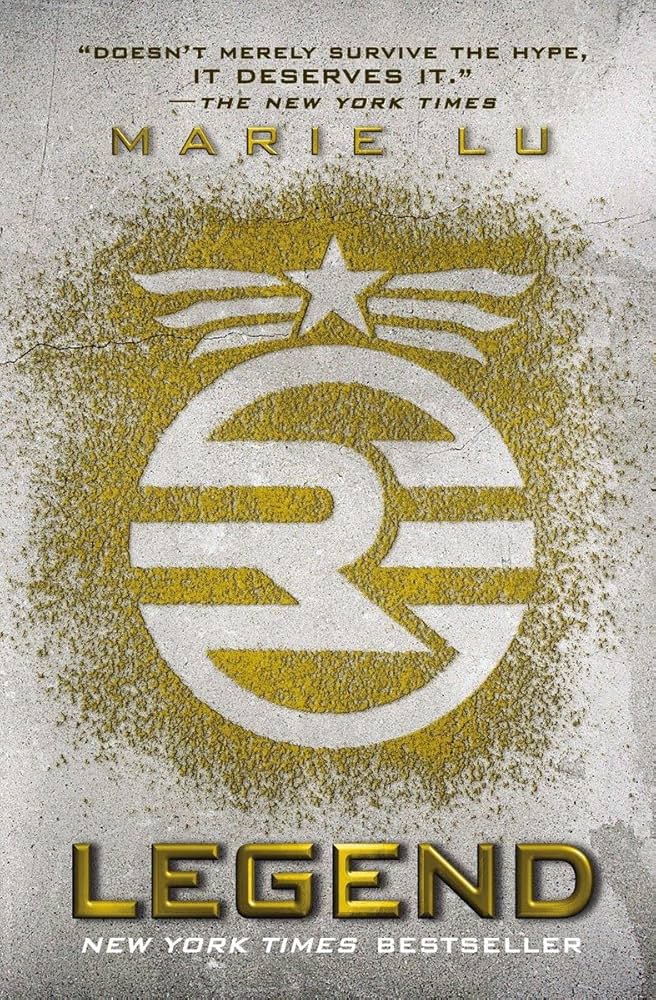
2. Legend by Marie Lu

Some of the most important windows books can offer are into perspectives we might not otherwise understand. In the dystopian Republic, we follow June, a military prodigy from an elite family, and Day, a boy from the slums who is the nation’s most wanted criminal. By putting us in both of their heads, Legend becomes a masterclass in empathy, showing how two people on opposite sides of a societal war can both be heroes in their own stories.

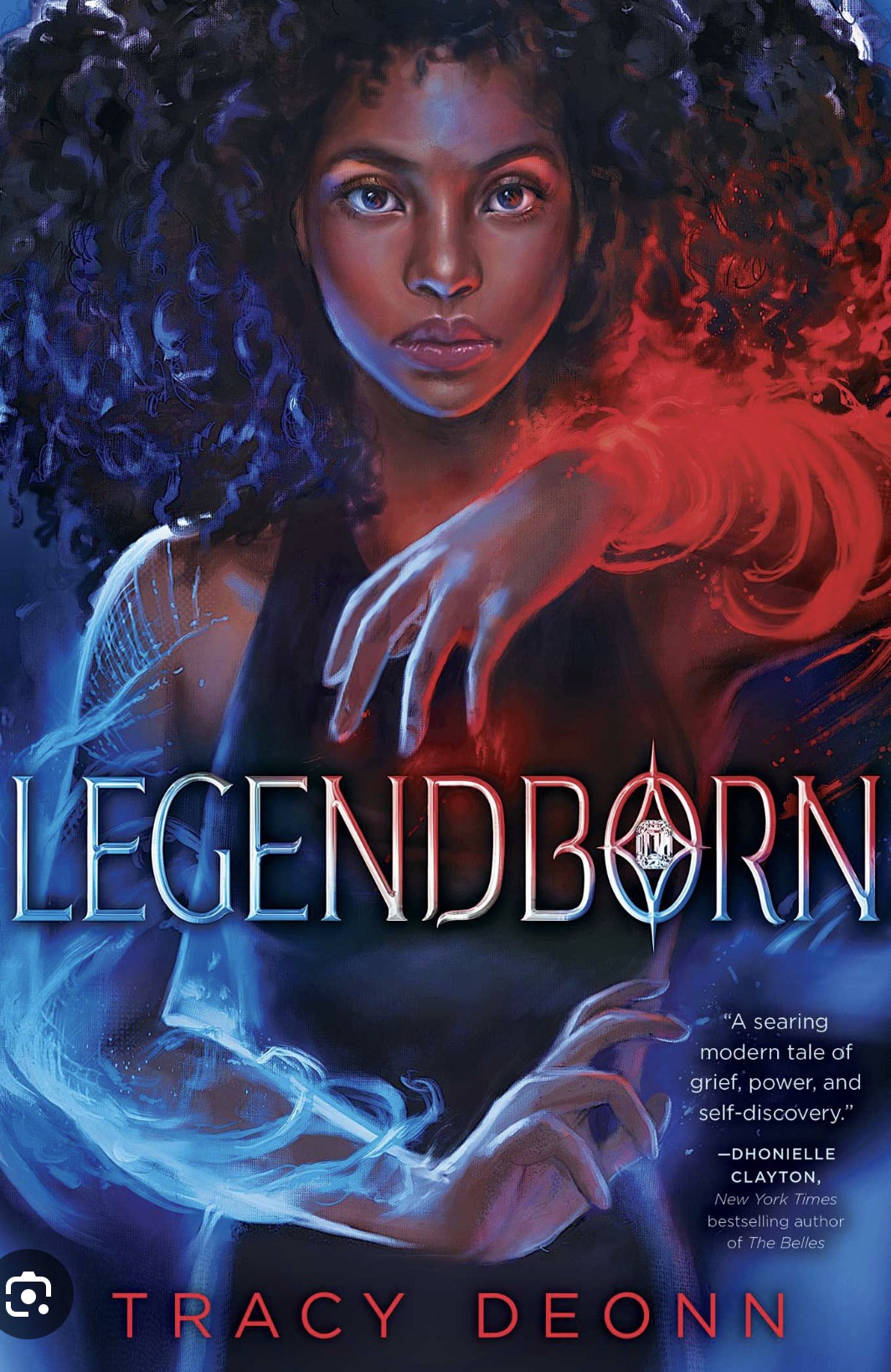
3. Legendborn by Tracy Deonn

Screenshot

When sixteen-year-old Bree Matthews’s mother dies, she uncovers a secret magical society based on Arthurian legend and realizes her own family history holds a powerful magic of its own. Legendborn is a stunning mirror for Black girls who love fantasy, weaving Southern culture and the history of slavery into the very fabric of magic. It’s also a vital window for every other reader, powerfully reframing a classic legend to create something wholly new and deeply necessary.

4. The House in the Cerulean Sea by T.J. Klune

This book is a warm hug for anyone who has ever felt like an outsider, and it’s a particularly powerful mirror for LGBTQ+ readers looking for gentle, hopeful fantasy. It follows a by-the-book caseworker, Linus Baker, as he investigates an orphanage of magical children and discovers the transformative power of found family. It’s a beautiful and tender story about choosing kindness over prejudice and finding where you truly belong..

5. Fourth Wing by Rebecca Yarros

This book is an absolute phenomenon, and one of its most powerful elements is its main character, Violet Sorrengail, who lives with a chronic illness that makes her body more fragile than others. In a brutal dragon-riding war college where weakness is a death sentence, Violet’s fight to not just survive but thrive is an incredible mirror for anyone living with a disability or chronic condition. It’s a fierce, powerful story about finding strength in resilience, not just in physical ability.


These books are more than just great stories; they are proof that the best fantasy reflects everyone. They create a world where more of us can see ourselves as the hero, ready for our own adventure.

What books have been powerful mirrors for you? I’d love to hear about the stories that made you feel truly seen in the comments below!

Best YA Series Endings Ever

Picture1Maybe it’s because we, as readers, become increasingly passionate about our favorite series that we have higher and higher expectations for each book. When you think about it logically, authors like Suzanne Collins and J.K. Rowling must feel like Atlas, with the weight of all of their successful books on their shoulders, trying to keep their series from tumbling off their backs.

All too often, the end of a great series leaves readers feeling underwhelmed at best, and annoyed at worst (ahem, Twilight series). Many readers were infuriated when Veronica Roth killed of the heroine of the Divergent series, for example. But when a series is ended well, there are few things in the world more satisfying for a devoted reader. Below are my top three favorite YA fantasy series endings, and the lessons I took away from them. Beware of spoilers!

Harry Potter Series by J.K. Rowling – Solve a puzzle an entire series in the making.
It may be so obvious as to be a cliché, but Harry Potter has to take top billing for best YA fantasy series endings ever. There were clues planted from book 1 that were finally revealed, and they didn’t disappoint. My favorite moment in the entire series was when Harry finally saw Snape’s memories and understood his true motivation. And the final book was littered with details like this – the invisibility cloak, Dumbledore’s past, even the much-awaited kiss between Hermione and Ron. The final battle was brutal but satisfying, and the epilogue gave readers a sense of closure. Readers may have their issues with the series conclusion, but for the most part they were minor. The brilliance of the series ending was a testament to the brilliance of the entire series.

The Uglies Series by Scott Westerfield – Evolve your character in a meaningful way within each book and throughout the series.
Tally Youngblood, the protagonist in The Uglies Series, is a compelling example of how a character must continue to evolve in every single book of a series. Westerfield does a masterful job of evolving Tally’s thinking, maturity, and understanding of the world around her. She increasingly sees that things aren’t black and white, and as she understands nuance, she grows up. The Tally at the beginning and end of each book is different, and so are the Tally at the beginning and end of the series. The only way that Westerfield could have achieved this is if he planned the stages that Tally would go through from the beginning. It’s this level of planning that’s required to create a masterpiece.

The Giver Quartet by Lois Lowry – Pivot perspectives to keep the series fresh.
Lowry takes a different approach than Rowling or Westerfield to keep readers hooked. Each one of the books of The Giver Quartet are unique, but interconnected. It’s fascinating to watch old characters interact with new, creating a webbed world that feels real because of its complexity. By the end of The Giver Quartet I felt so immersed in the world that I could have added my own chapter to it. When others want to continue living in a world you’ve created, you know you have a great story.

What’s your YA fantasy series ending ever?

Free YA Fantasy Ebook: The Society of Imaginary Friends (The Conjurors Series)

The-Society-of-Imaginary-Friends-2500x1563-Amazon-Smashwords-Kobo-AppleIf you’re a lover of teen/young adult fantasy, check out the first book in The Conjurors Series for free on Amazon March 14-16. The Society of Imaginary Friends is available on Amazon if you’re interested in checking it out.

I welcome all feedback and reviews, so if you decide to read it let me know what you think!

Click here to check out an excerpt from the novel. Below is the blurb:

Belief is a powerful magic.

Valerie Diaz has a power that she can’t contain, and it’s killing her.

Bounced between foster homes and the streets, she only has time to concentrate on staying alive. But a visit from the imaginary friend of her childhood opens a world of possibilities, including a new life half a universe away on a planet that is bursting with magic.

The Society of Imaginary Friends follows Valerie on a journey that straddles two worlds. In order to survive, she must travel many light years away to a realm where anything is possible.

On the Globe, imaginary friends come to life, the last of the unicorns rules the realm, and magic seeps from the pores of all the Conjurors who live there. But choosing to embrace her potential will set Valerie on a treacherous course – one filled with true love, adventure and perilous danger.

Knights-of-Light-2500x1563-Amazon-Smashwords-Kobo-AppleYou can also check out the second book in The Conjurors Series, Knights of Light, for $3.99 on Amazon.

Announcing My New YA Fantasy Novel: Knights of Light (The Conjurors Series)

Knights-of-Light-2500x1563-Amazon-Smashwords-Kobo-AppleI’m not going to try to play it cool – I’m excited to announce that the second book in my young adult fantasy series, The Conjurors, is published. Knights of Light is now available on Amazon.

If you want to take Knights of Light for a test drive, check out the free excerpt here. Below is the blurb:

Leading means taking mortal risks. Hiding is not an option.

With a tumultuous year behind her, Valerie is ready to start a life that doesn’t include running from enemies and risking her life. Too bad someone wants her dead.

No matter how much she resists, Valerie is thrust into a position where it is up to her to lead the Conjurors against the power-hungry Fractus or suffer the consequences of two worlds ruled by those who wield magic as a weapon. But the clashes don’t stop on the battlefield. As Valerie finds herself torn between her new love and her best friend, it will be up to her to figure out who she can’t live without.

In the fast-paced second novel of The Conjurors Series, Valerie searches for the father she thought was long dead and begins to come to grips with the immensity of her new power.

The battle has begun.

How to Write a Great Battle Scene

shutterstock_101136988One of the scenes in my novels that I find most intimidating to write is battles. How much action is too much? Or am I making it too simple? The Conjurors is a young adult fantasy series, and I enjoyed a succint, informative article on StormTheCastle.com about writing fantasy battles that got my brain working. These techniques gave me a starting point, and when I sat down and wrote the big battle in my story, I found a few other helpful techniques that I wanted to share.

Keep track of your heroine.
With all of the blood and manoevers and treachery, it’s easy to get lost when writing a battle. I found that using my heroine as an anchor helped to focus me. This is still her story, so I reminded myself to include her emotional responses to what she was witnessing, as well as the action itself.

Write a battle your audience will care about.
The battle scene in a book for adult men should look different than a battle in a YA fantasy aimed at a female readership. Talk to your fans and friends to see how much detail they want you to go into on the battlefield. Personally, I tend to skim the battle scenes in books that describe tactics and detailed combat. On the other hand, when I read Suzanne Collins’ Hunger Games trilogy, the battles kept me riveted, because it was as much about what was happening inside Katniss’ head as it was about the fighting itself.

Check out historical battle tactics.
This can get overwhelming and confusing, so I’d like to add the caveat that it’s only worth real effort if you’re writing a massive battle scene. If you’ll be battling for a few chapters, you might want to check out some information on battle strategy to make your story richer. It also helps provide a framework for your battle so that you don’t get lost in all the blood.

Choose a fighting style and read up on it.
You can even take a class. If your fighters are all using hand-to-hand combat, it helps to know a few moves that you didn’t see in an action movie. You can talk to a friend in martial arts or even read up on the basics. No matter what style you have in mind, from 21st century warfare to clashing swords, a little knowledge goes a long way toward making your story believable.

Do you have any other tips on how to write a battle scene well? I’m editing mine now and would love some tips!

On Writing 100,000 Words in 100 Days – Sorta

shutterstock_119136343

A little over a week ago I became the proud author of the complete first draft of the second book in my young adult fantasy series, The Conjurors. I’d made a pact with myself to write 100,000 words in 100 days, and I can’t say that I wrote 1,000 words every single day – but I came close. Life got in the way sometimes, like when my husband, toddler and myself all came down with a violent stomach virus. Or, to be fair, also when I became obsessed with Cassandra Clare’s The Infernal Devices Trilogy and decided that my need to marathon the series overrode my need to finish my own story.

But at least having this goal encouraged me to complete the first draft of my novel in close to 100 days. It’s an exercise that I plan to repeat in the future. I know some writers ebb and flow in the amount of content they create as their muse inspires them. Sometimes I wish that I were that kind of writer, but in reality I think I’m the kind of person who does best when I force myself to be creative.

So given that this plan was a success, I think it’s time for a new goal as I begin the editing process – which I happen to love and am excited to begin. I owe my beta readers a draft of the story in September, so until then I plan to edit a chapter a day, minimum. This may be ambitious, but it’s a place to start.

Do any of you have advice on setting editing goals? If so I’d love to hear your thoughts and advice!

Read It and Weep (Literally)

shutterstock_102844172This week I killed off my first character, ever. It was difficult – even though I wasn’t super attached to him, I couldn’t help feeling a little guilty. After all, he was a good guy and under different circumstances maybe he could have lasted for another chapter or two. But after reminding myself that he was, in fact, a figment of my imagination, I was able to focus on the most important part. How to make his death compelling.

What is it that makes death truly gripping in great young adult fantasy writing? I remember crying when Sirius Black and Dumbledore died while reading J.K. Rowling‘s Harry Potter series. And little Prim got a sniffle or two when I read Suzanne CollinsHunger Games trilogy. But I wasn’t sad so much because the characters were gone, but rather because of the emotional toll it took on Harry and Katniss. It was their response that sparked the reaction in me.

Gandalf‘s death in J. R. R. Tolkien‘s The Lord of the Rings, however, didn’t move me in the same way. He was my favorite character in the series, but when he died I felt more like shrugging than crying. Maybe it was his age. Maybe it was because he died a victor and had led a full life. Of course, then he returns as Gandalf the White, and as happy as I was to see him, I was glad I hadn’t wasted any time grieving for him. So it’s safe to say that you won’t find any of my characters coming back from the grave.

As a reader, I like when an author isn’t afraid to kill off main characters. It makes me feel like no one is safe, which heightens the tension during the action scenes. Now I just have to work on writing the emotion of these moments well.

Do you have any suggestions about things to consider for writing about death in young adult fantasy?

100,000 Words in 100 Days

shutterstock_77716045Lately I’ve been fighting with myself. There are so many excuses not to write every day – I have a toddler with a virus every other week, a demanding day job, and family and friends that I want to spend time with. At the end of the day I’m so tired that I feel like eking out an ounce of creativity would be like squeezing water from a rock.

But on the other hand, I’m a happier person when I write. Suddenly on my commute to work instead of being annoyed with the traffic, I’m imagining scenes that I’m working on. I feel more attuned to what’s going on around me, because I never know where inspiration might strike. And when I wake up in the middle of the night, instead of stressing about a deadline the next day, it’s because I just solved an important plot puzzle that had been nagging me.

I’ve always been a person who likes to have a solid goal, so I’ve made the decision that I will write every day, no excuses, for 100 days. With some luck, I hope to have a very rough first draft of the second book in my series completed at the end of that time. Hopefully at the end I’ll have something solid that I can edit, and my sanity will still be intact. Wish me luck.