SIDE QUEST: From the journal of Lord Malakor the Unforgiving

Welcome to Side Quest, a series of posts I share on my blog from time to time that give you a peek into the weird ‘what if’ scenarios and playful thought experiments I use to keep my imagination fired up when I’m taking a break from my latest novel.

Day 482 of the Eternal Gloom

I am this close to scorching the entire Eastern province. Not because of their pathetic rebellion. Not because of their overdue tithes. But because that gilded buffoon, Sir Gideon the “Gleaming,” just ruined a perfectly good batch of Shadowberry & Ghost Pepper Preserve.

Do you know how hard it is to get ghost peppers to grow in a cursed climate? The soil pH has to be exactly 4.5.

I was at the most crucial stage. The jam had just reached a 211-degree rolling boil. I was performing the wrinkle test on a frozen plate. The set was looking exquisite. I was already picturing the blue ribbon at the All-Kingdom Confectionery Contest.

And then, he bursts in.

“By the Light of Zorath!” he yelled, probably waking the entire crypt. “Fiend! Your bubbling Plague of Eternal Blight is at an end!”

I tried to stop him. “Gideon, you oaf, watch the jars! They’ve just been sterilized!”

But no. He just had to swing that ridiculous, glowing broadsword. Smashed my copper cauldron right off the fire pit. Two gallons of premium, pectin-balanced preserve, splattered all over my rare, hand-carved despair-stone floor. It’s going to be a nightmare to clean.

“The world is safe once more, Malakor!” he shouted, pointing the sword at me.

I just… I couldn’t.

“You… you… blond-haired menace,” I sputtered. “That was my submission batch! Do you have any idea how difficult it is to achieve a consistent flavor profile?”

Did he pause to really listen? To hear me? No! He threw the pot out the window and left, looking smug.

This is the fifth time this month. He thinks my canning operation is an “alchemical weapons lab.” He “liberated” my prize-winning apricot-habanero last week, thinking it was “liquid gold” to fund my armies. I bought those apricots from a mortal farmer. A mortal farmer, Gideon! His name is Stan!

I will have my revenge. And I will win “Best in Show” for my Spiced Blood-Orange Marmalade. Just as soon as I can re-sterilize my equipment.

Sidekicks with main character energy

As a writer, there’s a secret, terrifying, and exhilarating thing that can happen while you’re drafting: a character you intended for a minor role walks into a scene and refuses to leave.

They show up with a fully-formed voice, a riveting backstory you never planned, and a perspective so compelling it threatens to derail your carefully crafted plot. They aren’t just supporting the protagonist anymore; they feel like the hero of a different, fascinating story that’s happening just off-page.

That’s what I call “Main Character Energy.” It’s more than just being a fan favorite. It’s the powerful sense that a character has their own complete, vibrant world spinning within the larger narrative. Here are three secondary characters who radiate that energy, making their books infinitely richer.

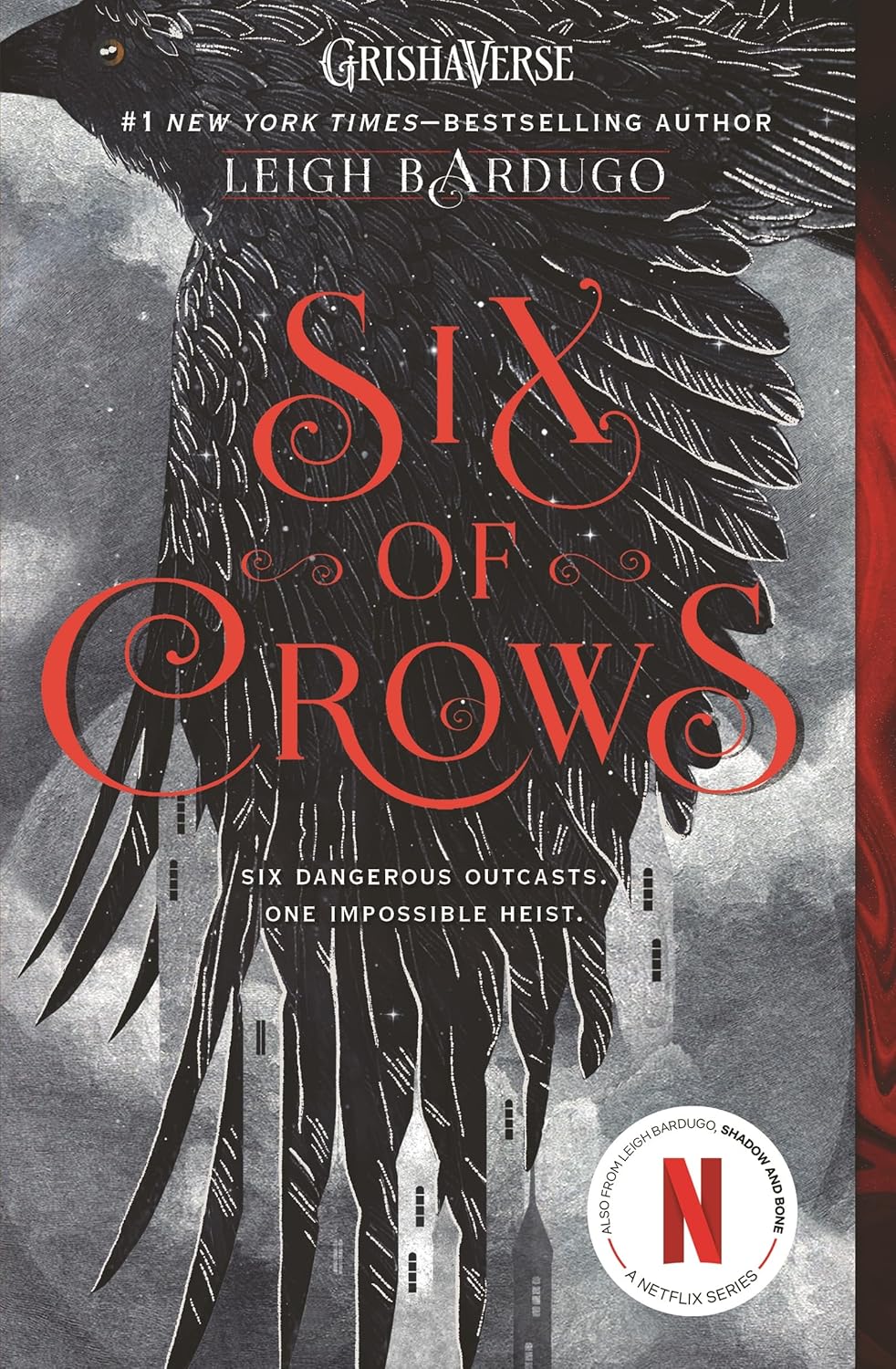
1. Inej Ghafa from Six of Crows by Leigh Bardugo

Kaz Brekker may be the mastermind, but Six of Crows is arguably Inej Ghafa’s story of reclamation. A girl of Suli heritage sold into indenture, her quest isn’t about money; it’s about buying back her own life and hunting the slavers who stole it. Her entire arc is a classic hero’s journey of confronting trauma and forging a new identity, happening in the shadow of a heist. You get the feeling that if the book followed only her, it would be just as compelling, if not more so. She is the moral center, and her quiet, deadly grace makes her the novel’s true gravitational pull.

2. Kenji Kishimoto from the Shatter Me series by Tahereh Mafi

Kenji isn’t just the comic relief; he’s the narrator of the story we wish we were reading sometimes. In a series defined by intense romance and angst, Kenji is the only one with enough perspective to see the utter absurdity of their situation, and he’s not afraid to say it. His Main Character Energy comes from the fact that he has a life, a history, and responsibilities—leading the soldiers of Sector 45—that exist completely outside of the main love triangle. He’s the protagonist of a gritty, found-family story about survival that just happens to intersect with Juliette’s epic romance.

3. Nico di Angelo from the Heroes of Olympus series by Rick Riordan

Nico’s power comes from the fact that his most important character development happens between books, in the shadows. We see the cheerful, myth-obsessed kid, and then we see the brooding, immensely powerful Son of Hades. His transformation is so profound that it forces us to imagine the harrowing solo journey he undertook. As a gay Italian demigod from the 1940s, he is a man out of time and out of place, everywhere he goes. He’s the protagonist of a dark, gothic tragedy who occasionally wanders into Percy Jackson’s sunnier adventure story, reminding us that the world is much bigger and scarier than we thought.


These are the characters who prove that a story’s magic doesn’t always come from the person on the cover. They remind us that every person on the street has a life as vivid and complex as our own.

One platform to rule them all, or life outside the Kindle Unlimited universe?

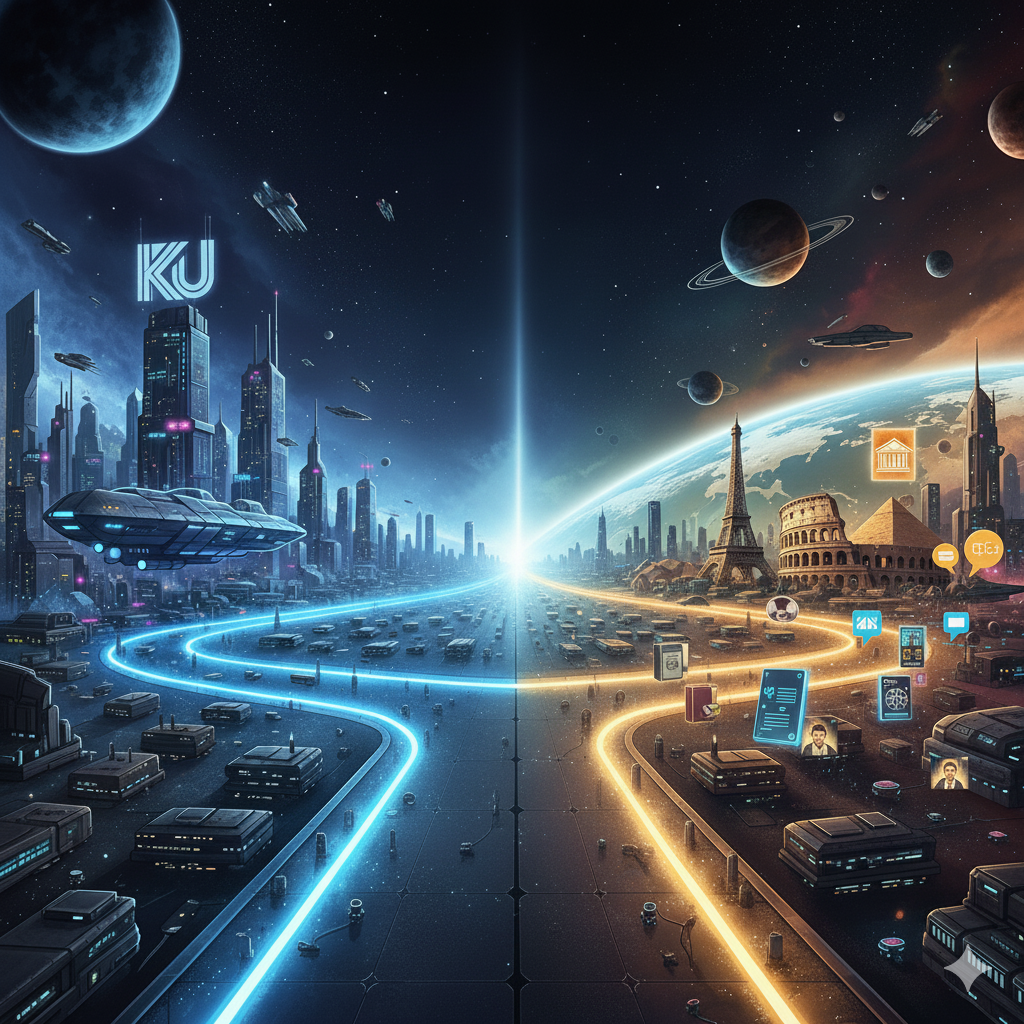
If you’re an indie author, you’ve stood at this exact crossroads. It’s one of the biggest strategic decisions we have to make, right up there with choosing a cover or deciding a character’s fate. On one side, you have the bustling, high-traffic empire of Amazon’s Kindle Unlimited (KU). On the other, the vast, uncharted frontier of “going wide.”

As the captain of my own author career, I’ve piloted ships in both systems. My Throwback Series lives exclusively in the KU ecosystem, while the Conjurors Series was launched to explore the wide galaxy of platforms.

Now, with a new novel set to launch in just a couple of months, I’m standing at that crossroads again, looking at the star-charts and trying to decide which flight plan is right for this new adventure.

The Gravitational Pull of the KU Empire

There’s no denying the power of Kindle Unlimited. It’s a massive, concentrated system of readers—arguably the most voracious readers in the galaxy. For my sci-fi Throwback Series, choosing KU felt right. It allowed me to tap into a built-in audience that loves to binge-read a series, and the page-read payment model can be incredibly powerful.

Marketing feels simpler when you’re only pointing your lasers at one target. You can focus all your energy and ad spend on a single destination, which for a busy author (and parent!) is a huge advantage. For many authors, KU is their entire solar system, and they thrive there.

The Magic of the Uncharted Worlds

But then there’s the other path. The one that feels a little more like exploration.

When you go wide, you’re not just sending your book to other stores like Kobo or Apple; you’re opening it up to entirely new ways of being discovered. For instance, I’ve shared some of my work on Wattpad for free, not knowing what to expect. The result? Waking up to comments from readers in the Philippines, getting messages from someone in on the other side of the world who stayed up all night to finish a story. That global connection is an incredible feeling.

And then there’s the quiet magic of libraries. I’ve seen my books pop up in library systems in all over the country. It’s a thrill that page-read data just can’t replicate – especially when you meet fans from across the country who have read and loved my series.

That moment. That’s it. That’s the feeling.

It wasn’t a sale. It wasn’t a page-read. It was a connection. A kid found a portal to a new world I built, right there in her school library, and it meant something to her. That’s a powerful argument for making sure your work can be discovered anywhere and everywhere.

Charting the Course for the New Ship

So, here I stand, about two months out from launching a brand-new novel. Do I dock it at the bustling, predictable spaceport of KU, hoping to attract the massive crowd of subscribers there? Or do I fuel it up for a journey into the wide unknown, aiming for those library shelves and international readers, hoping to create more of those magical, real-world connections?

Honestly, I haven’t decided yet. Each path has its own quests and its own rewards.

But I’d love to turn this over to you. Whether you’re a reader or a fellow writer, what do you think? As a reader, where do you discover new books? As a writer, are you Team KU or Team Wide?

Let me know in the comments below.

Meet a few of the youngest stars of YA fantasy & sci-fi fiction writing

Do you ever have a story in your head that feels so huge, so epic, that you think, “Who am I to write this?” It’s a feeling a lot of writers have, especially when they’re young. But some of the most groundbreaking, imaginative, and successful books in recent years were written by authors who weren’t much older than their target audience. They prove that you don’t need decades of life experience to build a new world from scratch. All you need is a powerful idea and the drive to see it through.

Let’s get inspired by a few of the youngest authors who took the YA science fiction and fantasy world by storm.

Christopher Paolini, author of Eragon

  • Breakout Age: Paolini started writing Eragon at just 15 years old. It was famously self-published before being picked up by a major publisher, when he was 19.
  • The Hit Book: Eragon, the first book in The Inheritance Cycle, became a global phenomenon. A classic farm-boy-finds-a-dragon-egg story, it was everything an epic fantasy fan could want.
  • What Made It Special: Eragon is a masterclass in ambition. Paolini wasn’t just writing a story; he was building a massive world with its own languages, history, and rules of magic. He proved that a teenager could not only write a novel, but could command the epic scale and intricate detail that the genre demands, inspiring a whole generation of young writers to dream bigger.

Veronica Roth, author of Divergent

  • Breakout Age: Roth famously wrote Divergent during her senior year of college. It was published when she was just 22 years old.
  • The Hit Book: Divergent kicked off a series that became a cornerstone of the YA dystopian boom. It tells the story of Tris Prior, who lives in a futuristic Chicago where society is divided into five factions based on human virtues.
  • What Made It Special: Divergent‘s genius lies in its powerful central metaphor. The faction system was a brilliant and instantly relatable way to explore the intense pressure teens feel to fit in and define their identity. It tapped directly into that universal high school question: “Where do I belong?” The psychological trials were a unique and thrilling way to explore character depth and courage.

Tomi Adeyemi, author of Children of Blood and Bone

  • Breakout Age: Adeyemi was 23 when her debut, Children of Blood and Bone, landed one of the biggest publishing deals in YA history.
  • The Hit Book: Children of Blood and Bone is a soaring epic fantasy that follows Zélie Adebola as she attempts to bring magic back to her oppressed people.
  • What Made It Special: This book was a cultural landmark. Adeyemi wove West African mythology and Yoruba spiritual traditions into a powerful, action-packed fantasy that felt both classic and revolutionary. It tackled deep themes of oppression, race, and identity with a fiery passion that resonated with millions of readers. Adeyemi showed the immense, world-changing power of telling stories that had been left off the fantasy map for far too long.

The next time you sit down to write and that little voice of doubt creeps in, just remember these authors. They didn’t wait for permission to build their worlds. Your age isn’t a barrier—it’s your superpower. You have a voice and a perspective that no one else has.

So go write that story. We’re all waiting to read it.

SIDE QUEST: So you’re the chosen one. Here’s how to procrastinate responsibly.

Welcome to Side Quest, a new series of posts I’ll share on my blog from time to time that give you a peek into the weird ‘what if’ scenarios and playful thought experiments I use to keep my imagination fired up when I’m taking a break from my latest novel.This is the very first one, and I hope it gives your own creative brain a fun little jolt!

It finally happened. The glowing amulet pulsed in your palm, the talking squirrel delivered his cryptic prophecy, or maybe the birthmark on your arm started looking suspiciously like a map to the Lost City of Gorgonzar.

Congratulations. You’re the Chosen One. An ancient evil is stirring, a galactic empire is threatening the Outer Rim, and you—yes, you, the person who considers finding matching socks a major victory—are the only one who can stop it.

There’s just one problem. You have a history final on Tuesday, your favorite show just dropped a new season, and that pile of laundry in the corner is one t-shirt away from achieving sentience. Destiny is calling, but your phone is buzzing with notifications that feel just a little more urgent.

Don’t panic. This isn’t a guide on how to save the world. This is a guide on how to put it off… responsibly. Welcome to the art of Strategic Destiny-Delaying.

Step 1: Re-evaluate your priorities with the tier system of impending doom.

Sure, the Shadow Overlord Xylos is planning to blot out the sun. That sounds bad. But will he give you a detention that goes on your permanent record if you don’t finish your book report on Ethan Frome? No. Your teacher, Mrs. Davison, will.

Create a simple chart. In one column, list your epic quests (“Vanquish the Serpent King,” “Find the Seven Shards of Light”). In the other, list your real-life tasks (“Walk the dog,” “Finish algebra homework”). The task that will result in immediate, tangible consequences (i.e., parental grounding or a failing grade) wins. The fate of the universe has been around for billions of years; it can wait until after dinner.

Step 2: Disguise your training as household chores.

No one can accuse you of slacking off if you’re being productive. You just have to reframe it.

  • Are you sweeping the kitchen floor? No, you are practicing staff combat with the Legendary Broom of Tidiness.
  • Just folding clothes? Think again. You’re actually inscribing protective sigils into the very fabric of your armor to ensure it withstands the rigors of the coming quest (to the movies).
  • Are you practicing your heroic “I’m here to save you!” entrance in the bathroom mirror? That’s just good personal hygiene and confidence-building.

Step 3: Conduct extensive “lore research.”

Your quest will require immense knowledge of past heroes, battle tactics, and plot twists. How does one acquire this knowledge? By watching hours of television, of course.

That eight-season fantasy epic isn’t a distraction; it’s a historical document. You’re studying the effectiveness of plot armor, analyzing the classic “unlikely friendship” trope, and taking notes on what not to do when facing a dragon. When your parents ask what you’re doing, simply look at them with grave importance and say, “I’m studying the archives.”

Step 4: Engage in strategic fellowship vetting.

You can’t face the Dark Lord alone. You’ll need a ragtag team of loyal companions. But choosing them is a delicate process that requires careful observation in a casual setting.

Are you going to get fudge with your best friend? No. You are assessing their suitability for the “comic relief with a heart of gold” role. Does their choice of toppings show a bold, decisive nature? Are they willing to share, proving their loyalty? This isn’t just hanging out; it’s team-building.

So go on, Chosen One. The world will still be there waiting to be saved when you’re ready. Probably. In the meantime, that new season isn’t going to watch itself.

How Much Violence Is Too Much in YA Literature?

As a writer of YA science fiction and fantasy, I’m no stranger to writing my heroines into some violent struggles. Whether it’s emotional abuse or outright warfare, somehow these themes are embedded in the hero(ine)’s journey.

But I am also sensitive to the fact the readers of my stories are not adults, like me. When I grapple with violence in my writing, I am aware that my words carry the potential to be a force for good, or to be damaging. Walking that narrow line, without condescending to readers who are smart, sensitive people, is not easy.

Below are the yardsticks I keep in mind when violence erupts in my stories.

Avoid gratuitous violence.
It’s easy to use graphic violence for it’s shock value. As writers, we want to make our readers feel something when they engage with our work. However, it’s not appropriate to use violence or trauma as a shortcut to actual writing and character development. For example, I’ve noticed a number of YA novels recently where the main character is a rape victim. The topic is not explored or an organic part of the story, but rather used as a way to generate instant sympathy for the protagonist. Inevitably, the result is a character that is a shell of a person, defined by what is done to them, rather than who they are. A character that is no more than a victim, rendered lovable only by their trauma (and drop-dead good looks, of course), is not a safe message to pass to a young adult audience.

Focus on the emotional drama of a violent event rather than the gore.
Young adult fantasy seems to have a different metric than other YA literature when it comes to the level of acceptable violence. In fantasy, YA heroes and heroines wield weapons, fight in wars, and kill enemies. But handling that level of violence when writing for young adults requires some delicacy. As a huge fan of Sarah J. Maas, one aspect of her work that I have always admired is her ability to address the psychological impact of the violence in her stories. She includes enough information to set the scene, but doesn’t plunge into the details of gory acts. The reader’s horror is evoked by the reaction of the protagonist, rather than the gore.

Do your due diligence when addressing issues of abuse, depression and suicide.
As writers creating fiction for young adults, we have a responsibility to make sure that our novels do not encourage destructive behavior. A recent example is the Netflix video series 13 Reasons Why, based on a novel of the same name. The story centers around a girl who commits suicide. For teens who are depressed or suicidal, reading about others who act on those feelings can be triggering. That doesn’t mean that authors should avoid those topics. Rather, do your homework and learn what experts say should be emphasized and avoided to craft a story that acts as a force of good (or at least good entertainment).

Address the consequences of violence.
After writing a scene where a character endures violence, remember that the pain lives on long after the act is over. That means that characters need time to heal, and may suffer from PTSD. Aside from the fact that this will make your story deeper and more resonant with readers, it is particularly important for YA audiences to understand that violence has long-lasting repercussions.

Write a book description that makes any violence in your novel explicit.
If your book includes violence, make sure that readers are aware of what they are getting into before opening your book. Your book description should make it clear that you are touching on a sensitive or triggering topic. When marketing your books, reach out to age-appropriate readers, and include disclaimers about the violence.

Write an Opening Chapter that Hooks Readers

CaptureThis year, I have left behind the characters who populated the series that I’ve been writing for several years. I’m embarking on a voyage to a new world, with a crew who is brand new to me. It’s fun and thrilling to be writing something completely new, but starting from scratch is also much harder than continuing a series.

The first chapter of any book, but especially the first book in a series, has to be gripping. Win a reader and they could go on to follow your characters for a long time. I’m now on the fifth major rewrite of my first chapter, and in honor of that I thought I’d share some DOs and DON’Ts that I’ve learned the hard way, with examples of excellent series openings from successful YA authors.

DO get to the story quickly rather than delving into too much description.
When your readers know nothing, it’s tempting to want to share everything you can about their backstory and the world they inhabit. But readers want to be immersed in a world, unaware that they are learning a character’s quirks and how their world functions because they’re more involved in the drama unfolding. I love Marissa Meyer’s Cinder, the first book of The Lunar Chronicles, because she doesn’t waste time introducing Cinder and Prince Charming and throwing them together right away. She hooked me by the end of the first chapter, and I kept reading until I finished the series.

DON’T jump into the middle of an action sequence from the first page. (Most of the time.)
Some authors take the advice of getting to the story quickly to mean that they throw their main character into the middle of a battle, or struggling to survive, from the first sentence. Remember, before your protagonist faces big danger, the reader has to care if they live or die. There are examples of stories that start “In Medias Res” (in the middle of things) but those done well are rare. If you’re a new author, stick to a simpler scene that lets us get to know the character.

DO give readers a picture of what the main characters look like.
While no reader wants to read pages about the protagonist’s long, flowing locks of golden hair, they do want to have a sketch of the characters in their minds. This is a tidbit that I’ve ignored in the past, and readers and agents have called me on it time and again. For an example of an author who puts a riveting picture in your mind from page one, check out We Were Liars by E. Lockhart. When the main character says of her family, “The Sinclairs are athletic, tall and handsome…Our smiles are wide, our chins are square, and our tennis serves aggressive” we can picture the protagonist and her family’s appearance and personality in one swoop.

DON’T start your story with your character waking up.
I saw this tidbit in several reputed literary agents’ pet peeves. Starting your story at the start of your main character’s day makes logical sense – to everyone. Readers, editors, and agents alike have read this kind of opening so many times that it has become cliche.

DO end your first chapter with a teaser that invites the reader to turn the page, NOW.
No matter how brilliant of a writer you are, it takes time to get a reader to invest emotionally in your character’s life. The first chapter is about piquing the reader’s interest, but it will take longer than that to earn their sympathy and empathy. With that in mind, a little mystery or promise of something fascinating to come goes a long way toward keeping readers moving forward with your story. Maggie Stiefvater does an excellent job of this in The Raven Boys. She introduces the protagonist, Blue, as a girl from a family with supernatural gifts. They’ve always predicted that she will kill her true love. The chapter ends with a promise from one of the characters that this is the year that she’ll fall in love. Will I continue reading? Hell, yes!

DON’T be afraid to change your first chapter, even if it impacts the rest of your story.
I know from experience that there is nothing more daunting for a writer than making a change to the first chapter that ripples through the rest of the book you’ve written (or in some cases, the series). But taking the time to make the opening perfect is an investment that will pay you back in spades. If readers aren’t hooked, they’ll never have the opportunity to see how great your writing gets by chapter 6. So grit your teeth and make it perfect, consequences be damned.

There are few things more difficult to do, or more critical to your success as an author, than writing an outstanding first chapter. But when you get it exactly right, the momentum can carry you through the rest of the book, and even the rest of the series. Readers will forgive a crappy chapter 32, but they will never read past a weak chapter 1.

How to Weave Believable Technology into Your YA Dystopian Novel (Part 2)

file000898499863As I mentioned in my last post, Part 1 on this topic, it is with glee that I leave behind the world I’ve been writing about for years to enter a new one. It’s radically different than the one I left behind, not even set in the same time. I’m visiting the future, and am learning about the technology I’ll find there. For the first time, my day job is kinda helpful, as I work in Silicon Valley at a high tech company, where we geek out about what the future will look like all the time.

I’m a believer that the best place to generate ideas for plausible ideas of future technology is to check out cutting-edge technology from today and extrapolate. Below are some resources that might trigger ideas for you.

Technology Websites
No surprise, there are a lot of online resources to sift through if you’re interested in technology. They range from those too mundane to yield exciting inspiration to those so futuristic that they don’t feel plausible. The sites I regularly check out are TechCrunch, which covers the latest technology news, and Fast Company, which doesn’t exclusively focus on technology, but rather innovation. If you’re interested in learning about how electronics function in a little more depth, check out the text and videos on SemisMatter to become more knowledgeable.

Technology-Focused TED Talks
If you haven’t heard of TED talks, they are awesome. Some of the most brilliant people alive share their expertise on everything from writing to technology to business. These brilliant people deliver short (18 minutes or less) talks on all kinds of topics, like robotics, biotechnology and space travel. And you can watch the videos of these talks for free on their website. They have a great search feature, including a way to filter by topic. Check out their most viewed talks and their technology topic talks. You’ll be educated without realizing it, and I defy you not to be inspired by some of the technology that you’re introduced to.

Consumer Electronics Show (CES)
CES is perhaps the most famous technology trade show, where the coolest up-and-coming technology is on display. Unfortunately, this is an industry event that isn’t open to the public, but there is a lot of media coverage of the event. If you do a search for the 2015 show, you’ll hear about the hottest technology that was present. I got distracted by a 3D printer that prints dessert, but that’s another story. Search for new coverage of CES for the past three years or so and you’ll start to notice trends that you can weave into your story.

Reference for the truly geeky.
For those interested in a dense but thought-provoking read about the extremes of what our future might look like, my favorite book, which I encountered in my day job, is The Singularity Is Near, by Ray Kurzweil. It blew my mind and made me grateful to be living in an age of exponential growth of technology. Maybe I’ll have a chip in my brain before I die (by choice!) or tiny robots will be released inside me to cure me of diseases. I sure hope so.

If you’re interested in how some famous ya dystopian authors have handled technology in their novels, check out my last post on the subject.

How to Weave Believable Technology into Your YA Dystopian Novel (Part 1)

CityI’m in the process of closing my current series and beginning a new one, and I’m thrilled at the chance to create a new world from scratch. My next series will be dystopian YA, and in preparation I’ve been giving a lot of thought to the kinds of technology that I want to incorporate into the world. When I’m engrossed in a well-written YA dystopian novel, the technology never feels foreign. I think that’s because it’s a natural extension of technology that exists today, and therefore feels so plausible that it doesn’t give me pause. On the other hand, when technology is not done well, it often feels superfluous, like a special effect that isn’t really essential to the plot.

Below are some of the ways that successful YA dystopian authors seamlessly integrated technology into the worlds they created.

Have relevant technology interact with the setting of your novel in a way that shapes your protagonist’s mental landscape.
Under the Never Sky, Veronica Rossi
In Under the Never Sky, the heroine, Aria, lives in an enclosed city because the outside world is considered toxic. As a result, space is at a premium. So that people don’t go crazy by being trapped in tight quarters, the Internet and virtual reality mingle to create a world of infinite space. As a result, in reality people may be weak or even malnourished. So when Aria is cast out of the city into the toxic outdoor world, she is more vulnerable than the “savages” who have spent their lives fighting for survival, and are therefore in prime physical condition. This unique use of technology and setting feels like a natural extension of how the Internet works today, and it isn’t superfluous. It’s essential that it exists in order to drive the plot forward.

Modify an existing technology by taking it to the extreme.
Unwind Dystology, Neal Shusterman
Today, kidneys, hearts, lungs and other organs can be transplanted, but imagine a world where that technology is taken to the extreme, and eyes, arms, even brains can be transplanted. One of the creepiest YA books I’ve encountered was Unwind. The premise is that parents can choose to have their kids “unwound” when they’re teenagers – have every single body part donated to science, so their troublesome teen is effectively gone, without officially having been murdered. Most of the technology in this series isn’t creative, but this one strong premise makes it feel wildly futuristic and spookily familiar at the same time.

Have your young protagonist interact with technology of the future in a way that adults wouldn’t.
Ender’s Game, Orson Scott Card
Ender’s Game is a classic, and a longtime favorite of mine. The setting, though it is in a very futuristic world complete with space ships and flashy weapons, is also not particularly unique. It’s technology we’ve seen in Star Trek and a number of popular sci-fi books. What makes it unique, however, is that the protagonist is a kid, and he reacts to it differently than any of the adult protagonists of other books and shows do. He finds creative ways to manipulate this technology, and ultimately is himself a victim of his own innocence when it comes to the power of the technology he wields. As a YA author, considering how your young protagonist will inhabit the world you’ve created is crucial. Remember that they are learning about it alongside you and your reader, rather than guiding you through it.

MedicalInvent a medical technology that solves a current problem in a way that creates a new one.
Uglies, Scott Westerfeld
There are a number of effective uses of futuristic technology in the Uglies series, but the most dramatic is the extreme plastic surgery that everyone undergoes to be made beautiful as they enter adulthood. Aside from looks, this also includes messing with the brain so that people are placid drones who don’t question the status quo. What worked well with the way the technology was handled was that the author didn’t over-explain it. The mechanics were hinted at, but specifics were left to the reader’s imagination.

Incorporate technology that affects the social structure of your world.
Matched, Ally Condie
In Matched, it is less the physical technology that takes center stage, but rather software that matches soul mates to each other that forms the premise of the series. It’s easy to think of futuristic technology in terms of things, like hovercrafts, but this more subtle use of technology can be even more believable and compelling. Matched, like Uglies, seamlessly wove in technology without over-explaining specifics of how it works. In hardcore sci-fi and fantasy, this would never fly. But with YA readers, it works well. Imagination supplies answers where needed, and readers are more interested in the character development than geeky details.

For those interested in learning more info on how to create believable technology for your dystopian YA novel, my next blog post shares resources that can inspire you if you’re having trouble envisioning what the technology of the future will look like.

In Quest of an Honest Review

shutterstock_228985963

When I began my self-publishing journey a few years ago and sent my novel into the world, I’ll confess to being shocked when anyone didn’t like it. My first 3-star review led me to eat five peppermint patties in a row. That’ll show ’em. But 3 years and 40 reviews later, I have a very different take on reviews. I’m happy to see them, no matter what the star rating is. The people who don’t like my writing teach me at least as much as the people who do.

Think my dialogue is trite? Allow me to rewrite it. The opening of my book didn’t hook you? Let me add a scene. My book reads like it was written for a younger target audience? Maybe it’s time to market it to middle grade instead of young adult.

Now that I’m almost done with the last book in my series, I know that I’ll take all the lessons that my readers taught me and apply them to my new series from the get-go. And my attitude toward reviews has completely changed. When it comes to reviews, no matter how critical, I say bring it on.

I have gone from wanting people to like my book to wanting to know the truth about my writing. No matter what people think, I’ll probably always write, but I don’t want to be deluded about it. When readers give me the truth, I relish it, even when it’s criticism.

For that reason, I decided to have the first book in The Conjurors Series reviewed by Glenn Hates Books – Brutally Honest Book Reviews. I highly recommend it for anyone who wants an honest assessment of their book. He won’t pull punches, but he’s not out to eviscerate everyone, either. If you’re ready for the truth, give it a try.

If you have any other recommendations on places to get legitimate reviews of books, let me know. I’ve tried Story Cartel with some success, and reaching out through social networks. Have you had any luck with other sources?