
Have you ever noticed what happens when adults try to write funny books for 10-to-12-year-olds? It’s like they suffer sudden, total amnesia about what it’s actually like to be in middle school.
Because I’m raising my own middle-grade (MG) humans here in California, I spend a ridiculous amount of time thinking about my audience. When I write YA sci-fi and fantasy, the instinct is to push the boundaries with massive stakes and sharp banter. But when writing MG comedy, too many adults default to sanitizing the world, dumbing down the jokes, and delivering a heavy-handed moral.
Kids hate that. (Me too, as it happens.)
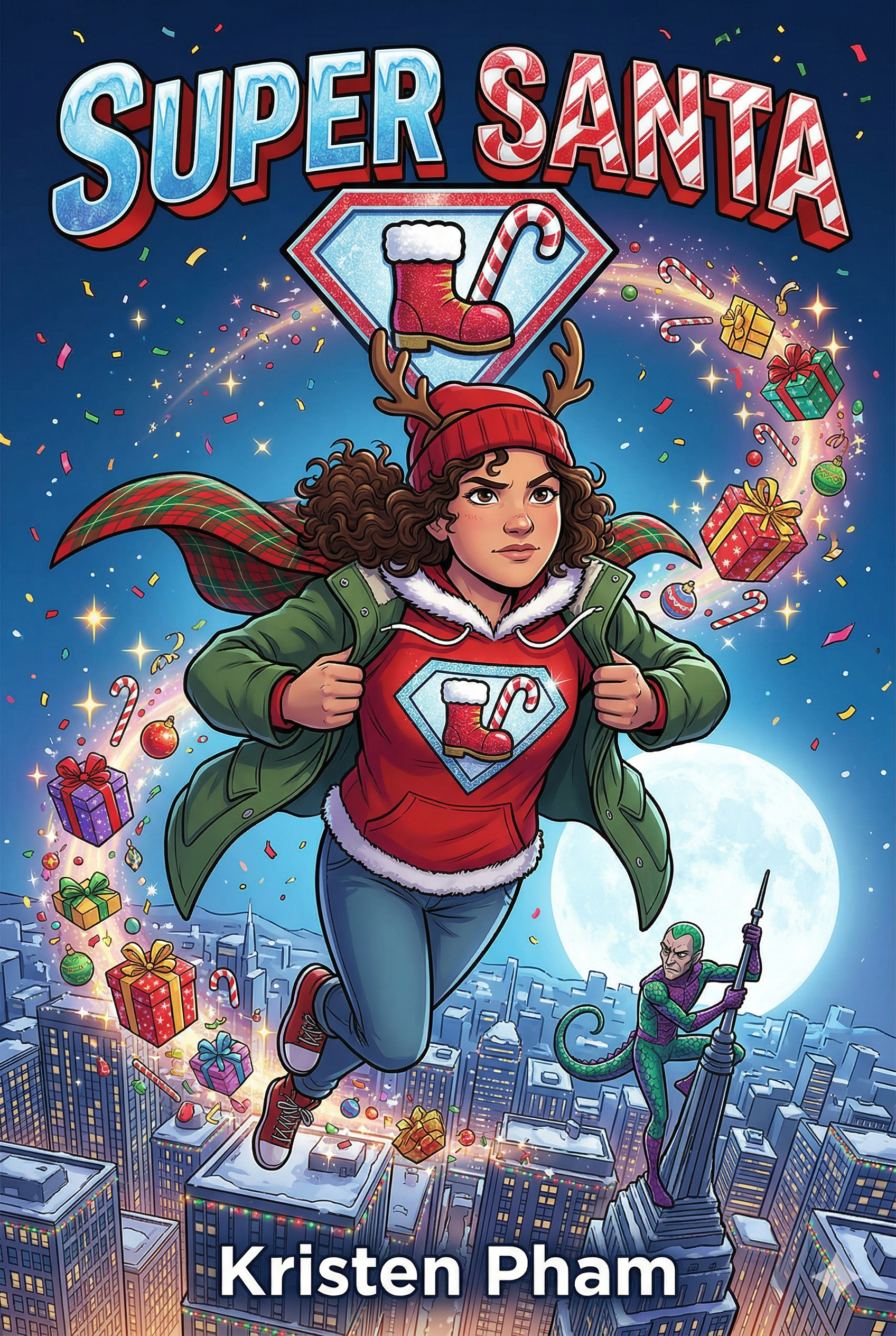
Middle grade readers are incredibly smart, deeply empathetic, and they can spot condescension from a mile away. Right now, I’m elbow-deep in drafting my newest MG comedy, currently titled Super Santa. Working on this delightfully wild premise has been a daily reminder of the golden rule of kidlit: You have to write up to your audience, never down.
If you’re tackling the MG fiction space, here’s how to keep your readers laughing without ever patting them on the head.
1. Let Diverse Characters Just Exist
Kids today are growing up in a complex world, and they understand it way better than adults give them credit for. They don’t need a lecture to explain reality.
For example, in Super Santa, my protagonist has a nonbinary sidekick. I didn’t write a heavy-handed, four-page monologue explaining their pronouns. Why? Because 11-year-olds don’t need me to. They just accept that their friend uses they/them, and then they immediately get back to the actual problem at hand: saving the North Pole. Pandering is the absolute enemy of comedic pacing. Trust that your readers understand the world, and let your diverse characters just exist and be funny.
2. Never Explain the Punchline
There’s a reason kids absolutely inhale series like Diary of a Wimpy Kid and Dog Man. It’s not just because they’re hilarious—it’s because the authors trust their readers to understand irony, visual gags, and the sheer absurdity of growing up.
A fatal mistake adults make is setting up a brilliant joke and then over-explaining the punchline just to make sure the kid “got it.” Kids are masters of sarcasm. Give them dialogue that crackles and let the joke stand on its own.
3. Treat the Absurd with Absolute Sincerity
The fastest way to ruin a comedic MG concept is for the author to wink at the camera to show that they know it’s silly.
Whether your protagonist is dealing with super-powered Santa Claus powers, a sentient toilet, or an alien invasion in the cafeteria, the characters inside the book have to treat the situation as life-or-death reality. The humor comes from how seriously they take it, not from you mocking your own premise.
4. Acknowledge That Middle School is Terrifying
Comedy is usually just a coping mechanism for anxiety, and being in middle school is objectively terrifying. Your body is weird, your friendships are shifting, and the world feels huge.
When writing funny middle grade books, you don’t need to shield your readers from dark, messy emotions. Often the comedic magic is just a vehicle to explore very real feelings. Show them characters who use humor to mask how scared they are and then show those same kids finding the courage to save the day anyway.



 Kristen Pham