Sidekicks with main character energy

As a writer, there’s a secret, terrifying, and exhilarating thing that can happen while you’re drafting: a character you intended for a minor role walks into a scene and refuses to leave.

They show up with a fully-formed voice, a riveting backstory you never planned, and a perspective so compelling it threatens to derail your carefully crafted plot. They aren’t just supporting the protagonist anymore; they feel like the hero of a different, fascinating story that’s happening just off-page.

That’s what I call “Main Character Energy.” It’s more than just being a fan favorite. It’s the powerful sense that a character has their own complete, vibrant world spinning within the larger narrative. Here are three secondary characters who radiate that energy, making their books infinitely richer.

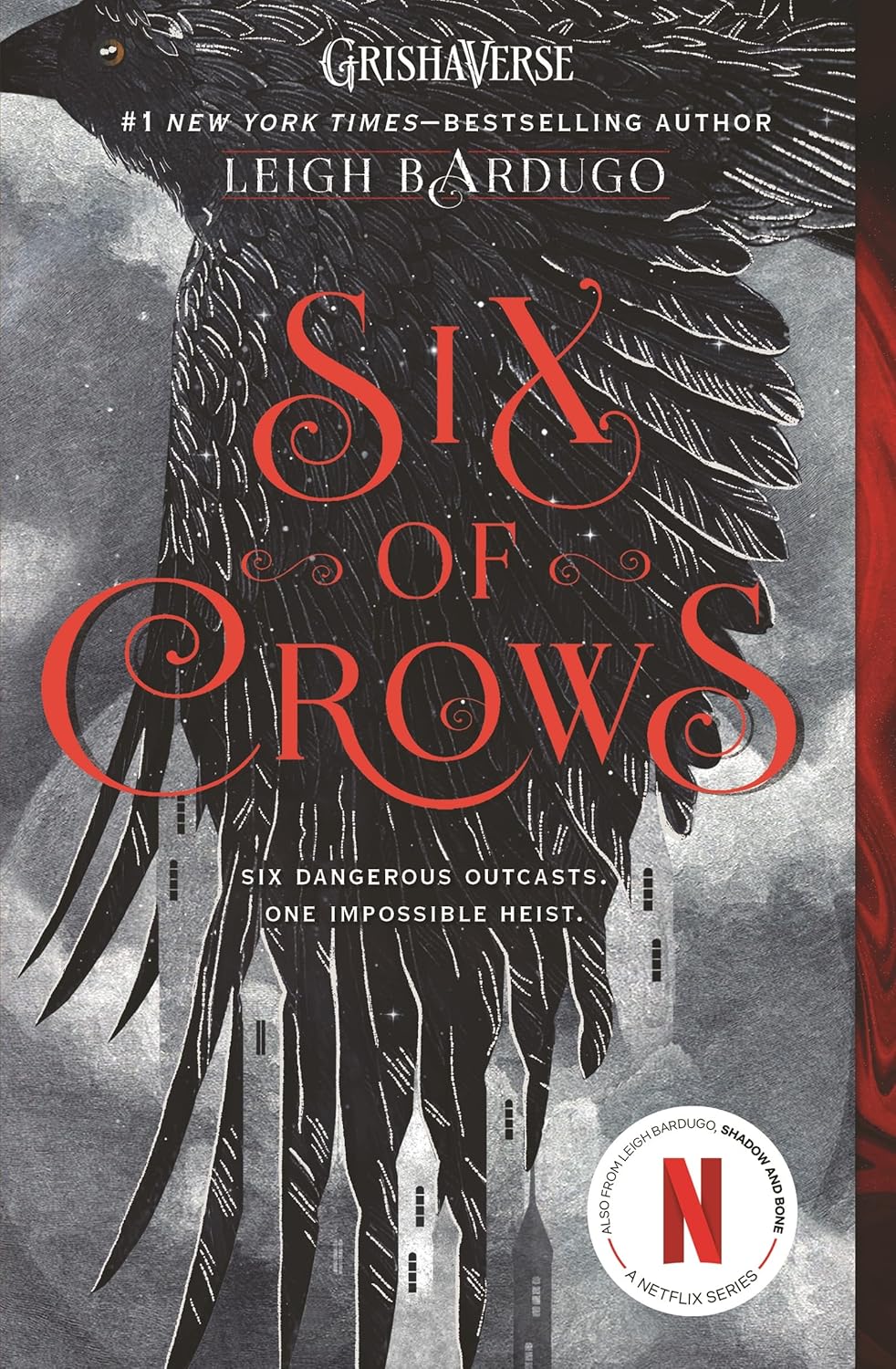
1. Inej Ghafa from Six of Crows by Leigh Bardugo

Kaz Brekker may be the mastermind, but Six of Crows is arguably Inej Ghafa’s story of reclamation. A girl of Suli heritage sold into indenture, her quest isn’t about money; it’s about buying back her own life and hunting the slavers who stole it. Her entire arc is a classic hero’s journey of confronting trauma and forging a new identity, happening in the shadow of a heist. You get the feeling that if the book followed only her, it would be just as compelling, if not more so. She is the moral center, and her quiet, deadly grace makes her the novel’s true gravitational pull.

2. Kenji Kishimoto from the Shatter Me series by Tahereh Mafi

Kenji isn’t just the comic relief; he’s the narrator of the story we wish we were reading sometimes. In a series defined by intense romance and angst, Kenji is the only one with enough perspective to see the utter absurdity of their situation, and he’s not afraid to say it. His Main Character Energy comes from the fact that he has a life, a history, and responsibilities—leading the soldiers of Sector 45—that exist completely outside of the main love triangle. He’s the protagonist of a gritty, found-family story about survival that just happens to intersect with Juliette’s epic romance.

3. Nico di Angelo from the Heroes of Olympus series by Rick Riordan

Nico’s power comes from the fact that his most important character development happens between books, in the shadows. We see the cheerful, myth-obsessed kid, and then we see the brooding, immensely powerful Son of Hades. His transformation is so profound that it forces us to imagine the harrowing solo journey he undertook. As a gay Italian demigod from the 1940s, he is a man out of time and out of place, everywhere he goes. He’s the protagonist of a dark, gothic tragedy who occasionally wanders into Percy Jackson’s sunnier adventure story, reminding us that the world is much bigger and scarier than we thought.


These are the characters who prove that a story’s magic doesn’t always come from the person on the cover. They remind us that every person on the street has a life as vivid and complex as our own.

One platform to rule them all, or life outside the Kindle Unlimited universe?

If you’re an indie author, you’ve stood at this exact crossroads. It’s one of the biggest strategic decisions we have to make, right up there with choosing a cover or deciding a character’s fate. On one side, you have the bustling, high-traffic empire of Amazon’s Kindle Unlimited (KU). On the other, the vast, uncharted frontier of “going wide.”

As the captain of my own author career, I’ve piloted ships in both systems. My Throwback Series lives exclusively in the KU ecosystem, while the Conjurors Series was launched to explore the wide galaxy of platforms.

Now, with a new novel set to launch in just a couple of months, I’m standing at that crossroads again, looking at the star-charts and trying to decide which flight plan is right for this new adventure.

The Gravitational Pull of the KU Empire

There’s no denying the power of Kindle Unlimited. It’s a massive, concentrated system of readers—arguably the most voracious readers in the galaxy. For my sci-fi Throwback Series, choosing KU felt right. It allowed me to tap into a built-in audience that loves to binge-read a series, and the page-read payment model can be incredibly powerful.

Marketing feels simpler when you’re only pointing your lasers at one target. You can focus all your energy and ad spend on a single destination, which for a busy author (and parent!) is a huge advantage. For many authors, KU is their entire solar system, and they thrive there.

The Magic of the Uncharted Worlds

But then there’s the other path. The one that feels a little more like exploration.

When you go wide, you’re not just sending your book to other stores like Kobo or Apple; you’re opening it up to entirely new ways of being discovered. For instance, I’ve shared some of my work on Wattpad for free, not knowing what to expect. The result? Waking up to comments from readers in the Philippines, getting messages from someone in on the other side of the world who stayed up all night to finish a story. That global connection is an incredible feeling.

And then there’s the quiet magic of libraries. I’ve seen my books pop up in library systems in all over the country. It’s a thrill that page-read data just can’t replicate – especially when you meet fans from across the country who have read and loved my series.

That moment. That’s it. That’s the feeling.

It wasn’t a sale. It wasn’t a page-read. It was a connection. A kid found a portal to a new world I built, right there in her school library, and it meant something to her. That’s a powerful argument for making sure your work can be discovered anywhere and everywhere.

Charting the Course for the New Ship

So, here I stand, about two months out from launching a brand-new novel. Do I dock it at the bustling, predictable spaceport of KU, hoping to attract the massive crowd of subscribers there? Or do I fuel it up for a journey into the wide unknown, aiming for those library shelves and international readers, hoping to create more of those magical, real-world connections?

Honestly, I haven’t decided yet. Each path has its own quests and its own rewards.

But I’d love to turn this over to you. Whether you’re a reader or a fellow writer, what do you think? As a reader, where do you discover new books? As a writer, are you Team KU or Team Wide?

Let me know in the comments below.

Meet a few of the youngest stars of YA fantasy & sci-fi fiction writing

Do you ever have a story in your head that feels so huge, so epic, that you think, “Who am I to write this?” It’s a feeling a lot of writers have, especially when they’re young. But some of the most groundbreaking, imaginative, and successful books in recent years were written by authors who weren’t much older than their target audience. They prove that you don’t need decades of life experience to build a new world from scratch. All you need is a powerful idea and the drive to see it through.

Let’s get inspired by a few of the youngest authors who took the YA science fiction and fantasy world by storm.

Christopher Paolini, author of Eragon

  • Breakout Age: Paolini started writing Eragon at just 15 years old. It was famously self-published before being picked up by a major publisher, when he was 19.
  • The Hit Book: Eragon, the first book in The Inheritance Cycle, became a global phenomenon. A classic farm-boy-finds-a-dragon-egg story, it was everything an epic fantasy fan could want.
  • What Made It Special: Eragon is a masterclass in ambition. Paolini wasn’t just writing a story; he was building a massive world with its own languages, history, and rules of magic. He proved that a teenager could not only write a novel, but could command the epic scale and intricate detail that the genre demands, inspiring a whole generation of young writers to dream bigger.

Veronica Roth, author of Divergent

  • Breakout Age: Roth famously wrote Divergent during her senior year of college. It was published when she was just 22 years old.
  • The Hit Book: Divergent kicked off a series that became a cornerstone of the YA dystopian boom. It tells the story of Tris Prior, who lives in a futuristic Chicago where society is divided into five factions based on human virtues.
  • What Made It Special: Divergent‘s genius lies in its powerful central metaphor. The faction system was a brilliant and instantly relatable way to explore the intense pressure teens feel to fit in and define their identity. It tapped directly into that universal high school question: “Where do I belong?” The psychological trials were a unique and thrilling way to explore character depth and courage.

Tomi Adeyemi, author of Children of Blood and Bone

  • Breakout Age: Adeyemi was 23 when her debut, Children of Blood and Bone, landed one of the biggest publishing deals in YA history.
  • The Hit Book: Children of Blood and Bone is a soaring epic fantasy that follows Zélie Adebola as she attempts to bring magic back to her oppressed people.
  • What Made It Special: This book was a cultural landmark. Adeyemi wove West African mythology and Yoruba spiritual traditions into a powerful, action-packed fantasy that felt both classic and revolutionary. It tackled deep themes of oppression, race, and identity with a fiery passion that resonated with millions of readers. Adeyemi showed the immense, world-changing power of telling stories that had been left off the fantasy map for far too long.

The next time you sit down to write and that little voice of doubt creeps in, just remember these authors. They didn’t wait for permission to build their worlds. Your age isn’t a barrier—it’s your superpower. You have a voice and a perspective that no one else has.

So go write that story. We’re all waiting to read it.

2020 Cover Art Trends for Young Adult Fiction

The first thing you hear when you’re reading advice on how to make your self-published novel sell is to have a professional cover that fits into the genre you are writing for. But what’s left out of that advice is that cover trends change over time. Whether you’re ready to launch a new release or you’re looking to reinvigorate your backlist with a fresh new cover, it’s critical to be sure that you’re leveraging cover art that is appealing to the young adult audience of today (not five years ago).

Cover art contests are regularly run by several self-publishing sites, such as The Book Designer. These sites can be great resources for inspiration or to get visibility for your own book by entering your cover into one of the free contests. Another way to check the pulse of cover art is to look at best sellers in your genre to see what your audience is clicking on. It’s good to know what’s working, but also don’t be afraid to make your cover different so that it pops out at the reader who’s scrolling through dozens of books.

For the young adult audience, below are five key cover art trends in 2020 that are compelling readers to click “Buy”. Proof that they work? I know that I bought more than one of these titles because I had to see what was inside the pages.

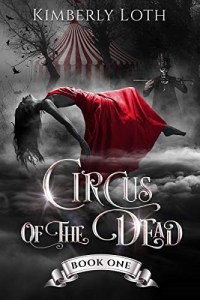
Trend 1: Grabbing the eye by using grayscale with a pop of color

Example: Circus of the Dead by Kimberly Loth


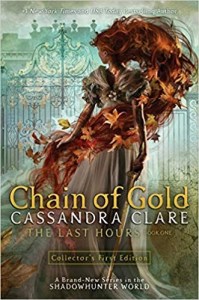
Trend 2: As a variation on the example above, muted palettes are leveraged for a dreamy, fantastical appeal.

Example: Chain of Gold by Cassandra Clare


Trend 3: Intriguing readers with a glimpse of something beautiful and mysterious

Example: Ember Queen by Laura Sebastian


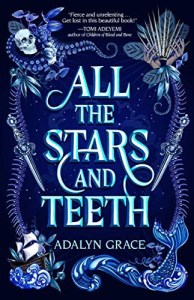
Trend 4: Pairing vibrant color and detailed graphics to make the viewer take a closer look.

Example: All the Stars and Teeth by Adalyn Grace


Trend 5: Pairing opposites (like death and beauty) compels readers to take a second look

Example: The Queen’s Assassin by Melissa De La Cruz


What cover art tactics have you seen work well, either on your book or others?

Vote for Joan the Made on Kindle Scout

After much writing, editing and general agonizing, I have finished the first book in my new trilogy, Joan the Made. This young adult series is set in the near-future, and follows Joan Fasces after she discovers that she cloned from of one of history’s greatest heroines—Joan of Arc. (Check out the full description of my novel below.)

I’ve decided to try to publish Joan the Made using the Kindle Scout program. Kindle Scout is reader-powered publishing for new, never-before-published books. It’s a place where readers help decide if a book gets published. The books that receive the most votes are published by Kindle Press.

Please vote for Joan the Made here. You will receive a FREE copy of my book if it is selected.

Book Description:

On Joan Fasces’ eighteenth birthday, she discovers that she is cloned from the famous Joan of Arc. But being cloned in America comes at a steep price. Segregated and oppressed, clones are forced to act as docile servants to the rest of the Evolved population.

Joan can either run from her fate and spend the rest of her life in hiding, or she can join a Throwback rebellion populated by clones of the greatest leaders in world history.

Goodreads Book Giveaway of My YA Fantasy Novel, The Society of Imaginary Friends

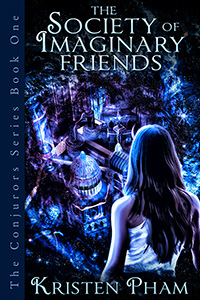
The-Society-of-Imaginary-Friends300x200Enter for a chance to win a hard copy of my Amazon bestselling novel, The Society of Imaginary Friends, a young adult epic fantasy. Click here to enter my Goodreads Giveaway, which is live now through December 21, 2016. This breakthrough novel is the first book of The Conjurors Series, and retails for $8.99.

Description:

Valerie Diaz has a power that she can’t contain, and it’s killing her. Bounced between foster homes and the streets, she only has time to concentrate on staying alive. But a visit from the imaginary friend of her childhood opens a world of possibilities, including a new life half a universe away on a planet that is bursting with magic.

The Society of Imaginary Friends follows Valerie on a journey that straddles two worlds. In order to survive, she must travel many light years away to a realm where anything is possible. On the Globe, imaginary friends come to life, the last of the unicorns rules the realm, and magic seeps from the pores of all the Conjurors who live there.

But choosing to embrace her potential will set Valerie on a treacherous course – one filled with true love, adventure and perilous danger.

Tips on Your Quest for An Agent

article-banner

Self-publishing my 4-book YA fantasy series, The Conjurors, was an experience that I am so grateful for. Over the past five years, pushing myself to finish the series and learning how to effectively market it has given me purpose and taught me what it means to build a platform and brand for myself.

But I’ll be the first to admit that marketing my books isn’t nearly as fun as writing them. There’s a satisfaction to be had when a sales/marketing strategy succeeds, but, for me, it doesn’t compare to the joy, the oblivion, of losing myself inside the movie in my head. So I decided for my new YA science fiction series, Joan the Made, I would search for an agent and try the traditional publishing route.

I had no illusions that it would be easy, or even possible, to land an agent. I have no contacts in the industry, or published friends to look to for advice or a reference. I’m also a hard-core introvert with the networking skills of a meerkat. But I have a book that I believe is the best thing I’ve written so far, and the willingness to spend a ridiculous number of hours researching agents, personalizing my query letters, and sending out hopeful wishes into the universe.

At first, there was a lot of rejection. But after sending dozens of queries and tweaking my manuscript and letter, interest began to rise. I’m still waiting and hoping that an agent will be interested in working with me. My manuscript is currently in the hands of a few agents, and there are others who have yet to respond.

Here are some lessons I learned along the way that dramatically improved the response rate from the agents I queried.

Revise your query letter when it isn’t working.
After every ten queries, I would rewrite my letter to emphasize a new angle. I adjusted the paragraph about myself, the description of the novel, and expanded why I was reaching out to that particular agent. This was the best thing I did. By the fifth query rewrite, I began seeing a lot more interest in reading samples of my manuscript, and even manuscript requests.

Revise your manuscript if you receive valuable feedback from agents.
A few kind agents gave me words of advice in their rejection notes, letting me know what they liked or what could be improved. About halfway through my querying process, I rewrote my manuscript to incorporate those suggestions.

Try Twitter pitch fests.
I know. I was skeptical at first, too. Condensing my manuscript into 140 characters was a challenge, and what real agents found writers on Twitter? A lot, it turned out. It was also a much-needed ego boost to see agents “like” my tweet and request a query letter and writing sample. One of those agents went on to request the full manuscript. I had the most success with #PitMad and #PitDark. Just be sure to vet any agents who are interested in your manuscript before reaching out to them to make sure they’re legit.

Only target agents interested in your exact genre, or you will drive yourself nuts.
Take it from the girl who queried over 100 agents. There are a lot of agents interested in exactly what you’re writing. Focus on those agents, rather than agents who have broader interests. If you’re writing Fantasy or Science Fiction, I found this list helpful. Another tactic that I tried was looking up who the agent was for books that were similar to mine that had been published and were successful.

I’m a still a newbie at the querying process, so I welcome any suggestions you have for me that I haven’t thought of yet.


How to Create an Advertising Campaign for Your $0.99 eBook Promotion

This September, I ran my biggest promotion to date on The Conjurors Collection, which is a bundle of the first three books in the series. It is the most successful promotion that I’ve run so far. Below are my best rankings during the promotion period.

Ranking

I discounted the bundle, which was $7.99, to $0.99 for two weeks, from September 6-19. In total, I sold 612 copies (earning me $214) and had a huge surge in readers from Kindle Unlimited, for which I was paid over $400. My check from Amazon for September was more than $700. Even considering that I spent $350 on advertising, I made a great profit (for me). Even better, the following month I made almost $500 even though I did very little advertising (less than $50), so the long-term benefit of the ad campaign was significant.

A month later I ran a mini-promotion on just the first book in the series, The Society of Imaginary Friends, discounting it to $0.99 for a week. I only spent $43 in advertising, but I had less than 50 sales. I wanted to call this out because part of my success with my September promotion was that I was selling three books for $0.99, which was a much more attractive deal.

Below I’ll list the sites that I used for advertising and the costs and results of each one. But some key takeaways – it’s worth it to have multiple days of high sales, even if the ads don’t immediately pay for themselves, because it pushes up your rank on Amazon, and the increased visibility results in more sales in the long term. For my next promotion, I plan to cluster my ads so that the ones that sell the most units are on subsequent days rather than spread out.

Another takeaway was that for a huge book like my bundle, it was worth it to be exclusive to Amazon (KDP Select). I was paid much better by every Amazon Unlimited reader than I was from readers who bought the bundle at $0.99. In the first case, I probably made over $5 for every reader who finished the book, and in the second case I made under $0.35. So while I may make my individual books available on other sites, I’ll keep my bundle exclusive to Amazon.

Below are the number of copies of the collection that I sold on a particular day, with the associated ad that I used.

Books Sold

September 19, 2015: Ebook Soda ($10), Pixel of Ink ($30)
Number of Downloads: 71
Effectiveness: Medium
Pixel of Ink is a site known for delivering a return on ad investment, but they do not always have options to advertise with them. It’s a matter of luck if your book can be featured when you need it there. I can’t say for certain how many sales were from Ebook Soda, so I may try advertising with them separately in a future promotion.

September 18, 2015:  FKBT ($25)
Number of Downloads: 35
Effectiveness: Medium
I was somewhat disappointed with the Free Kindle Books & Tips ad, given its price tag. It’s one of the few I won’t be using again, because my $25 can be split among other sites that will deliver a bigger value altogether.

September 17, 2015:  Wattpad (Free), Indies Unlimited Thrifty Thursday (Free)
Number of Downloads: 19
Effectiveness: High
I was concerned about my rankings dropping because I had no paid ads on this day, and was pleasantly surprised that a post on my Wattpad account (where I have the first book in the series published for free) and Indies Unlimited delivered an excellent influx of readers for no charge.

September 16, 2015:  Booksends ($50)
Number of Downloads: 70
Effectiveness: Medium
Though Booksends is pricey, I recommend it in order to drive up your Amazon sales rank. Though my initial investment in the ad didn’t yield a positive return, I do think it helped the overall campaign by selling such a high number of copies in one day.

September 14 & 15, 2015:  Books Butterfly ($50), Book Barbarian ($8)
Number of Downloads: 92
Effectiveness: Medium
These ads were over the course of two days. Like the Booksends ad, I recommend using Books Butterfly to give your ad campaign momentum by having a higher number of downloads, even if the ad doesn’t pay for itself right away. I will also try Book Barbarian again, next time on its own day so I can better determine how well it does on its own.

September 13, 2015:  The Fussy Librarian ($24 to be listed in multiple genres)
Number of Downloads: 19
Effectiveness: Low
I’ve advertised with Fussy in the past with better results, but this time I was disappointed in the return on my investment. However, I think part of the problem was that I spent extra cash to be listed in additional genres. Next time, I’ll stick to one genre, which will have a lower price tag.

September 12, 2015: eBookHounds ($5), Robin Reads ($15)
Number of Downloads: 59
Effectiveness: High
This was my first time advertising on these two sites, and I will definitely be using them again. I had a high number of downloads for a low cost, and it was one of a few days where I immediately made a profit, not counting the long-term impact on sales.

September 11, 2015:  Betty Book FREAK ($8), Reading Deals (Free)
Number of Downloads: 17
Effectiveness: Medium
For $8, I was satisfied with the number of downloads I received. I would try using Betty Book FREAK again to see how it performs on a different day.

September 10, 2015:  The Ereader Cafe ($25)
Number of Downloads: 27
Effectiveness: Low
Like FKBT, I was disappointed by how few downloads my $25 got me. This is a site I may cut from my future promotions to see if the money can be better spent elsewhere.

September 9, 2015:  Booklover’s Heaven (Free), BKKnights ($5.50)
Number of Downloads: 22
Effectiveness: High
BK Knights always gives me a good return for a small price tag. But be careful which of his services you choose. I recommend SKIPPING his twitter/facebook offerings. Instead, opt to be listed on his site, where readers are more likely to download your book.

September 8, 2015: Ereader News Today ($20)
Number of Downloads: 50
Effectiveness: High
I always have excellent results when I advertise with ENT, and this time was no exception.

September 7, 2015: Discount Books Daily ($10), Booktastik ($10), SweetFreeBooks ($5), ReadFreely (Free)
Number of Downloads: 25
Effectiveness: Low
By grouping so many ads together, it’s hard for me to parse which ones worked best. Maybe one site is responsible for all 25 sales, in which case I would be doing it a disservice not to recommend it. However, I will think twice before advertising on any of the paid sites from this day of my promo in the future, because the number of downloads was disappointing for a combined budget of $25.

September 6, 2015: BookGorilla ($50), ReadCheaply (Free)
Number of Downloads: 71
Effectiveness: Medium
Like Booksends and Books Butterfly, though BookGorilla is pricey, I recommend it in order to drive up your Amazon sales rank. Though my initial investment in the ad didn’t yield a positive return, I do think it helped the overall campaign by selling such a high number of copies in one day.


Have you found other sites that you highly recommend for advertising ebooks? If so, please share!

The Conjurors Collection: First Three Books in My YA Fantasy Series Available for $0.99

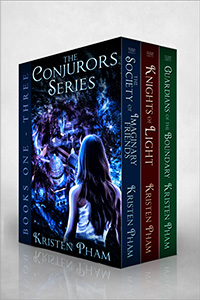
The-Conjurors-Series-3D-Omnibus-300x200If you’re a lover of teen/young adult fantasy, check out the first three books in The Conjurors Series for $0.99 today through September 20. The Conjurors Collection, Books 1-3, is available on Amazon if you’re interested in checking it out.

I welcome all feedback and reviews, so if you decide to read it let me know what you think!

Click here to check out an excerpt from the first novel, The Society of Imaginary Friends. Below is the blurb for the series:

Belief is a powerful magic.

Valerie Diaz has a power that she can’t contain, and it’s killing her. Bounced between foster homes and the streets, she only has time to concentrate on staying alive. But a visit from the imaginary friend of her childhood opens a world of possibilities, including a new life half a universe away on a planet that is bursting with magic.

The first three books of The Conjurors Series follow Valerie on a journey that straddles two worlds. In order to survive, she must travel many light years away to a realm where anything is possible. But choosing to embrace her potential will set Valerie on a treacherous course – one filled with true love, adventure and perilous danger.

This collection includes the first three novels in this young adult fantasy series: The Society of Imaginary Friends, Knights of Light, and Guardians of the Boundary. Purchased individually, the ebooks would cost $10.

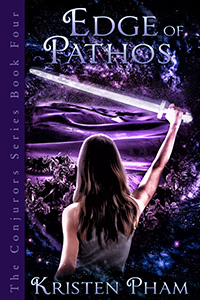
Edge-of-Pathos-300x200You can also check out the fourth and final book in The Conjurors Series, Edge of Pathos, for $4.99 on Amazon. It is not included in the collection.

Why Every YA Author Should Post a Book on Wattpad

e56666b5164c669f57b13bcc8fd05f54I know I’m a little late to the party, but recently I had a wonderful experience posting the first novel in my YA fantasy series, The Society of Imaginary Friends, on Wattpad. It’s been so rewarding that I recommend that any self-published YA author upload a book on this site. Did I make money? No. Did I connect with hundreds of grateful fans who were thrilled with my story? Yes!

Wattpad is a site where authors, many of whom are new writers, post their books one chapter at a time for free (my book’s page is here, if you’re curious). Readers can vote if they liked a chapter, and can comment on every chapter. There is a great app so that you can read on your phone, tablet or computer. Also, because all of the books on Wattpad are free, there are a lot of young, avid readers yearning for good YA fiction to read.

For me, this was an opportunity to connect with the readers whom I had written my series for. Many, if not most, of the people who have downloaded my series on Amazon are in their late teens or are adults. On Wattpad, the majority of the readers of my story are 13-18, my intended audience, and they responded warmly to my novel. Their positive energy has reinvigorated my writing, and is at least as rewarding as any paid sale of my books that I’ve received.

If you want to connect to a devoted YA readership, definitely publish at least one of your novels on Wattpad. Below are some tips to make the most out of your experience.

Once your full book is posted, make it a Featured listing. (This is free.)
When I began posting chapters of my book on Wattpad, I had very few readers. Even when I posted it on the Wattpad boards for “young adult” and “fantasy” and read and commented on other authors’ books, my story was relatively unknown. That’s when I discovered that Wattpad will promote your book as a “featured” story for free once most or all of the chapters of your book are published. Once I was featured, I had a couple thousand readers a day for the first week, and after that continued to have hundreds of new readers checking out my story for weeks afterward.

Reply to all comments on your book.
One of the best parts of Wattpad is that it is a chance to hear what your audience thinks of your writing. The readers on this site are vocal, which I loved. I received valuable feedback about what characters were resonating with my audience, and when the plot was getting slow. Most of the comments were very positive, and it brightened my day to read them.

Check your book’s engagement and demographic stats.
Wattpad tracks a lot of helpful metrics about who is reading your book. Demographic information including the gender, age and geographic location of your readership is very telling. You can quickly assess if your cover and blurb are drawing the audience you are targeting. Wattpad also tracks how many votes and comments each chapter received. This is helpful to see if certain chapters receive more or less attention, and help you identify where readers are losing interest, or where their interest is piqued.

Bask in the sunshine of your fans adoration.
Best of all, all that positive energy directed at me from my new, enthusiastic Wattpad fans put a fire under me to keep writing. Self-publishing can be a long, lonely road, and knowing that readers are devouring my work and begging for more, even if they can’t pay for it, made all that work feel worthwhile.

Do you have any additional tips for success on Wattpad? If so, please share!