SIDE QUEST: From the journal of Lord Malakor the Unforgiving

Welcome to Side Quest, a series of posts I share on my blog from time to time that give you a peek into the weird ‘what if’ scenarios and playful thought experiments I use to keep my imagination fired up when I’m taking a break from my latest novel.

Day 482 of the Eternal Gloom

I am this close to scorching the entire Eastern province. Not because of their pathetic rebellion. Not because of their overdue tithes. But because that gilded buffoon, Sir Gideon the “Gleaming,” just ruined a perfectly good batch of Shadowberry & Ghost Pepper Preserve.

Do you know how hard it is to get ghost peppers to grow in a cursed climate? The soil pH has to be exactly 4.5.

I was at the most crucial stage. The jam had just reached a 211-degree rolling boil. I was performing the wrinkle test on a frozen plate. The set was looking exquisite. I was already picturing the blue ribbon at the All-Kingdom Confectionery Contest.

And then, he bursts in.

“By the Light of Zorath!” he yelled, probably waking the entire crypt. “Fiend! Your bubbling Plague of Eternal Blight is at an end!”

I tried to stop him. “Gideon, you oaf, watch the jars! They’ve just been sterilized!”

But no. He just had to swing that ridiculous, glowing broadsword. Smashed my copper cauldron right off the fire pit. Two gallons of premium, pectin-balanced preserve, splattered all over my rare, hand-carved despair-stone floor. It’s going to be a nightmare to clean.

“The world is safe once more, Malakor!” he shouted, pointing the sword at me.

I just… I couldn’t.

“You… you… blond-haired menace,” I sputtered. “That was my submission batch! Do you have any idea how difficult it is to achieve a consistent flavor profile?”

Did he pause to really listen? To hear me? No! He threw the pot out the window and left, looking smug.

This is the fifth time this month. He thinks my canning operation is an “alchemical weapons lab.” He “liberated” my prize-winning apricot-habanero last week, thinking it was “liquid gold” to fund my armies. I bought those apricots from a mortal farmer. A mortal farmer, Gideon! His name is Stan!

I will have my revenge. And I will win “Best in Show” for my Spiced Blood-Orange Marmalade. Just as soon as I can re-sterilize my equipment.

Sidekicks with main character energy

As a writer, there’s a secret, terrifying, and exhilarating thing that can happen while you’re drafting: a character you intended for a minor role walks into a scene and refuses to leave.

They show up with a fully-formed voice, a riveting backstory you never planned, and a perspective so compelling it threatens to derail your carefully crafted plot. They aren’t just supporting the protagonist anymore; they feel like the hero of a different, fascinating story that’s happening just off-page.

That’s what I call “Main Character Energy.” It’s more than just being a fan favorite. It’s the powerful sense that a character has their own complete, vibrant world spinning within the larger narrative. Here are three secondary characters who radiate that energy, making their books infinitely richer.

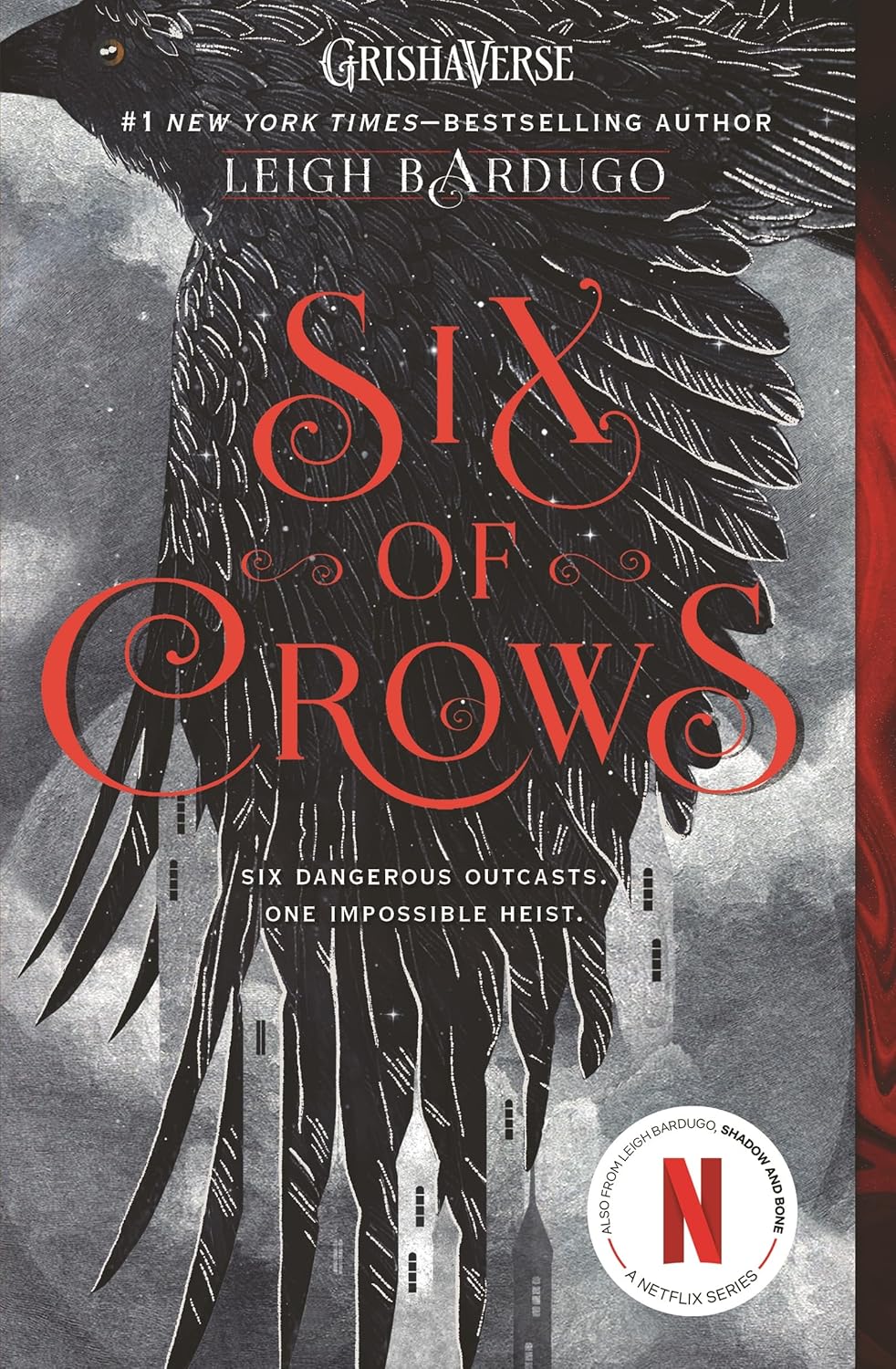
1. Inej Ghafa from Six of Crows by Leigh Bardugo

Kaz Brekker may be the mastermind, but Six of Crows is arguably Inej Ghafa’s story of reclamation. A girl of Suli heritage sold into indenture, her quest isn’t about money; it’s about buying back her own life and hunting the slavers who stole it. Her entire arc is a classic hero’s journey of confronting trauma and forging a new identity, happening in the shadow of a heist. You get the feeling that if the book followed only her, it would be just as compelling, if not more so. She is the moral center, and her quiet, deadly grace makes her the novel’s true gravitational pull.

2. Kenji Kishimoto from the Shatter Me series by Tahereh Mafi

Kenji isn’t just the comic relief; he’s the narrator of the story we wish we were reading sometimes. In a series defined by intense romance and angst, Kenji is the only one with enough perspective to see the utter absurdity of their situation, and he’s not afraid to say it. His Main Character Energy comes from the fact that he has a life, a history, and responsibilities—leading the soldiers of Sector 45—that exist completely outside of the main love triangle. He’s the protagonist of a gritty, found-family story about survival that just happens to intersect with Juliette’s epic romance.

3. Nico di Angelo from the Heroes of Olympus series by Rick Riordan

Nico’s power comes from the fact that his most important character development happens between books, in the shadows. We see the cheerful, myth-obsessed kid, and then we see the brooding, immensely powerful Son of Hades. His transformation is so profound that it forces us to imagine the harrowing solo journey he undertook. As a gay Italian demigod from the 1940s, he is a man out of time and out of place, everywhere he goes. He’s the protagonist of a dark, gothic tragedy who occasionally wanders into Percy Jackson’s sunnier adventure story, reminding us that the world is much bigger and scarier than we thought.


These are the characters who prove that a story’s magic doesn’t always come from the person on the cover. They remind us that every person on the street has a life as vivid and complex as our own.

Meet a few of the youngest stars of YA fantasy & sci-fi fiction writing

Do you ever have a story in your head that feels so huge, so epic, that you think, “Who am I to write this?” It’s a feeling a lot of writers have, especially when they’re young. But some of the most groundbreaking, imaginative, and successful books in recent years were written by authors who weren’t much older than their target audience. They prove that you don’t need decades of life experience to build a new world from scratch. All you need is a powerful idea and the drive to see it through.

Let’s get inspired by a few of the youngest authors who took the YA science fiction and fantasy world by storm.

Christopher Paolini, author of Eragon

  • Breakout Age: Paolini started writing Eragon at just 15 years old. It was famously self-published before being picked up by a major publisher, when he was 19.
  • The Hit Book: Eragon, the first book in The Inheritance Cycle, became a global phenomenon. A classic farm-boy-finds-a-dragon-egg story, it was everything an epic fantasy fan could want.
  • What Made It Special: Eragon is a masterclass in ambition. Paolini wasn’t just writing a story; he was building a massive world with its own languages, history, and rules of magic. He proved that a teenager could not only write a novel, but could command the epic scale and intricate detail that the genre demands, inspiring a whole generation of young writers to dream bigger.

Veronica Roth, author of Divergent

  • Breakout Age: Roth famously wrote Divergent during her senior year of college. It was published when she was just 22 years old.
  • The Hit Book: Divergent kicked off a series that became a cornerstone of the YA dystopian boom. It tells the story of Tris Prior, who lives in a futuristic Chicago where society is divided into five factions based on human virtues.
  • What Made It Special: Divergent‘s genius lies in its powerful central metaphor. The faction system was a brilliant and instantly relatable way to explore the intense pressure teens feel to fit in and define their identity. It tapped directly into that universal high school question: “Where do I belong?” The psychological trials were a unique and thrilling way to explore character depth and courage.

Tomi Adeyemi, author of Children of Blood and Bone

  • Breakout Age: Adeyemi was 23 when her debut, Children of Blood and Bone, landed one of the biggest publishing deals in YA history.
  • The Hit Book: Children of Blood and Bone is a soaring epic fantasy that follows Zélie Adebola as she attempts to bring magic back to her oppressed people.
  • What Made It Special: This book was a cultural landmark. Adeyemi wove West African mythology and Yoruba spiritual traditions into a powerful, action-packed fantasy that felt both classic and revolutionary. It tackled deep themes of oppression, race, and identity with a fiery passion that resonated with millions of readers. Adeyemi showed the immense, world-changing power of telling stories that had been left off the fantasy map for far too long.

The next time you sit down to write and that little voice of doubt creeps in, just remember these authors. They didn’t wait for permission to build their worlds. Your age isn’t a barrier—it’s your superpower. You have a voice and a perspective that no one else has.

So go write that story. We’re all waiting to read it.

SIDE QUEST: So you’re the chosen one. Here’s how to procrastinate responsibly.

Welcome to Side Quest, a new series of posts I’ll share on my blog from time to time that give you a peek into the weird ‘what if’ scenarios and playful thought experiments I use to keep my imagination fired up when I’m taking a break from my latest novel.This is the very first one, and I hope it gives your own creative brain a fun little jolt!

It finally happened. The glowing amulet pulsed in your palm, the talking squirrel delivered his cryptic prophecy, or maybe the birthmark on your arm started looking suspiciously like a map to the Lost City of Gorgonzar.

Congratulations. You’re the Chosen One. An ancient evil is stirring, a galactic empire is threatening the Outer Rim, and you—yes, you, the person who considers finding matching socks a major victory—are the only one who can stop it.

There’s just one problem. You have a history final on Tuesday, your favorite show just dropped a new season, and that pile of laundry in the corner is one t-shirt away from achieving sentience. Destiny is calling, but your phone is buzzing with notifications that feel just a little more urgent.

Don’t panic. This isn’t a guide on how to save the world. This is a guide on how to put it off… responsibly. Welcome to the art of Strategic Destiny-Delaying.

Step 1: Re-evaluate your priorities with the tier system of impending doom.

Sure, the Shadow Overlord Xylos is planning to blot out the sun. That sounds bad. But will he give you a detention that goes on your permanent record if you don’t finish your book report on Ethan Frome? No. Your teacher, Mrs. Davison, will.

Create a simple chart. In one column, list your epic quests (“Vanquish the Serpent King,” “Find the Seven Shards of Light”). In the other, list your real-life tasks (“Walk the dog,” “Finish algebra homework”). The task that will result in immediate, tangible consequences (i.e., parental grounding or a failing grade) wins. The fate of the universe has been around for billions of years; it can wait until after dinner.

Step 2: Disguise your training as household chores.

No one can accuse you of slacking off if you’re being productive. You just have to reframe it.

  • Are you sweeping the kitchen floor? No, you are practicing staff combat with the Legendary Broom of Tidiness.
  • Just folding clothes? Think again. You’re actually inscribing protective sigils into the very fabric of your armor to ensure it withstands the rigors of the coming quest (to the movies).
  • Are you practicing your heroic “I’m here to save you!” entrance in the bathroom mirror? That’s just good personal hygiene and confidence-building.

Step 3: Conduct extensive “lore research.”

Your quest will require immense knowledge of past heroes, battle tactics, and plot twists. How does one acquire this knowledge? By watching hours of television, of course.

That eight-season fantasy epic isn’t a distraction; it’s a historical document. You’re studying the effectiveness of plot armor, analyzing the classic “unlikely friendship” trope, and taking notes on what not to do when facing a dragon. When your parents ask what you’re doing, simply look at them with grave importance and say, “I’m studying the archives.”

Step 4: Engage in strategic fellowship vetting.

You can’t face the Dark Lord alone. You’ll need a ragtag team of loyal companions. But choosing them is a delicate process that requires careful observation in a casual setting.

Are you going to get fudge with your best friend? No. You are assessing their suitability for the “comic relief with a heart of gold” role. Does their choice of toppings show a bold, decisive nature? Are they willing to share, proving their loyalty? This isn’t just hanging out; it’s team-building.

So go on, Chosen One. The world will still be there waiting to be saved when you’re ready. Probably. In the meantime, that new season isn’t going to watch itself.

How to support an indie author for free – a first experience with the Kindle Scout Program

Check out this wonderful post onKindle Scout by my fellow indie author, Allie Potts!

Allie P.'s avatarAllie Potts

A way to support #indieauthors for free and an Introduction to #KindleScout - www.alliepottswrites.comThis is the launch week for a young adult science fiction book called Joan the Made written by Kristen Pham. While I always enjoy celebrating my fellow indie author’s bookbirthdays, this one is special as it is the first book I helped bring to market through Amazon’s Kindle Scout Program.

I say that like I put in a lot of work.

For those who aren’t as familiar with the ever mysterious world of independent publishing, the Kindle Scout program is a way for authors to get a little financial and marketing boost from the all mighty Amazon without sacrificing all their creative control or signing away their rights for future works in the worlds they create under the guise of non-compete terms.

As I am still in the midst of rewrite, I have yet to try my hand at gaining access to the program with one of my own books…

View original post 539 more words

Vote for Joan the Made on Kindle Scout

After much writing, editing and general agonizing, I have finished the first book in my new trilogy, Joan the Made. This young adult series is set in the near-future, and follows Joan Fasces after she discovers that she cloned from of one of history’s greatest heroines—Joan of Arc. (Check out the full description of my novel below.)

I’ve decided to try to publish Joan the Made using the Kindle Scout program. Kindle Scout is reader-powered publishing for new, never-before-published books. It’s a place where readers help decide if a book gets published. The books that receive the most votes are published by Kindle Press.

Please vote for Joan the Made here. You will receive a FREE copy of my book if it is selected.

Book Description:

On Joan Fasces’ eighteenth birthday, she discovers that she is cloned from the famous Joan of Arc. But being cloned in America comes at a steep price. Segregated and oppressed, clones are forced to act as docile servants to the rest of the Evolved population.

Joan can either run from her fate and spend the rest of her life in hiding, or she can join a Throwback rebellion populated by clones of the greatest leaders in world history.

How Much Violence Is Too Much in YA Literature?

As a writer of YA science fiction and fantasy, I’m no stranger to writing my heroines into some violent struggles. Whether it’s emotional abuse or outright warfare, somehow these themes are embedded in the hero(ine)’s journey.

But I am also sensitive to the fact the readers of my stories are not adults, like me. When I grapple with violence in my writing, I am aware that my words carry the potential to be a force for good, or to be damaging. Walking that narrow line, without condescending to readers who are smart, sensitive people, is not easy.

Below are the yardsticks I keep in mind when violence erupts in my stories.

Avoid gratuitous violence.
It’s easy to use graphic violence for it’s shock value. As writers, we want to make our readers feel something when they engage with our work. However, it’s not appropriate to use violence or trauma as a shortcut to actual writing and character development. For example, I’ve noticed a number of YA novels recently where the main character is a rape victim. The topic is not explored or an organic part of the story, but rather used as a way to generate instant sympathy for the protagonist. Inevitably, the result is a character that is a shell of a person, defined by what is done to them, rather than who they are. A character that is no more than a victim, rendered lovable only by their trauma (and drop-dead good looks, of course), is not a safe message to pass to a young adult audience.

Focus on the emotional drama of a violent event rather than the gore.
Young adult fantasy seems to have a different metric than other YA literature when it comes to the level of acceptable violence. In fantasy, YA heroes and heroines wield weapons, fight in wars, and kill enemies. But handling that level of violence when writing for young adults requires some delicacy. As a huge fan of Sarah J. Maas, one aspect of her work that I have always admired is her ability to address the psychological impact of the violence in her stories. She includes enough information to set the scene, but doesn’t plunge into the details of gory acts. The reader’s horror is evoked by the reaction of the protagonist, rather than the gore.

Do your due diligence when addressing issues of abuse, depression and suicide.
As writers creating fiction for young adults, we have a responsibility to make sure that our novels do not encourage destructive behavior. A recent example is the Netflix video series 13 Reasons Why, based on a novel of the same name. The story centers around a girl who commits suicide. For teens who are depressed or suicidal, reading about others who act on those feelings can be triggering. That doesn’t mean that authors should avoid those topics. Rather, do your homework and learn what experts say should be emphasized and avoided to craft a story that acts as a force of good (or at least good entertainment).

Address the consequences of violence.
After writing a scene where a character endures violence, remember that the pain lives on long after the act is over. That means that characters need time to heal, and may suffer from PTSD. Aside from the fact that this will make your story deeper and more resonant with readers, it is particularly important for YA audiences to understand that violence has long-lasting repercussions.

Write a book description that makes any violence in your novel explicit.
If your book includes violence, make sure that readers are aware of what they are getting into before opening your book. Your book description should make it clear that you are touching on a sensitive or triggering topic. When marketing your books, reach out to age-appropriate readers, and include disclaimers about the violence.

A Mom’s Take on Maui’s “You’re Welcome” Song from Disney’s Moana

Maybe it was because my 5-year-old decided to write a letter to Santa about all the things mom had done wrong that day.

Maybe it was because my 3-year-old refused to let  me brush her teeth for the umpteenth time until I showed her pictures of rotten teeth on the Internet.

Or maybe it’s just that writer’s block will do strange things to a person.

But that night, when I watched Disney’s Moana for the first time with my husband, and I really sympathized with Maui when Moana came to drag him off on her quest. When he sang the “You’re Welcome” song, all I could think of was my own kids.

I’m always in need of a creative outlet, so I decided to write a spoof of the song. For fun, I added some funny parenting pictures for your viewing pleasure. The singing is by a talented artist, Celeste Notley-Smith. Check it out and let me know what you think!


2017 YA Fantasy Trends

captureThe crop of YA fantasy novels this year has been a true delight. It’s still February, and I’ve already ripped my way through hundreds of pages of adventure, anguish, and romance. As a reader, it’s been a blissful escape during a year that has been tumultuous for so many of us already.

As a writer, I’m also excited to see that there is a changing of the guard in terms of the kinds of stories being released. I mean no offense to gritty urban fantasy, heroines who seem born knowing how to fight off all kinds of monsters, and epic battlefield clashes, but it’s refreshing to find stories writ smaller, and more intimately, than ever. The new themes and personalities that are emerging keep writers on their toes and readers enthralled.

Here are some of the themes that I’ve found to be both popular and powerful this year.

capture3Parental (and family) drama takes center stage.
This year’s heroines are not the orphans and loners of yesteryear. They must navigate family politics and expectations, and break out of the childhood roles that bind them in order to find their identities apart from their parents. In Stephanie Garber’s novel, Caraval, the heroine has a father who brutally beats her and her sister. Part of her journey is not only physically escaping his control, but breaking through the mental trauma that defines her. What I love about the emphasis of the integral role of family on a protagonist, for better or for worse, is that it leads us away from the view that you can separate an individual from where they come from. Heroines who are the products of their history feel more personal, and believable.

capture4The power of art to change us and define us.
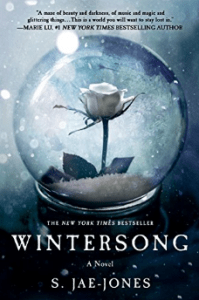
I have enjoyed the YA fantasy of the past few years taking a concrete approach to strength in its heroines. These women could fight the biggest monsters, wield the most magic, and us their wits and logic to overcome any obstacle. But I didn’t know that I was missing heroines with artistic, sensitive souls that gave them strength. Now, I can’t imagine a heroine without one. My favorite example is from S. Jae-Jones’ novel, Wintersong. Liesl, the protagonist, is a composer, and the power of music is a theme that acts as the glue holding the story together. It deepens and intensifies both the reader’s understanding of the protagonist, and lends believability to the “specialness” that makes her unique to a goblin king.

capture2Love interests who are happy to be “beta” males.
Praise all that is good, this year the alpha male appears to be taking a backseat to a subtler, more fragile and human male specimen. Bulging muscles and overconfidence are taken off their pedestal for men who are interested in the arts, slender in their build, and comfortable letting a woman take the driver’s seat. Sigh. I’m halfway in love, just thinking about them. A prime example is the character of Jest in Marissa Meyer’s Heartless, which was released last November, but I’m still counting in our 2017 trends. Jest is a performer and a lover. He’s heroic in his own right, but he never robs Cath, the protagonist, of her choices. There is the risk that he is too perfect, but I’ll take that when I see a heroine with the ability and choice for forge her own future.

Novels that play with our sense of what’s real.
Maybe it’s because so many of us are questioning if our news, our politics, even our own opinions can be trusted, but there is a distinct theme that I’ve found winding its way through YA fantasy this year. The current crop of protagonists not only don’t know who they can trust, but they also must question the reality of the very world they inhabit. From Caraval to Heartless to Wintersong, the heroines’ stories are upended as they question what is real, and what is part of a game. Maybe that’s what many of us our wishing – that we might wake up, like Alice, and discover that the upside-down world that frightened us was nothing more than a dream.

Any other trends that have caught your eye this year, or books that you’d recommend to a reader always starving for a good YA fantasy?

Looking for Villainspiration

abstract-1057521_960_720It’s dark and dreary in my hometown of San Jose this week, and the ghost of something dark hovers at the edges of my thoughts whenever I watch the news. The combined effect might be disturbing if it were an ordinary week, but right now I’m obsessing over how to craft a worthy villain to terrorize the protagonist of my new series. I need all the villainspiration I can get, because the task of creating a villain requires a different kind of soul-searching than writing a nuanced protagonist.

As an avid reader of all kinds of literature, I’ve been frightened by the creations of many talented authors who are adept at writing believable antagonists for their heroes. Below are some of the most helpful nuggets I’ve taken from their hard work and brilliance.

Knowledge of the villain’s plans and motivations should be hard-won.
One of the creepiest books of all time is Dracula by Bram Stoker. I’ve lain awake at nights as a grown adult unable to sleep for fear that the red light blinking in the corner is not, in fact, my fire alarm, but rather the red pupils of an evil vampire after my sweet little throat. Stoker’s Dracula never revealed his darker side to the heroes willingly. He acted the part of a gentleman, and it took serious detective work to uncover his evil past and nefarious plans for the future. When the heroes earn their knowledge, the reader credits it more than when it’s handed over in a neat package of backstory from someone in the know.

Sometimes the worst villains start out as the heroine’s friend.
This isn’t a new idea, but it’s one that is powerful time and again when executed well. When a friend turns enemy, they know the heroine’s fears, strengths, and vulnerabilities. And because the villain began as a friend, the author is less likely to let the villain devolve into a caricature of evil instead of a person. Sarah J. Maas has a new twist on this idea in her Court of Thorns and Roses trilogy. The heroine’s true love in the first book becomes the villain of the second, without any idea that he has fallen from his throne in her heart. Seeing how the good in him grows warped in both fascinating and troubling – in the best way.

No monologuing. Ever.
Your heroine can have a speech. Your heroine’s friend can espouse on relevant topics at lenght. Your heroine’s mentor can have a rallying pep talk. But, please, skip the long explanation of motives, preview of evil plans, and exhaustive reminiscences of the past coming from the mouth of the villain. If the villain’s backstory is crucial, find a creative way to expose it. J.K. Rowling created the pensieve to give Harry a peek into Voldemort’s past. It allowed the reader to experience events in real time, with action, instead the biased ranting of Voldemort. This makes more sense for most villains, who would never willingly reveal weaknesses or plans to someone with the ability to undermine them.

Take a peek inside your villain’s head.
It’s human nature to over-simplify and stereotype the people we encounter, and the heroine of your story is no different. When, as a writer, you’re lost inside your protagonist’s head, good and evil are very black and white. But readers have a different reaction to villains who are too extreme, or cartoonish. They are less terrifying, because they don’t feel real. Writing from the villain’s perspective (even if you don’t use what you write in your final draft) forces you to give them believable motives, a view of the world that makes sense to them, feelings, and a personal history. If you’re looking for an author who does this so well, consider the protagonist/villain of Lolita by Vladimir Nabokov, Humbert Humbert. The man is a child molester, but in his own head he is a victim of the thirteen-year-old torturing him with her beauty. You find yourself on the brink of sympathizing with him, and then the reality of what a monster he is hits you again and again. Even if you can’t give your villain a voice within your novel, as his creator you should know him well, so you can write him believably.

Thunder (or a garbage truck) is rumbling in the background as I write this post, reminding me that I should return to the task of tackling my next novel. So I’ll dim the lights, shed reality, and put some of this villainspiration to good use. As long as I don’t encounter my own personal tormentor…writer’s block.

NOOOOOOOOOOOOOOOOOOOOO!!!!