Free YA Fantasy Ebook: The Society of Imaginary Friends (The Conjurors Series)

The-Society-of-Imaginary-Friends-2500x1563-Amazon-Smashwords-Kobo-AppleIf you’re a lover of teen/young adult fantasy, check out the first book in The Conjurors Series for free on Amazon March 14-16. The Society of Imaginary Friends is available on Amazon if you’re interested in checking it out.

I welcome all feedback and reviews, so if you decide to read it let me know what you think!

Click here to check out an excerpt from the novel. Below is the blurb:

Belief is a powerful magic.

Valerie Diaz has a power that she can’t contain, and it’s killing her.

Bounced between foster homes and the streets, she only has time to concentrate on staying alive. But a visit from the imaginary friend of her childhood opens a world of possibilities, including a new life half a universe away on a planet that is bursting with magic.

The Society of Imaginary Friends follows Valerie on a journey that straddles two worlds. In order to survive, she must travel many light years away to a realm where anything is possible.

On the Globe, imaginary friends come to life, the last of the unicorns rules the realm, and magic seeps from the pores of all the Conjurors who live there. But choosing to embrace her potential will set Valerie on a treacherous course – one filled with true love, adventure and perilous danger.

Knights-of-Light-2500x1563-Amazon-Smashwords-Kobo-AppleYou can also check out the second book in The Conjurors Series, Knights of Light, for $3.99 on Amazon.

Announcing My New YA Fantasy Novel: Knights of Light (The Conjurors Series)

Knights-of-Light-2500x1563-Amazon-Smashwords-Kobo-AppleI’m not going to try to play it cool – I’m excited to announce that the second book in my young adult fantasy series, The Conjurors, is published. Knights of Light is now available on Amazon.

If you want to take Knights of Light for a test drive, check out the free excerpt here. Below is the blurb:

Leading means taking mortal risks. Hiding is not an option.

With a tumultuous year behind her, Valerie is ready to start a life that doesn’t include running from enemies and risking her life. Too bad someone wants her dead.

No matter how much she resists, Valerie is thrust into a position where it is up to her to lead the Conjurors against the power-hungry Fractus or suffer the consequences of two worlds ruled by those who wield magic as a weapon. But the clashes don’t stop on the battlefield. As Valerie finds herself torn between her new love and her best friend, it will be up to her to figure out who she can’t live without.

In the fast-paced second novel of The Conjurors Series, Valerie searches for the father she thought was long dead and begins to come to grips with the immensity of her new power.

The battle has begun.

How Not to Approach Choosing a Cover Artist

Picture1When I wrote the first book in The Conjurors Series, I held what turned out to be a naive belief that it would succeed or fail based on the merits of my writing. Now older and (hopefully) wiser, I’m ready to admit that a strong, eye-catching cover is crucial to selling any book – but especially one that you’re self-publishing. If you’re a self-publishing pro, this post is not for you. But if you’re a relative newbie to this world, please learn from my mistakes. Perhaps you’ll save yourself hundreds of strands of hair that you would otherwise pull out your head in frustration.

Unless you’re a gifted artist as well as a writer, don’t create your own cover art.
Even a random person on the street could have done a better job with the cover of my book than I did with my original cover. In my infinite wisdom, I opened ClipArt in PowerPoint, chose an image, and called it a day. To my untrained eye it looked simple and elegant. But friends and family assured me it looked boring and amateurish. When readers agreed, I had to admit that they were right.

Don’t hire someone from O-Desk, Freelancer, etc. unless you have a strong artistic sensibility and know exactly what you want on your cover.
Alas, in my case, my creativity with the written word does not extend to the visual arts. I knew enough to realize that my own cover art wasn’t getting the job done, but figured that surely someone who could draw reasonably well could easily create a dynamite cover. However, without any distinctive guidance from me, or even an understanding if what I was seeing was good, this effort didn’t save me any cash – it was a money sinkhole.

Avoid random web searches for cover artists unless you have the patience of a saint.
After scouring dozens of websites and flipping through hundreds of cover samples, I felt more overwhelmed and less confident about how to fix my cover than ever. I had no idea if the artists whose work I was viewing had been successful in selling books. I was terrified of throwing away more money on an artist who needed guidance from me that I couldn’t provide.

Don’t let your number one consideration when choosing a cover artist be price.
Like a lot of newbies in the self-publishing industry, I’m on a micro budget when it comes to promoting my books. But people more experienced and successful than myself all agree that your cover is the last thing you should cheap out on. I’m not saying you need Dan Brown’s cover artist working for you, but finding someone who can give you a cover that is professional and pleasing can be the difference between success and failure when readers only your see your title and a thumbnail image of your cover before deciding if they want to find out more.

With that being said, there were a few things that did work for me. First was seeing who the pros were using. Some self-published authors thank their cover artists in their acknowledgments or post who their cover artists and editors are on their websites. (And may karma reward them for that!) Another good source was a Goodreads list of recommended cover artists (they have multiple threads on this topic). This was nice because there were a variety of price points. My last tip is to reach out to any friends you have who are artists or at least have a good sense for the visual arts to look at the portfolio of the cover artist  you’re planning to go with before you spend any cash. Worst case scenario, at least you have someone other than yourself to blame if your cover doesn’t come out quite right.

Brand new covers of the first two novels in The Conjurors Series will be posted on my site in October. I hope you come check them out and let me know if I finally got it right!

How to Write a Great Battle Scene

shutterstock_101136988One of the scenes in my novels that I find most intimidating to write is battles. How much action is too much? Or am I making it too simple? The Conjurors is a young adult fantasy series, and I enjoyed a succint, informative article on StormTheCastle.com about writing fantasy battles that got my brain working. These techniques gave me a starting point, and when I sat down and wrote the big battle in my story, I found a few other helpful techniques that I wanted to share.

Keep track of your heroine.
With all of the blood and manoevers and treachery, it’s easy to get lost when writing a battle. I found that using my heroine as an anchor helped to focus me. This is still her story, so I reminded myself to include her emotional responses to what she was witnessing, as well as the action itself.

Write a battle your audience will care about.
The battle scene in a book for adult men should look different than a battle in a YA fantasy aimed at a female readership. Talk to your fans and friends to see how much detail they want you to go into on the battlefield. Personally, I tend to skim the battle scenes in books that describe tactics and detailed combat. On the other hand, when I read Suzanne Collins’ Hunger Games trilogy, the battles kept me riveted, because it was as much about what was happening inside Katniss’ head as it was about the fighting itself.

Check out historical battle tactics.
This can get overwhelming and confusing, so I’d like to add the caveat that it’s only worth real effort if you’re writing a massive battle scene. If you’ll be battling for a few chapters, you might want to check out some information on battle strategy to make your story richer. It also helps provide a framework for your battle so that you don’t get lost in all the blood.

Choose a fighting style and read up on it.
You can even take a class. If your fighters are all using hand-to-hand combat, it helps to know a few moves that you didn’t see in an action movie. You can talk to a friend in martial arts or even read up on the basics. No matter what style you have in mind, from 21st century warfare to clashing swords, a little knowledge goes a long way toward making your story believable.

Do you have any other tips on how to write a battle scene well? I’m editing mine now and would love some tips!

On Writing 100,000 Words in 100 Days – Sorta

shutterstock_119136343

A little over a week ago I became the proud author of the complete first draft of the second book in my young adult fantasy series, The Conjurors. I’d made a pact with myself to write 100,000 words in 100 days, and I can’t say that I wrote 1,000 words every single day – but I came close. Life got in the way sometimes, like when my husband, toddler and myself all came down with a violent stomach virus. Or, to be fair, also when I became obsessed with Cassandra Clare’s The Infernal Devices Trilogy and decided that my need to marathon the series overrode my need to finish my own story.

But at least having this goal encouraged me to complete the first draft of my novel in close to 100 days. It’s an exercise that I plan to repeat in the future. I know some writers ebb and flow in the amount of content they create as their muse inspires them. Sometimes I wish that I were that kind of writer, but in reality I think I’m the kind of person who does best when I force myself to be creative.

So given that this plan was a success, I think it’s time for a new goal as I begin the editing process – which I happen to love and am excited to begin. I owe my beta readers a draft of the story in September, so until then I plan to edit a chapter a day, minimum. This may be ambitious, but it’s a place to start.

Do any of you have advice on setting editing goals? If so I’d love to hear your thoughts and advice!

Best First Sentences in YA Fantasy

shutterstock_123859036Now that I’m writing the ending of the second book in The Conjurors Series, I find myself looking back to the beginning – particularly the very first line of the story. I read a great article in The Atlantic about Stephen King’s approach to writing great first lines – make it an irresistable invitation to continue reading and introduce your style and protagonist. This master of the craft spends weeks and even years perfecting opening lines, and once he does, the rest of the story flows.

But for me, I find that writing a great first line means having a complete grasp of the story as a whole. No matter how detailed my outline is, the story is still nebulous until it’s written. I love to research the “greats” when I’m looking for inspiration, and I thought you might enjoy some of the best first lines from young adult fantasy novels that I encountered on my search.

10.
In these dungeons the darkness was complete, but Katsa had a map in her mind.
– Kristin Cashore, Graceling

This is a simple, graceful opening line that introduces the reader to the protagonist with an interesting tidbit about her personality. It also puts the reader in the middle of the action without being confusing or disorienting.

9.
I felt her fear before I heard her screams.
– Richelle Mead, Vampire Academy

An excellent example of an attention-grabber that propels the reader straight into the story.

8.
“Aaaaaaaaaaaaarrrrrrrrrrrrgggggggggghhhhhhh!” His fall seemed to go on forever.
– Jamie Thomson, Dark Lord: The Early Years

We’re smack dab in the middle of action, and the tone is already set for the offbeat humor that is unique to this story.

7.
Look, I didn’t want to be a half-blood.
– Rick Riordan, The Lightning Thief

This short sentence both establishes the conversational, first person voice of this series as well as immediately making the reader relate to the protagonist.

6.
Lyra and her daemon moved through the darkening hall, taking care to keep to one side, out of sight of the kitchen.
– Philip Pullman, The Golden Compass

A girl and her daemon sneaking around in the dark? Please tell me more!

5.
The demon exploded in a shower of ichor and guts.
– Cassandra Clare, Clockwork Angel

Starting in the middle of an action scene is a classic way that authors hook readers, to the point where it sometimes feels cliche. But Clare decides to go big or go home with this approach, and it got my heart pumping from the first line.

4.
The children were playing while Holston climbed to his death; he could hear them squealing as only happy children do.
– Hugh Howey, Wool
Foreshadowing at its finest. The contast between the squealing children and the prospect of death is riveting, and it also introduces us to the first protagonist of the story.

3.
It is the first day of November and so, today, someone will die.
– Maggie Stiefvater, The Scorpio Races

This first line shares some of the characteristics of the first line from Wool, but I loved it even better because of its perfect mystery and simplicty.

2.
Dear Reader, I’m sorry to say that the book you are holding in your hands is extremely unpleasant.
– Lemony Snicket, The Bad Beginning

Lemony Snicket has a very unique tone in his stories, and from the first line of the A Series of Unfortunate Events series, readers can instantly get a sense of it. I also admire the use of reverse psychology. What is it about him warning me away from this horrible book that really makes me want to keep reading?

1.
I am dead, but it’s not so bad. I’ve learned to live with it.
– Isaac Marion, Warm Bodies

One of the best first lines I’ve come across. Readers get an instant sense of both the tone of the writing and the personality of the protagonist. It also introduces us to a unique concept right away. It doesn’t take pages to discover that we’re in a world unlike anything we’ve read about before.

Did I miss any of your favorite YA fantasy first lines?

Author Interview: T. Sae-Low on Writing YA High Fantasy

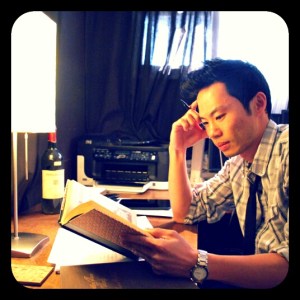
Author PicFor the sake of transparency, I’ll admit that the new author I’m interviewing today is one of my favorites. His YA fantasy Prophecy Rock series is action-packed and filled with characters who stay with you long after you’ve finished reading his stories. So far he has written the first book in the series, Genesis, and a novella called Shadows of Kyrus that will be released soon and I had the pleasure of beta reading. Both stories are quick, enjoyable reads that I recommend.

With the Prophecy Rock series, Sae-Low created a compelling world that feels real and robust. He is also gifted at creating powerful, believable female characters, a subject which you may already know is close to my heart. I hope you enjoy this peek into his thinking process as much as I did!

Tell us a little about the mysterious T. Sae-Low. Can we know what the “T” stands for?

Well, long story short, I’m a native of L.A. but went to college down in San Diego. After college I tried a couple different fields of work and ended up becoming a teacher. It’s Mr. Sae-Low by day and the mysterious T. Sae-Low at night! The “T” is just the first initial of my first name which is “Theppong.” The name is Thai which is where my parents are originally from before emigrating to the U.S. I’ve been told that it means “Angel of Mercy” or “Angel of  God” in Thai, but my family could just be messing with me. I’m thinking it’s the latter.
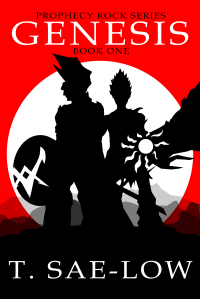
Cover_R5What was the hardest part about writing Genesis, and how did you overcome it?

Two things immediately come to mind. The first was creating the outline. It took so much longer than I thought it would. For months and months I spent countless hours researching to create Eos and all the characters that populate it. After that, I needed to figure out where I wanted the story to go. Once I had all that done, the writing came a lot easier than I thought it would…but it was just the first draft. The second thing that I think any creative mind can attest to was the revision process. To get the manuscript just right, at least in my mind, took a while. I continued revising and tweaking things until I was finally satisfied with the story. It took a lot of time and perseverance but it was well worth it when you see the finished product.

The female characters in Genesis are very strong. Did they come from your imagination or were they inspired by people from your life?

Yeah, I wanted to have strong female leads because I feel that they’re just so much more interesting than the typical “damsel in distress” archetype. Since the novel takes place in an age of constant warfare, I knew there would be a good number of battles (both large and small) in the novel. I didn’t want my female characters to be watching from the sidelines but actually in the thick of the action and even dictating what was happening.

I find my inspiration from a variety of sources, but I do tend to look back in history at ordinary people who did extraordinary things. Figures like Mother Theresa and Harriet Tubman come to mind. To endure incredible odds and still manage to come out on top is truly fascinating. For my female characters, in addition to being able to beat down their enemies in battle, I wanted them to have strong and opinionated personalities that almost commanded attention. I just felt it made them that much more interesting.

What was your inspiration for the vivid settings that you created in Genesis?

The world of Eos is a combination of a whole lot of different sources. I grew up reading and collecting comic books and watching anime with my older brother. Every title seemed to have a unique and wonderful world that I always wanted to learn more about. Why is the sky colored green? Why do they have to wear masks? Why are the buildings shaped like that? I found myself asking more and more questions as I delved deeper into these make-believe worlds. Another part of me has always been fascinated with mythologies of various cultures. Each one is so creative and different in how they try to explain and make sense of the world around us. I love reading about creation myths and what different cultures believe about the afterlife. All of these inspirations mixed together in my mind and what came out was the world and mythology of Eos and Prophecy Rock.

You’ve also written a novella that will be published soon, Shadows of Kyrus. Which story did you find easier to write?

Even though Genesis was a longer story, I felt it was easier to write than Shadows of Kyrus. With Shadows of Kyrus, I wanted to approach it a little differently and experiment with the narrative format. As a novella that takes place in the world of Eos but isn’t necessarily tied to the main story arc, I gave myself more flexibility in what I wanted to do. As odd as it may sound, I was inspired to write Shadows of Kyrus after I read some of the classic monster tales like Mary Shelley’s Frankenstein. Shadows was originally supposed to be told as a series of flashbacks during an interview but the plot evolved in a different direction during the writing process that I am very happy with.

What is the strangest thing that has ever inspired you?

I ride the train to work everyday and just watching and observing different people helps me create some of my characters. Here’s a short story. So one day an older man boards the train with his bicycle and starts banging his bike against the seats and even into other patrons. He’s cursing and hollering at everyone and just making a huge scene. Eventually he starts mouthing off at another rider and the other guy gets so angry that he hurls his soda at the old crotchety man, splashing soda all over the place, including me! I and other people were upset but the old man was laughing hysterically at the whole thing. The other rider got off the train and the old man exited shortly after. It was such a weird and random scenario, but I honestly couldn’t stop wondering what this old man’s story was. How the heck did he get to this point in his life? Did something horribly tragic happen to make him become like this? Or has he been like this his whole life? Anyways, when I got home that night and did some writing, the incident inspired me to write the scene in Genesis where one of the key characters meets the old man at the marketplace.

What are some books and authors that have inspired your writing?

There are so many to choose from but the ones that stand out to me are the masters of fantasy like Tolkien because of his incredible ability to create worlds. I mean the guy even created the term Mythopoeia! George R.R. Martin is a master of weaving together multiple plot lines into one epic story like no other. I’m a big fan of Paulo Coehlo and his works like The Alchemist. His ability to tell a simple yet deeply profound story is a skill that I truly admire. I also listen to great speeches from history on my iPod (yeah, I’m a nerd like that). Speeches are fascinating to me because you have to deliver so much with such few words. Even though it’s a different medium, I try to incorporate the same principal into my writing as well.

Is there anything else you’d like us to know about you?

I just want to thank Kristen Pham for the chance to be featured on her wonderful blog. Please support indie and self-published authors. There are a lot of great writers out there who deserve to be recognized and are creating truly unique and ground breaking work. Thanks to everyone who has supported me and my writing. Please check out my website at www.tsaelow.com to learn more about me and the Prophecy Rock Series. Shadows of Kyrus is almost available so please stay tuned! You can follow me on my blog, Twitter, and Facebook. Thanks!

Five Terrifying Young Adult Fantasy Villains

Over the past few weeks I’ve been creating the backstory for the villain of my series, The Conjurors. I want him to be believable, compelling, and frightening. For inspiration, I looked to the masters of young adult fantasy and considered which villains I found most captivating. Below are my top five.

Lord Voldemort, Harry Potter, J.K. Rowling

VoldemortJ.K. Rowling may not be the first author to use Hitler as a model for her super villain, but she is the most creative, in my opinion. Voldemort’s obsession with the purity of the wizard race, combined with his sociopathic childhood, make him both creepy and intensely threatening. Throughout the series no one was safe – not even civilians or children. When he whipped out his wand, my palms would sweat for whoever was at the other end of it. And let’s not forget his snake, Nagini. I think I’d rather submit to “Avada Kedavra” than be eaten by that enormous monster.

Metatron, His Dark Materials, Philip Pullman

A power-mad angel with almost unlimited powers, Metatron feels undefeatable in the His Dark Materials series. He uses the language of religion to create a dictatorship from heaven, where he can control human’s lives like puppets. Perhaps most chilling of all, he is even more powerful than The Authority, who is god in the series. Throughout the books, I found myself wondering how he could ever be taken down – but it was by his own weakness in the end, not someone more powerful than himself. My one gripe was that the hero and heroine of the story, both children, weren’t the ones to lead him to his doom.

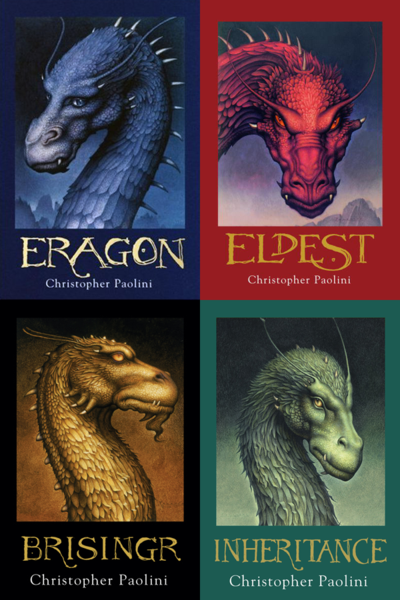
Galbatorix, The Inheritance Cycle, Christopher Paolini

InheritanceCycleCoversUsing the souls of dead dragons to power his magic? Yikes! I have to give Paolini credit for finding one of the most original and sinister ways for a villain to derive his power. Galbatorix is absent for much of the series, but he is always talked about. This makes him more intimidating than if we were encountering him around every corner. And when Eragon does finally encounter the villain of the series, he doesn’t disappoint – he can possess people and, like Metatron, has to defeat himself because he is too powerful to be destroyed by anyone else.

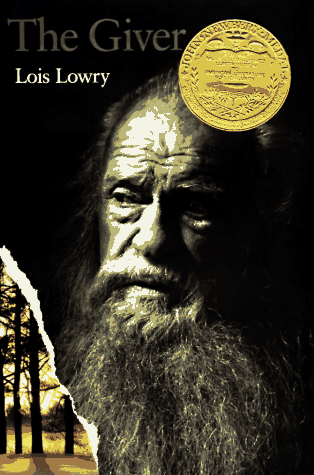
Society, The Giver Quartet, Lois Lowry

TheGiverThe Giver was one of the most fascinating books that I read when I was younger, and Lowry has recently finished the series in 2012 with the final book, Son. In this series, it isn’t one villain who acts as the antagonist of the series, but rather society as a whole. The mob mentality of killing off those who are weak, and a conscious decision to shut off emotions, leads to very cold and clinical assessments of who should live and die. It’s a world where babies who cry too much are killed, having a disability can lead to execution, and it is up to children to be the moral compass for a society that has no idea that it is out of control. In this way the villain of the series is like the hydra – one head is cut off only to be replaced by two more.

Neferet, House of Night, P.C. Cast and Kristin Cast

The House of Night series achieved something difficult when they created Neferet, a beautiful, powerful and charismatic vampyre who wants to instigate a war with humans. Part of Neferet’s appeal comes from the fact that she is so likeable at times – for a good part of the series you hope she can be turned around. She also has a great backstory that really makes you feel for her. I thoroughly enjoy a villain who I can sympathize with and isn’t pure evil. When the hero or heroine has to defeat someone they care about on some level, the stakes seem higher.

Did I miss your favorite YA fantasy villain?

Falling in Love on the Page

Picture1I’m writing the second book in my series, The Conjurors, and my main character is falling in love. Writing this in a way that feels real and conveys the power and passion of love when you’re 16 has been exceptionally hard for me to do well. If I keep it too minimal, readers won’t have an emotional investment in the relationship. But take it over the top, and it starts to feel like a cheesy romance novel.

Not to be controversial, but my one gripe with J.K. Rowling‘s Harry Potter (of which I’m a HUGE fan) was that I never felt invested in Harry and Ginny. Hermione and Ron, I was totally rooting for. But somehow I always felt like Harry deserved a more compelling love story.

At the other extreme, Stephanie Meyer‘s Twilight series hit a nerve with YA girls for the romance, but for the rest of us who were looking for more substance to the world and the action surrounding that story, the series was disappointing.

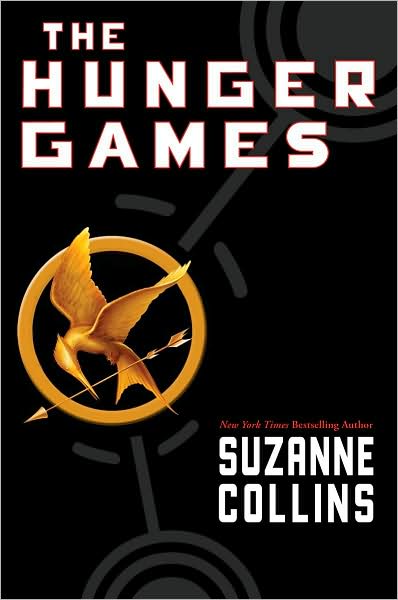
hungergamesSo how do writers find the right balance? I think that The Hunger Games by Suzanne Collins did a great job of weaving a dynamic love triangle with a gripping story. It gave the series an emotional center that made the stakes higher and the consequences more poignant.

What YA books do you think have done an exceptional job with romance?

A Look Back at Children’s Fantasy Classics

Writing for a younger audience as an adult is a tricky business. Granted, I still feel like an 11-year-old kid on the inside, but actual 11 year olds tell me that I am, in fact, a grown woman who should probably not hog the swings at the park. And in my writing, as much as I try to channel my inner child, I know that sometimes I may be missing some of the intense wonder and possibility that most people only feel until a certain age.

Wrinkle in TimeWhen that happens I think back to the fantasy and sci-fi books that drew me in as a child, the ones I read over and over. One series that I loved was A Wrinkle in Time by Madeleine L’Engle. I read them again and again through the years, and every time I would get something new. As an eight year old, I struggled to wrap my brain around the concept but was fascinated by the raw emotions of Meg and her family. At 12 I only cared about the romance between Meg and Calvin. And in high school I was finally able to marvel at the complexity of the world and the characters.

I also loved The Girl with the Silver Eyes by Willo Davis Roberts, where the main character moves things with her mind. She was an outsider (like me) who found friends and mastered her powers to do cool things. I remember logging serious time staring at objects and trying to move them with the power of my thoughts, or trying to have conversations with my friends telepathically.

The series on my shelf that had the most worn spines was The Chronicles of Prydain by Lloyd Alexander. The main character was a boy, Taran, but I could completely relate to him. And the world that Alexander created was so rich that you could practically smell the pig pen that Taran had to keep clean. To this day just seeing the covers reminds me of rainy days huddled by a window with a book and nights with a flashlight under the blanket.

PrydainI could go on and on. But these blasts from my past always help me realize that a great fantasy or sci-fi is less about a cool concept or a fascinating world, and more about a character who feels real to a kid. The character can be as smart or powerful as an adult, but they must approach the world with curiosity and hope, and believe that they still have the power to make a difference, even if it is in a small way. And when they do, every kid who reads that story feels for a minute like they might be special too.

What are the books that you read as a child that still inspire you now?