Meet a few of the youngest stars of YA fantasy & sci-fi fiction writing

Do you ever have a story in your head that feels so huge, so epic, that you think, “Who am I to write this?” It’s a feeling a lot of writers have, especially when they’re young. But some of the most groundbreaking, imaginative, and successful books in recent years were written by authors who weren’t much older than their target audience. They prove that you don’t need decades of life experience to build a new world from scratch. All you need is a powerful idea and the drive to see it through.

Let’s get inspired by a few of the youngest authors who took the YA science fiction and fantasy world by storm.

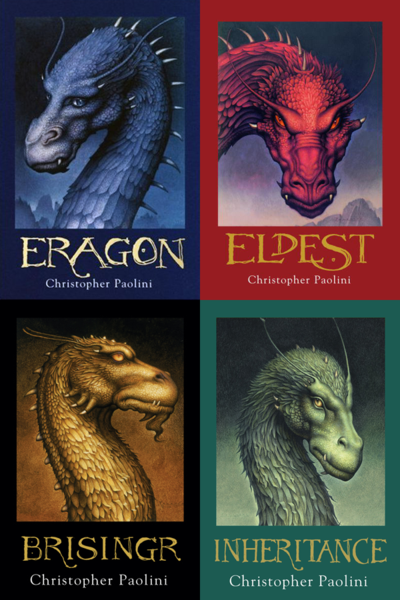
Christopher Paolini, author of Eragon

  • Breakout Age: Paolini started writing Eragon at just 15 years old. It was famously self-published before being picked up by a major publisher, when he was 19.
  • The Hit Book: Eragon, the first book in The Inheritance Cycle, became a global phenomenon. A classic farm-boy-finds-a-dragon-egg story, it was everything an epic fantasy fan could want.
  • What Made It Special: Eragon is a masterclass in ambition. Paolini wasn’t just writing a story; he was building a massive world with its own languages, history, and rules of magic. He proved that a teenager could not only write a novel, but could command the epic scale and intricate detail that the genre demands, inspiring a whole generation of young writers to dream bigger.

Veronica Roth, author of Divergent

  • Breakout Age: Roth famously wrote Divergent during her senior year of college. It was published when she was just 22 years old.
  • The Hit Book: Divergent kicked off a series that became a cornerstone of the YA dystopian boom. It tells the story of Tris Prior, who lives in a futuristic Chicago where society is divided into five factions based on human virtues.
  • What Made It Special: Divergent‘s genius lies in its powerful central metaphor. The faction system was a brilliant and instantly relatable way to explore the intense pressure teens feel to fit in and define their identity. It tapped directly into that universal high school question: “Where do I belong?” The psychological trials were a unique and thrilling way to explore character depth and courage.

Tomi Adeyemi, author of Children of Blood and Bone

  • Breakout Age: Adeyemi was 23 when her debut, Children of Blood and Bone, landed one of the biggest publishing deals in YA history.
  • The Hit Book: Children of Blood and Bone is a soaring epic fantasy that follows Zélie Adebola as she attempts to bring magic back to her oppressed people.
  • What Made It Special: This book was a cultural landmark. Adeyemi wove West African mythology and Yoruba spiritual traditions into a powerful, action-packed fantasy that felt both classic and revolutionary. It tackled deep themes of oppression, race, and identity with a fiery passion that resonated with millions of readers. Adeyemi showed the immense, world-changing power of telling stories that had been left off the fantasy map for far too long.

The next time you sit down to write and that little voice of doubt creeps in, just remember these authors. They didn’t wait for permission to build their worlds. Your age isn’t a barrier—it’s your superpower. You have a voice and a perspective that no one else has.

So go write that story. We’re all waiting to read it.

Five Terrifying Young Adult Fantasy Villains

Over the past few weeks I’ve been creating the backstory for the villain of my series, The Conjurors. I want him to be believable, compelling, and frightening. For inspiration, I looked to the masters of young adult fantasy and considered which villains I found most captivating. Below are my top five.

Lord Voldemort, Harry Potter, J.K. Rowling

VoldemortJ.K. Rowling may not be the first author to use Hitler as a model for her super villain, but she is the most creative, in my opinion. Voldemort’s obsession with the purity of the wizard race, combined with his sociopathic childhood, make him both creepy and intensely threatening. Throughout the series no one was safe – not even civilians or children. When he whipped out his wand, my palms would sweat for whoever was at the other end of it. And let’s not forget his snake, Nagini. I think I’d rather submit to “Avada Kedavra” than be eaten by that enormous monster.

Metatron, His Dark Materials, Philip Pullman

A power-mad angel with almost unlimited powers, Metatron feels undefeatable in the His Dark Materials series. He uses the language of religion to create a dictatorship from heaven, where he can control human’s lives like puppets. Perhaps most chilling of all, he is even more powerful than The Authority, who is god in the series. Throughout the books, I found myself wondering how he could ever be taken down – but it was by his own weakness in the end, not someone more powerful than himself. My one gripe was that the hero and heroine of the story, both children, weren’t the ones to lead him to his doom.

Galbatorix, The Inheritance Cycle, Christopher Paolini

InheritanceCycleCoversUsing the souls of dead dragons to power his magic? Yikes! I have to give Paolini credit for finding one of the most original and sinister ways for a villain to derive his power. Galbatorix is absent for much of the series, but he is always talked about. This makes him more intimidating than if we were encountering him around every corner. And when Eragon does finally encounter the villain of the series, he doesn’t disappoint – he can possess people and, like Metatron, has to defeat himself because he is too powerful to be destroyed by anyone else.

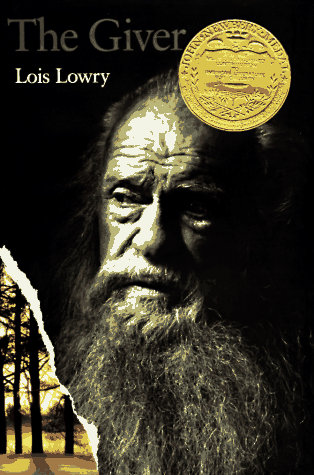
Society, The Giver Quartet, Lois Lowry

TheGiverThe Giver was one of the most fascinating books that I read when I was younger, and Lowry has recently finished the series in 2012 with the final book, Son. In this series, it isn’t one villain who acts as the antagonist of the series, but rather society as a whole. The mob mentality of killing off those who are weak, and a conscious decision to shut off emotions, leads to very cold and clinical assessments of who should live and die. It’s a world where babies who cry too much are killed, having a disability can lead to execution, and it is up to children to be the moral compass for a society that has no idea that it is out of control. In this way the villain of the series is like the hydra – one head is cut off only to be replaced by two more.

Neferet, House of Night, P.C. Cast and Kristin Cast

The House of Night series achieved something difficult when they created Neferet, a beautiful, powerful and charismatic vampyre who wants to instigate a war with humans. Part of Neferet’s appeal comes from the fact that she is so likeable at times – for a good part of the series you hope she can be turned around. She also has a great backstory that really makes you feel for her. I thoroughly enjoy a villain who I can sympathize with and isn’t pure evil. When the hero or heroine has to defeat someone they care about on some level, the stakes seem higher.

Did I miss your favorite YA fantasy villain?