
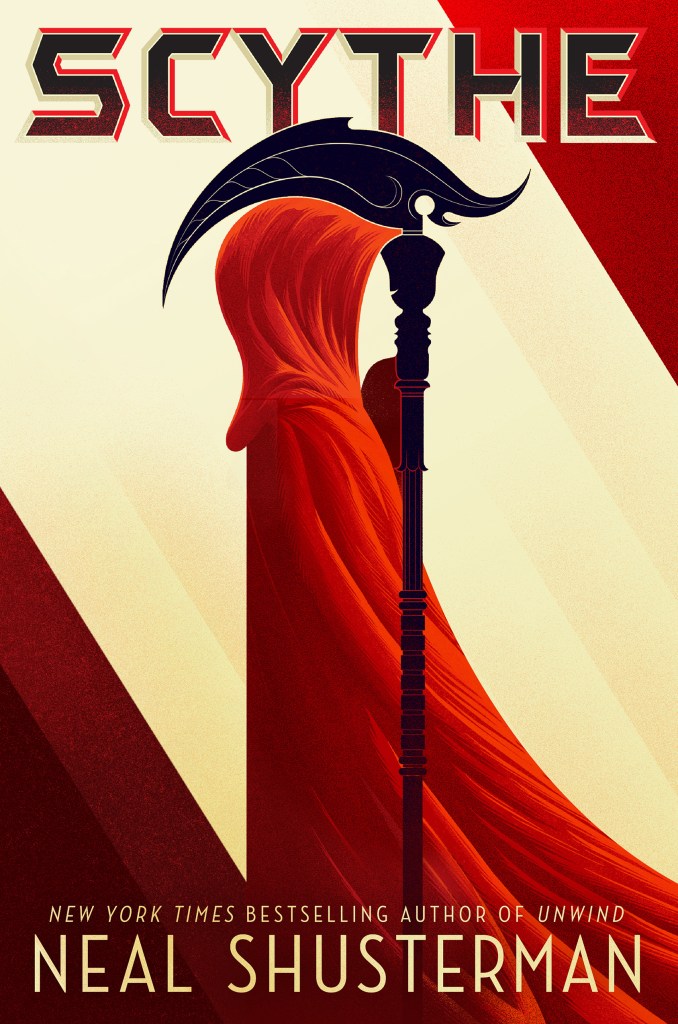
I’ve been in a total book hangover since turning the last page of the Scythe trilogy. You know that feeling where the real world looks a little bit blurry because you’re still half-submerged in the one you just left? That was me for three days straight. As I read, I found myself constantly reaching for my highlighter, not just because the plot was a total roller coaster, but because Neal Shusterman managed to make a “perfect” future feel so hauntingly inevitable.
It’s exactly the kind of balance I’m constantly chasing in my own novels: that sweet spot where big, “what-if” science meets the messy, complicated hearts of the people living through it. I’ve been noodling on why this world felt so real to me, and since I always process things better once I get them down on the page, I wanted to share the world-building shifts I’m making in my own work after spending time in the Scythehood.
Give your “perfect” world a price tag
In my own drafts, I’m always tempted to make things go smoothly for my characters once they find a portal or a piece of tech. Scythe reminded me that the most interesting stories happen when the science is flawless but the people are still a mess. Shusterman gives humanity immortality, but then shows us the weird, psychological rot that sets in when no one is afraid of the end anymore.
If I’m building a utopia, I need to find the “emotional tax” my characters have to pay to live there. If there’s no friction, there’s no story.
Let the world be a silent witness
The “Thunderhead” (the AI that runs the world) is probably the most fascinating character I’ve encountered in years. It’s a literal god-machine, but its choice to stay out of the Scythes’ business creates more tension than a killer robot ever could. It made me rethink how I handle power in my own books.
Sometimes the most effective element in your world is the one that refuses to help. It forces your characters to grow (or fail) on their own terms, which is way more satisfying to read.
Keep a foot in the real world
Even in a future where you can “reset” your age and live forever, people in this book still care about the color of their robes and the status of their journals. It’s a great reminder that world-building isn’t just about the big ideas, it’s about the small, human vanities.
No matter how far into the future or a fantasy realm I go, I need to bring a piece of home with me. Whether it’s a character’s favorite mug or a specific tradition, those tiny details are what make a world feel like a place I’ve actually visited.
I’m already looking at my current work-in-progress with fresh eyes. I’m asking myself: Where is the human cost? What are the rules my characters can’t break? If you’re a reader, these are the details that make you stay up until 2:00 AM. If you’re a writer, these are the tools that help you build a world worth staying up for.
 Kristen Pham